Unassigned
The World of the Dinosaurs - Climate and Life

Have you ever wondered what it would feel like to stand on a planet ruled by giant reptiles? The world of the dinosaurs was hotter, wetter, and far more connected than the Earth you know today. Continents drifted, oceans opened, volcanoes roared, and life exploded into thousands of incredible forms.
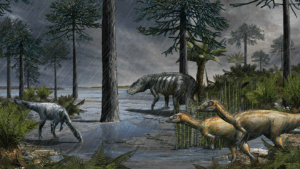
A slow, detailed journey unfolds across the 186 million years when dinosaurs ruled the planet. Rivers teemed with fish, swamps echoed with the calls of amphibians, and vast forests stretched to the horizon, filled with towering conifers and ferns.
 Via Science News
Every habitat, from arid deserts to lush floodplains, was a stage for evolutionary experiments, where new species constantly appeared, adapted, or vanished. This dynamic world set the scene for the rise of creatures that would capture human imagination for millennia.
 Via Live Science
Each period looked and felt completely different because the continents never stopped moving, the climate kept changing, and new kinds of plants and animals appeared. These shifts created endless opportunities for life to diversify, pushing evolution in surprising directions. By the end of the Mesozoic, Earth had become a complex world of giants, flyers, and swimmers unlike anything before.
 Via Australian Museum
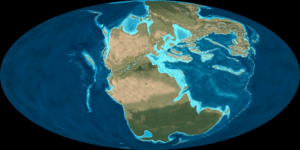
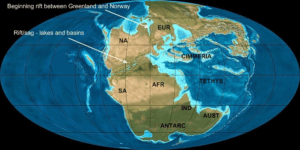
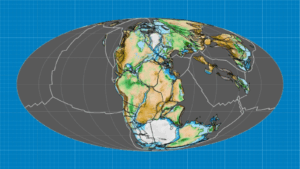
At the start of the Triassic, every continent on Earth was squeezed together into one supercontinent named Pangea. Picture North America glued to Africa, South America pressed against Antarctica, and Australia touching India. Pangea formed a giant “C” shape wrapped around by a single enormous ocean called Panthalassa. A smaller sea, the Tethys, filled the opening of the “C.”
Because Pangea was so huge, the middle of the land was thousands of miles from any ocean. Winds carrying rain from the sea lost their moisture long before they reached the center. Giant red deserts covered the heart of the supercontinent. Dunes hundreds of feet tall shifted across what is now North America, Africa, and Europe.
 Via History of the Earth
Flash floods roared through dry riverbeds only a few times each year. Closer to the coasts, the land was greener. Rivers carried water from distant mountains, and forests of tall seed ferns and early conifers grew along the edges. The weather was hot everywhere. There were no polar ice caps, and even places near the poles stayed warm.
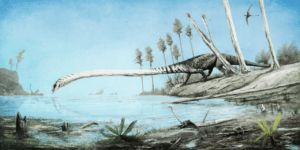
The first true dinosaurs appeared approximately 230 million years ago, during the middle of the Triassic period. They were small, fast, two-legged hunters no bigger than turkeys. Animals like Herrerasaurus and Eoraptor ran across the dry landscapes chasing insects and tiny reptiles. They shared the world with crocodile relatives, early turtles, and the first tiny mammals hiding in the shadows.
 Via Interesting Engineering
 Via A Dinosaur A Day
Forests that once supported a wide range of early reptiles and amphibians collapsed under the stress of rapid climate swings. As the environment slowly stabilized, new plant groups, especially early conifers, spread across the recovering landscapes. These tougher plants thrived in the altered climate and created fresh habitats that dinosaurs later depended on, helping shape the ecosystems of the Jurassic world.
 Via Popular Science
Between them, a narrow sea that would one day become the Atlantic Ocean began to widen, inch by inch. With the continents breaking up, rain clouds could reach farther inland. Deserts turned into swamps and forests. Tall conifer trees, cycads that looked like chunky palm trees, and giant horsetail plants covered the land. There were still no grasses or flowers; those would appear much later.
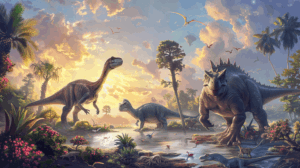
Sea levels rose and flooded low areas, creating warm, shallow oceans full of reefs made by shellfish and sponges. Ammonites, coiled shellfish with beautiful patterned shells, swam in huge numbers. This was the classic dinosaur age. Long-necked giants such as Diplodocus, Brachiosaurus, and Apatosaurus stretched their necks high into the treetops to eat soft leaves. Stegosaurus walked around with giant plates on its back and spikes on its tail.
 Via Reddit
Sharp-toothed hunters like Allosaurus and Ceratosaurus followed the herds. In the sky, pterosaurs with wingspans as wide as small airplanes glided on warm air currents. The Jurassic climate had almost no cold seasons. Palm-like plants grew as far north as modern-day Alaska and as far south as Antarctica. Crocodile relatives lived near the North Pole, and coral reefs grew in waters that are frozen today.
 Via Dinosaur org
Sea levels reached their highest point in dinosaur times. A giant inland sea called the Western Interior Seaway cut North America in half from the Arctic Ocean to the Gulf of Mexico. Another huge sea covered much of Europe. Warm, shallow water flooded large parts of Africa and South America. For the first time, flowering plants appeared. Magnolias, oaks, and early roses spread quickly. Insects such as bees and butterflies evolved alongside them.
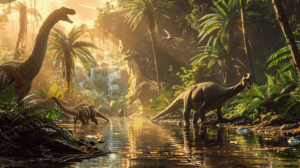
Dinosaurs that ate plants now had new foods like fruits and seeds. The climate stayed very warm for most of the Cretaceous. Forests of tall trees grew inside the Arctic Circle. Dinosaurs such as Edmontosaurus and Troodon lived in polar forests where the sun did not rise for months in winter, yet the weather never froze. In the southern continents, cooler climates appeared in some places.
 Via Dinosaur org
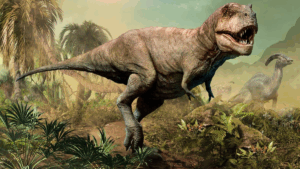
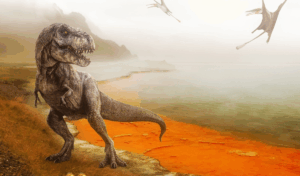
Horned dinosaurs like Triceratops and armored ankylosaurs roamed North America. Duck-billed hadrosaurs formed huge herds. The most famous predator, Tyrannosaurus rex, appeared near the end of the period. In South America, giant meat-eaters such as Giganotosaurus hunted enormous long-necked titanosaurs. In Madagascar, strange birds with teeth and tiny meat-eating dinosaurs lived in isolation.
 Via The Wire Science
That is why Tyrannosaurus lived only in North America while its close cousin, Tarbosaurus, lived in Asia. New mountains rose where continents collided. Rivers changed direction. Coastlines grew longer, creating more beaches and swamps. Every change made new homes for life.
 Via The Conversation
There was no grass anywhere on Earth until after the dinosaurs were gone. The moon was closer, so the tides were stronger. The days were slightly shorter because Earth spun faster. The sky had more carbon dioxide, so sunsets were probably redder and more dramatic. Sixty-six million years ago, an asteroid ten kilometers wide struck the Yucatán Peninsula in Mexico. It hit with the force of billions of atomic bombs. Dust and smoke blocked the sun for years.
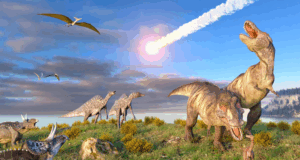 Via Gecai Culture
For 186 million years, dinosaurs walked, swam, and flew across a world that was always on the move. Today, the same slow forces still push India into Asia, widen the Atlantic, and lift mountains higher. The age of dinosaurs is over, but the planet humans knew is still alive beneath their feet, still drifting, still changing, and still full of wonders.
More in Unassigned
Via Science News
Every habitat, from arid deserts to lush floodplains, was a stage for evolutionary experiments, where new species constantly appeared, adapted, or vanished. This dynamic world set the scene for the rise of creatures that would capture human imagination for millennia.
The Mesozoic Era - The Age of Reptiles
The Mesozoic Era lasted from 252 million to 66 million years ago. People often call it the Age of Dinosaurs, but reptiles also ruled the skies and seas. This long stretch of time is divided into three periods: Triassic, Jurassic, and Cretaceous.
Via Live Science
Each period looked and felt completely different because the continents never stopped moving, the climate kept changing, and new kinds of plants and animals appeared. These shifts created endless opportunities for life to diversify, pushing evolution in surprising directions. By the end of the Mesozoic, Earth had become a complex world of giants, flyers, and swimmers unlike anything before.
The Triassic World - One Giant Continent
The Triassic Period ran from 252 million to 201 million years ago. Earth was still recovering from the worst mass extinction in history. More than 90 percent of all species had vanished just before the period began. The few animals and plants that survived suddenly had the whole world to themselves.
Via Australian Museum
At the start of the Triassic, every continent on Earth was squeezed together into one supercontinent named Pangea. Picture North America glued to Africa, South America pressed against Antarctica, and Australia touching India. Pangea formed a giant “C” shape wrapped around by a single enormous ocean called Panthalassa. A smaller sea, the Tethys, filled the opening of the “C.”
Because Pangea was so huge, the middle of the land was thousands of miles from any ocean. Winds carrying rain from the sea lost their moisture long before they reached the center. Giant red deserts covered the heart of the supercontinent. Dunes hundreds of feet tall shifted across what is now North America, Africa, and Europe.
Via History of the Earth
Flash floods roared through dry riverbeds only a few times each year. Closer to the coasts, the land was greener. Rivers carried water from distant mountains, and forests of tall seed ferns and early conifers grew along the edges. The weather was hot everywhere. There were no polar ice caps, and even places near the poles stayed warm.
The first true dinosaurs appeared approximately 230 million years ago, during the middle of the Triassic period. They were small, fast, two-legged hunters no bigger than turkeys. Animals like Herrerasaurus and Eoraptor ran across the dry landscapes chasing insects and tiny reptiles. They shared the world with crocodile relatives, early turtles, and the first tiny mammals hiding in the shadows.
Via Interesting Engineering
The Great Triassic-Jurassic Extinction
Around 201 million years ago, massive volcanoes in what is now the Atlantic Ocean erupted for hundreds of thousands of years. They poured out enough lava to cover the United States under a layer half a mile thick. The gases from these eruptions changed the climate quickly. Many animals could not survive the sudden heat and acid rain. More than half of all species have disappeared. This disaster cleared the stage for dinosaurs to take over. With so many competitors gone, new ecological niches opened, allowing dinosaurs to grow larger and more diverse. The extinction reshaped life on Earth, setting the course for the dominance of reptiles in the Jurassic period. Another consequence of this extinction was the dramatic shift in plant life.
Via A Dinosaur A Day
Forests that once supported a wide range of early reptiles and amphibians collapsed under the stress of rapid climate swings. As the environment slowly stabilized, new plant groups, especially early conifers, spread across the recovering landscapes. These tougher plants thrived in the altered climate and created fresh habitats that dinosaurs later depended on, helping shape the ecosystems of the Jurassic world.
The Jurassic World - A Steamy Greenhouse
The Jurassic Period lasted from 201 million to 145 million years ago. After the great extinction, dinosaurs grew larger and spread throughout the world. The world became warm and wet, almost like a giant greenhouse. Pangea started to crack apart. A huge rift opened from the north and began splitting the supercontinent into two pieces. The northern piece was called Laurasia, and the southern piece was called Gondwana.
Via Popular Science
Between them, a narrow sea that would one day become the Atlantic Ocean began to widen, inch by inch. With the continents breaking up, rain clouds could reach farther inland. Deserts turned into swamps and forests. Tall conifer trees, cycads that looked like chunky palm trees, and giant horsetail plants covered the land. There were still no grasses or flowers; those would appear much later.
Sea levels rose and flooded low areas, creating warm, shallow oceans full of reefs made by shellfish and sponges. Ammonites, coiled shellfish with beautiful patterned shells, swam in huge numbers. This was the classic dinosaur age. Long-necked giants such as Diplodocus, Brachiosaurus, and Apatosaurus stretched their necks high into the treetops to eat soft leaves. Stegosaurus walked around with giant plates on its back and spikes on its tail.
Via Reddit
Sharp-toothed hunters like Allosaurus and Ceratosaurus followed the herds. In the sky, pterosaurs with wingspans as wide as small airplanes glided on warm air currents. The Jurassic climate had almost no cold seasons. Palm-like plants grew as far north as modern-day Alaska and as far south as Antarctica. Crocodile relatives lived near the North Pole, and coral reefs grew in waters that are frozen today.
The Cretaceous World - Flowering Plants and Familiar Continents
The Cretaceous Period stretched from 145 million to 66 million years ago. This was the longest and final chapter of the dinosaur story. The continents drifted closer to the places you know today. North America and South America separated from Africa and Europe. The Atlantic Ocean grew wider every year. India broke away from Madagascar and started a long, fast journey north. Australia and Antarctica were still connected but slowly pulling apart.
Via Dinosaur org
Sea levels reached their highest point in dinosaur times. A giant inland sea called the Western Interior Seaway cut North America in half from the Arctic Ocean to the Gulf of Mexico. Another huge sea covered much of Europe. Warm, shallow water flooded large parts of Africa and South America. For the first time, flowering plants appeared. Magnolias, oaks, and early roses spread quickly. Insects such as bees and butterflies evolved alongside them.
Dinosaurs that ate plants now had new foods like fruits and seeds. The climate stayed very warm for most of the Cretaceous. Forests of tall trees grew inside the Arctic Circle. Dinosaurs such as Edmontosaurus and Troodon lived in polar forests where the sun did not rise for months in winter, yet the weather never froze. In the southern continents, cooler climates appeared in some places.
Via Dinosaur org
Horned dinosaurs like Triceratops and armored ankylosaurs roamed North America. Duck-billed hadrosaurs formed huge herds. The most famous predator, Tyrannosaurus rex, appeared near the end of the period. In South America, giant meat-eaters such as Giganotosaurus hunted enormous long-necked titanosaurs. In Madagascar, strange birds with teeth and tiny meat-eating dinosaurs lived in isolation.
How Moving Continents Changed Dinosaur Lives
When all land was joined in Pangea, a dinosaur that started in South America could walk to Asia without crossing water. Fossils of the same species are sometimes found on continents that are now oceans apart. As the continents drifted, populations became cut off. Dinosaurs on different landmasses evolved in their own directions.
Via The Wire Science
That is why Tyrannosaurus lived only in North America while its close cousin, Tarbosaurus, lived in Asia. New mountains rose where continents collided. Rivers changed direction. Coastlines grew longer, creating more beaches and swamps. Every change made new homes for life.
Volcanoes and Greenhouse Gases
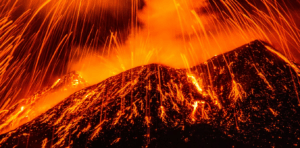
Huge volcanic areas called the Deccan Traps in India erupted near the end of the Cretaceous. They released gases that kept the planet extra warm. At the same time, the opening oceans absorbed carbon dioxide, and the climate started to cool slightly in the final million years of the dinosaurs.
Via The Conversation
There was no grass anywhere on Earth until after the dinosaurs were gone. The moon was closer, so the tides were stronger. The days were slightly shorter because Earth spun faster. The sky had more carbon dioxide, so sunsets were probably redder and more dramatic. Sixty-six million years ago, an asteroid ten kilometers wide struck the Yucatán Peninsula in Mexico. It hit with the force of billions of atomic bombs. Dust and smoke blocked the sun for years.
Explore Earth's Environment with Dinosaurs
The Earth of the dinosaurs was a moving, breathing, changing world. One supercontinent split into seven. Oceans were born and grew. Plants invented flowers, and dinosaurs grew into thousands of shapes and sizes. Warm polar forests, steaming jungles, and vast inland seas covered the planet.
Via Gecai Culture
For 186 million years, dinosaurs walked, swam, and flew across a world that was always on the move. Today, the same slow forces still push India into Asia, widen the Atlantic, and lift mountains higher. The age of dinosaurs is over, but the planet humans knew is still alive beneath their feet, still drifting, still changing, and still full of wonders.