Science
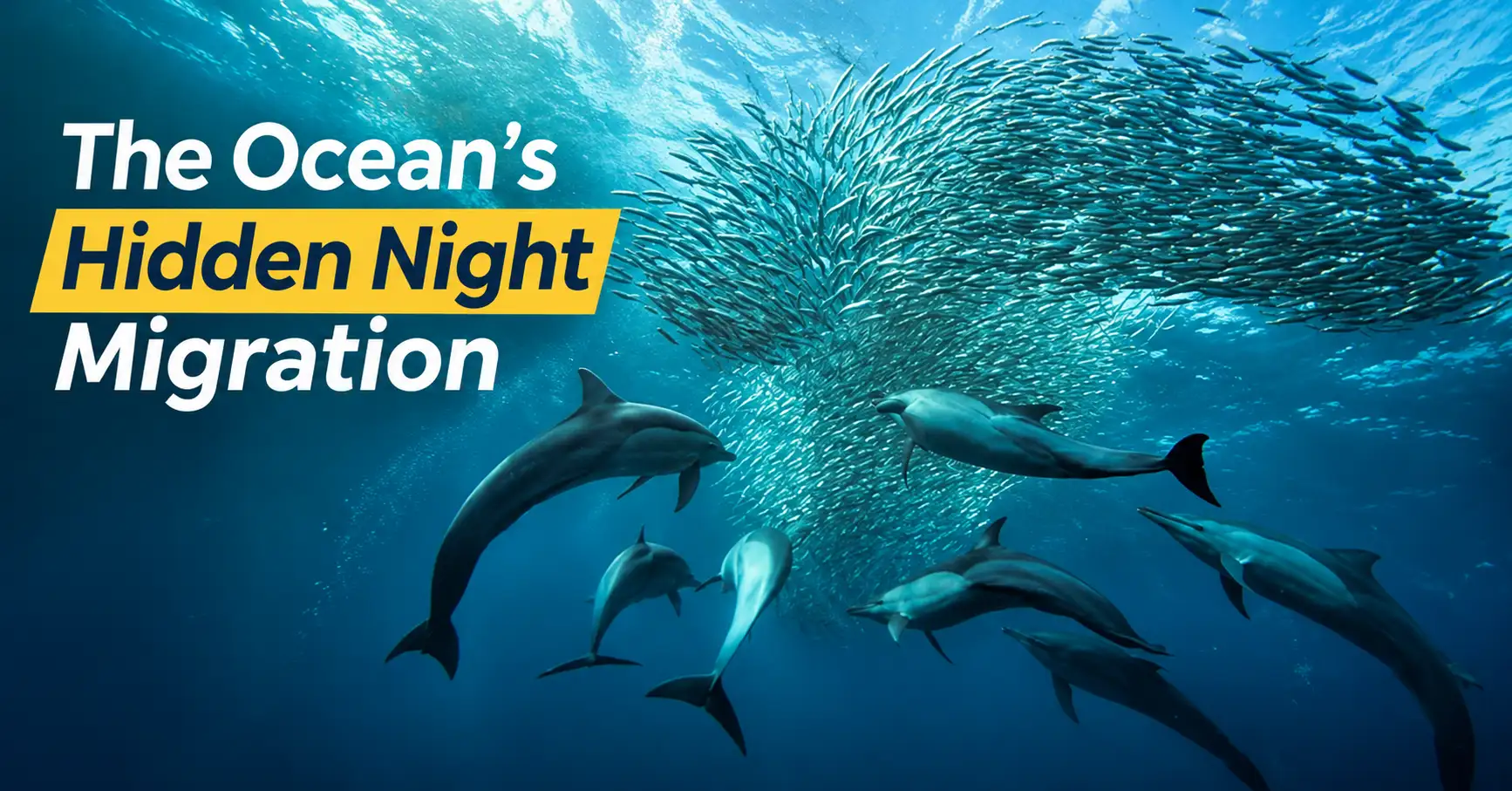
Trillions of Sea Creatures Make a Secret Night Journey
Far below the bright surface waters of the ocean exists a mysterious region known as the twilight zone. This area receives only a small amount of sunlight, creating a dim environment where countless marine creatures survive through unique adaptations and behaviors that remain largely hidden from human observation.
The twilight zone, also called the mesopelagic zone, begins around 200 meters beneath the ocean surface and stretches into deeper waters where sunlight gradually disappears. Although it seems empty and dark, this underwater region contains an incredible variety of life forms that support the balance of ocean ecosystems.
Via BBC
Scientists consider this part of the ocean one of the most important yet least understood environments on Earth. It contains enormous populations of small organisms that influence marine food chains, transport nutrients, and contribute to natural processes that affect the entire planet.
The Discovery of the Ocean’s Moving Layer
During the Second World War, sonar operators made an unexpected discovery while studying ocean depths. Their equipment showed reflections that appeared to come from the seafloor, but researchers later realized the signals were coming from a massive group of living organisms moving through the water.
Via The Marian
This strange moving layer became known as the deep scattering layer because the concentration of marine creatures was dense enough to reflect sonar signals. The discovery revealed that the ocean contained a hidden migration happening thousands of meters below the surface.
The movement was eventually linked to millions of tiny animals traveling upward and downward every day. Instead of a changing ocean floor, scientists had discovered one of the largest animal migrations on Earth, occurring continuously throughout the oceans across the globe.
Via Wikipedia
The Largest Daily Migration on Earth
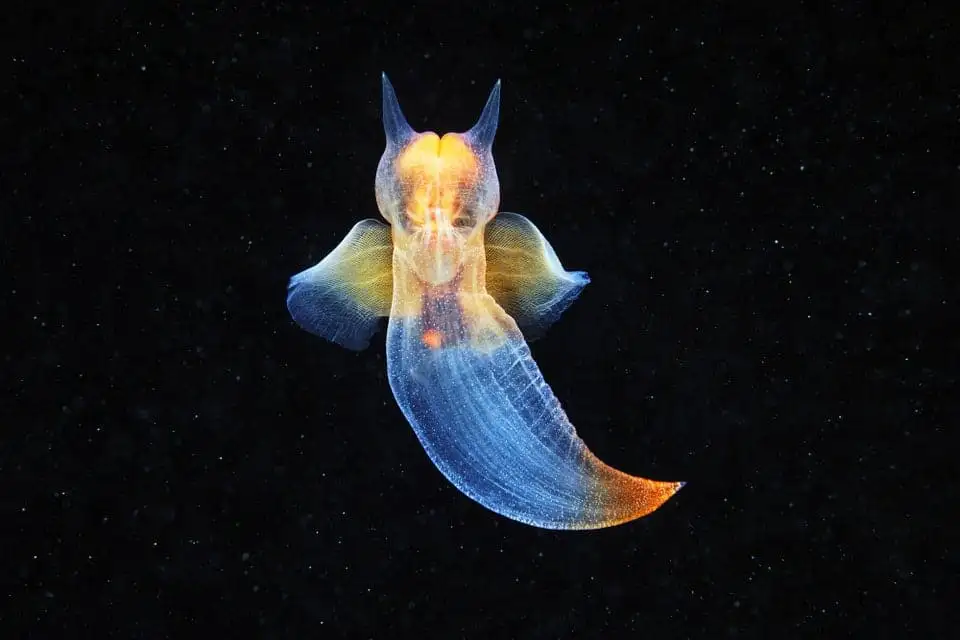
Every night, trillions of tiny marine creatures rise from deeper waters toward the ocean surface in a natural movement called diel vertical migration. This journey happens across the world's oceans and represents the largest regular migration of animals by total biomass.
These small organisms travel upward under the protection of darkness to search for food near the surface. When daylight returns, they move back into deeper waters where they can avoid predators that rely on vision to hunt in brighter conditions.
Via Passport Ocean
Marine researchers compare this worldwide movement to a wave traveling around the planet. As darkness spreads from one region to another, countless creatures follow the night, creating a continuous cycle of movement that connects different layers of the ocean.
Why Tiny Creatures Move Toward the Surface
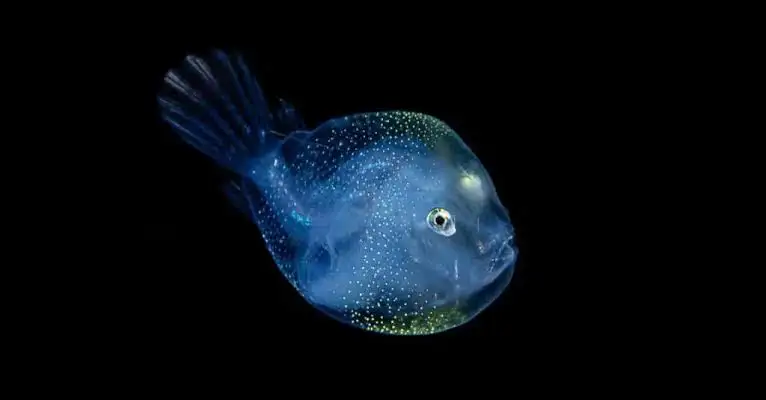
The main reason many twilight zone animals rise at night is to feed on phytoplankton found closer to the ocean surface. These microscopic plant-like organisms require sunlight to grow, which limits their presence to areas where light can still penetrate.
Via A-Z Animals
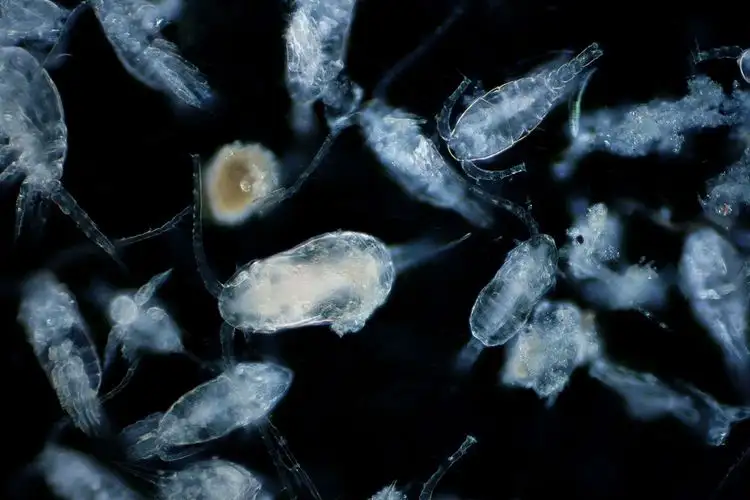
Zooplankton, which includes many tiny animal species, depend on phytoplankton as an important food source. Although these creatures may only measure a few millimeters, they complete enormous daily journeys by traveling hundreds of meters between deep and shallow waters.
This movement would be extremely demanding for such small animals. Their daily migration is comparable to a human traveling several long distances repeatedly, showing the remarkable energy and survival strategies developed by ocean organisms.
Via One Ocean Foundation
Life in the Permanent Darkness Below
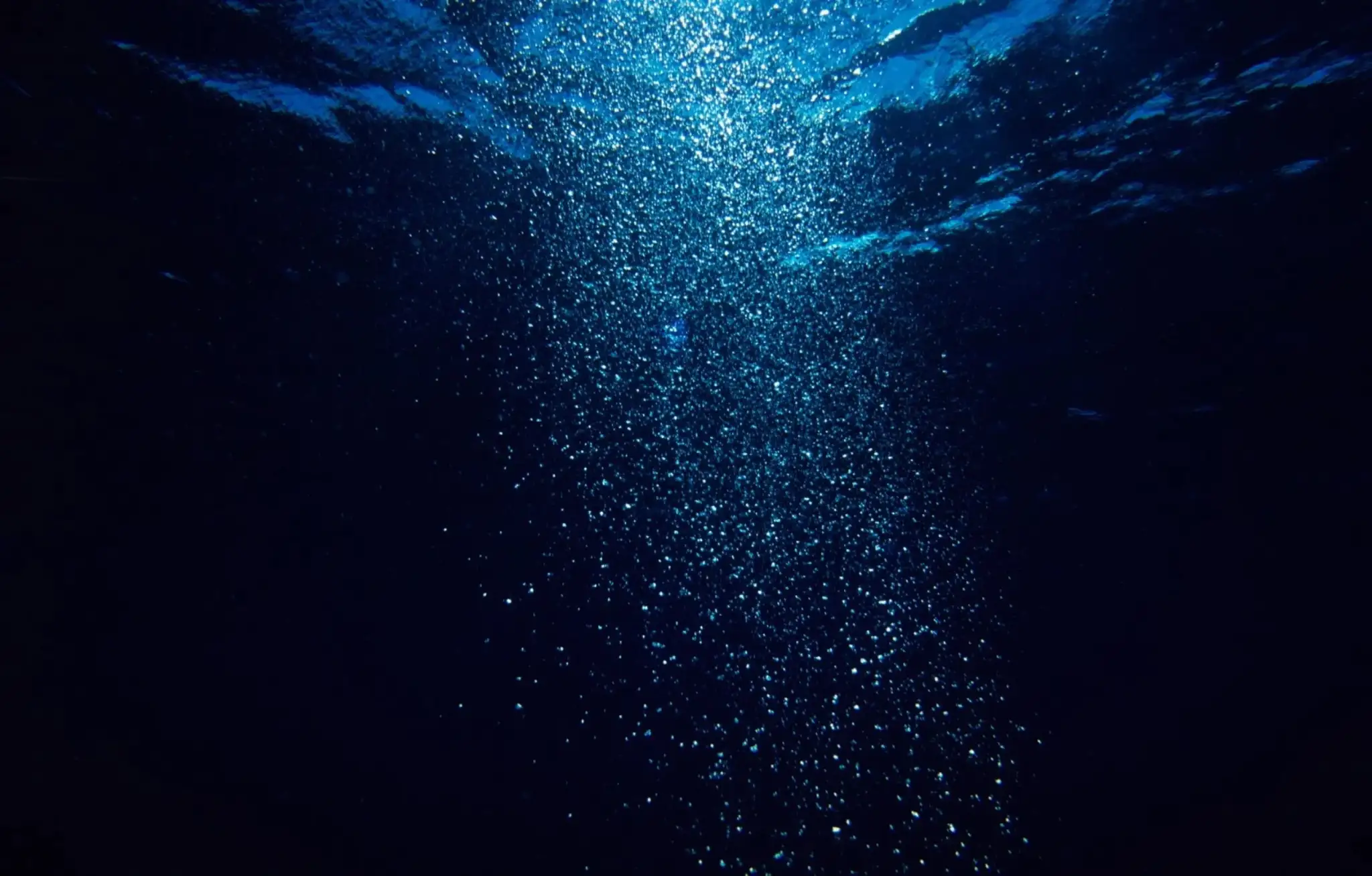
As creatures travel deeper into the ocean, sunlight becomes weaker until it disappears completely. Beyond approximately 1,000 meters, the environment becomes completely dark, and marine animals must rely on other methods to survive and communicate.
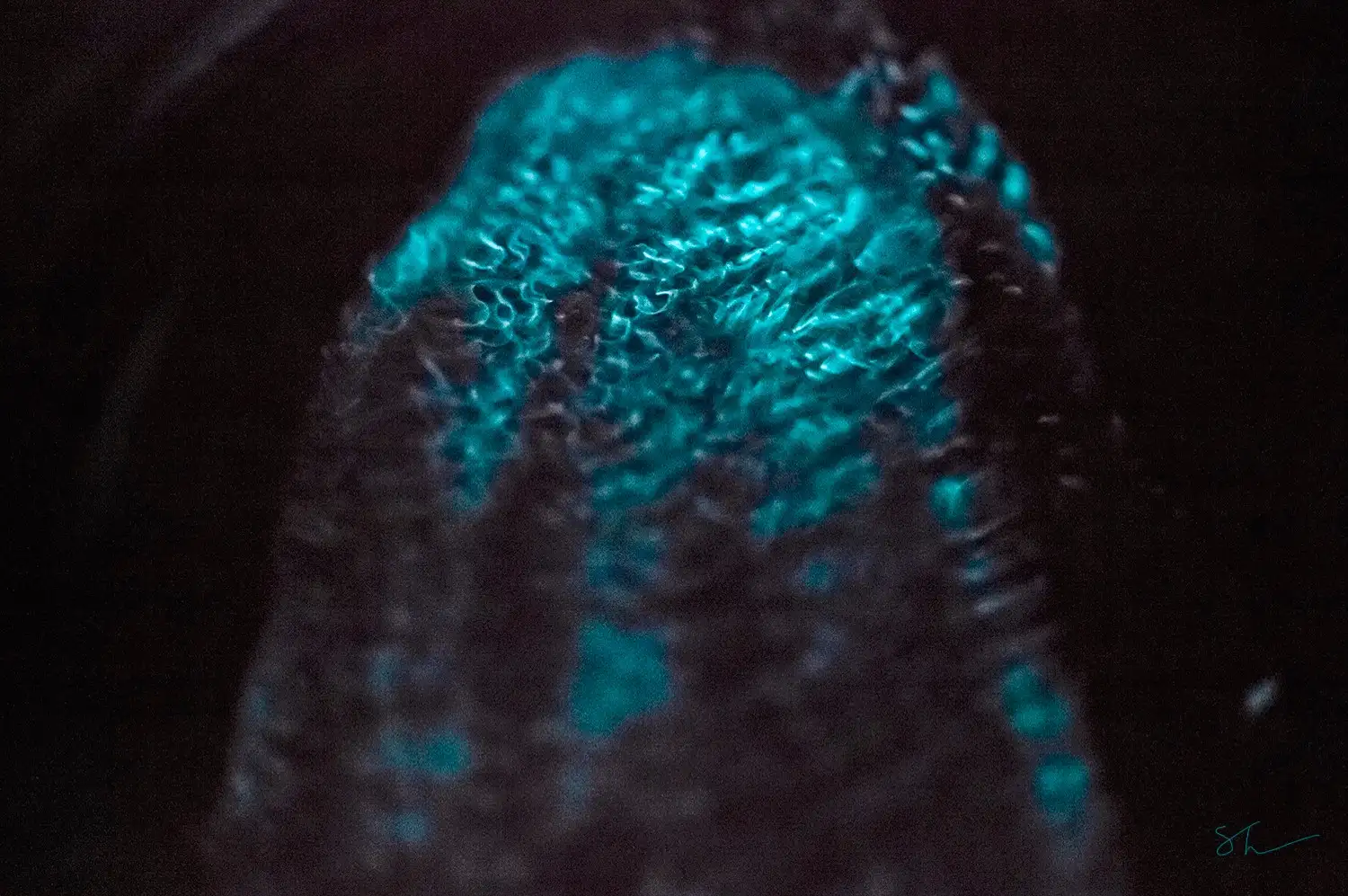
Many species in this region produce their own light through a process called bioluminescence. These glowing signals can help animals attract prey, confuse predators, communicate with others, or create flashes of light in the otherwise dark underwater environment.
Via Phys
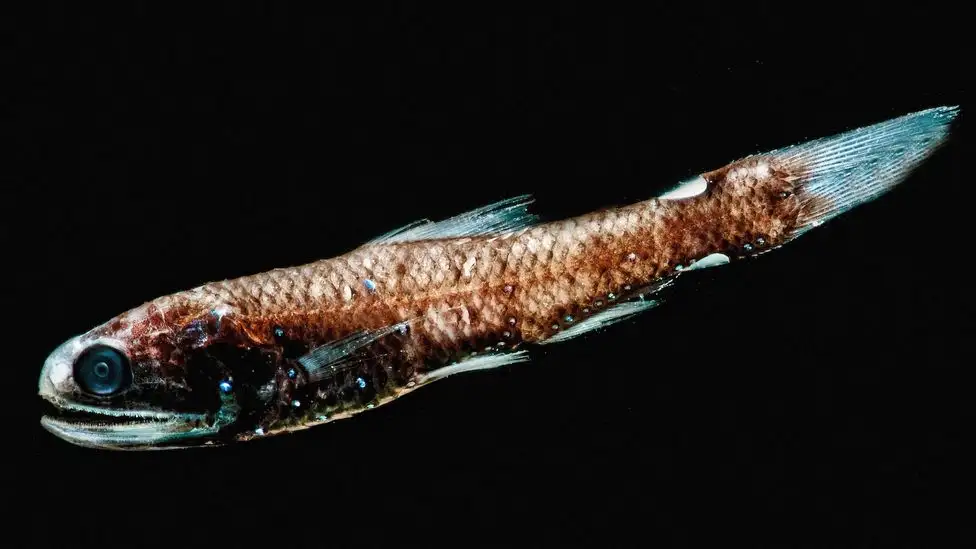
Lanternfish are among the most common glowing creatures found in these depths. They represent a large portion of deep-sea fish populations and form a major part of the deep scattering layer responsible for the movement detected by sonar systems.
The Important Role of Twilight Zone Creatures
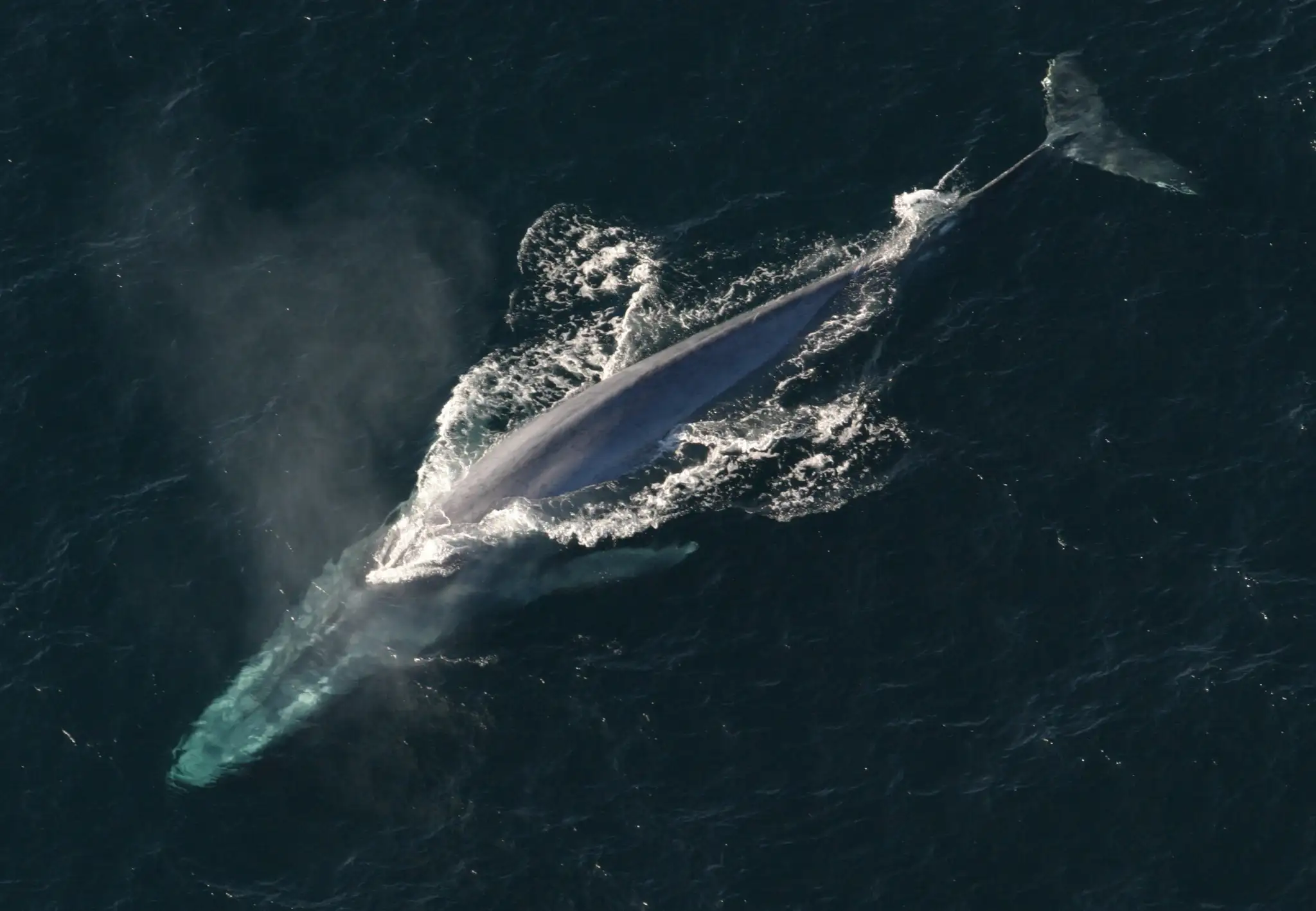
The animals living in the mesopelagic zone play an essential role within ocean food networks. Many larger marine predators depend on these small creatures as a major food source, including species that are important for global fisheries and human diets.
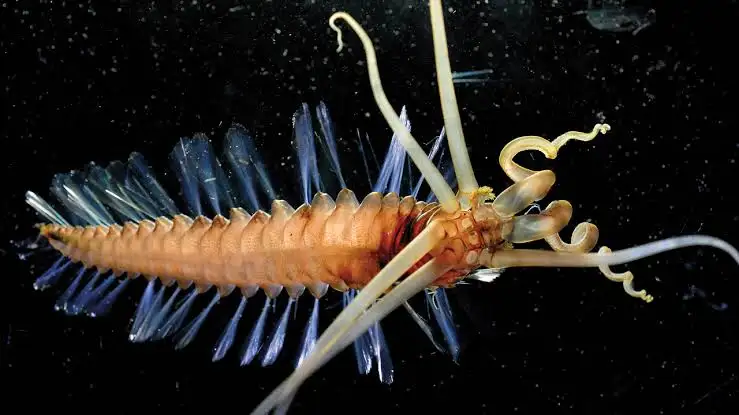
Via A-Z Animals
Beyond providing food for larger animals, these tiny organisms also help move nutrients through the ocean. Their daily journeys transport materials between surface waters and deeper regions, supporting chemical cycles that influence marine ecosystems.
Although individual creatures may appear insignificant because of their small size, their combined impact is enormous. Trillions of animals moving together create large-scale effects that influence ocean health, climate processes, and the balance of life beneath the waves.
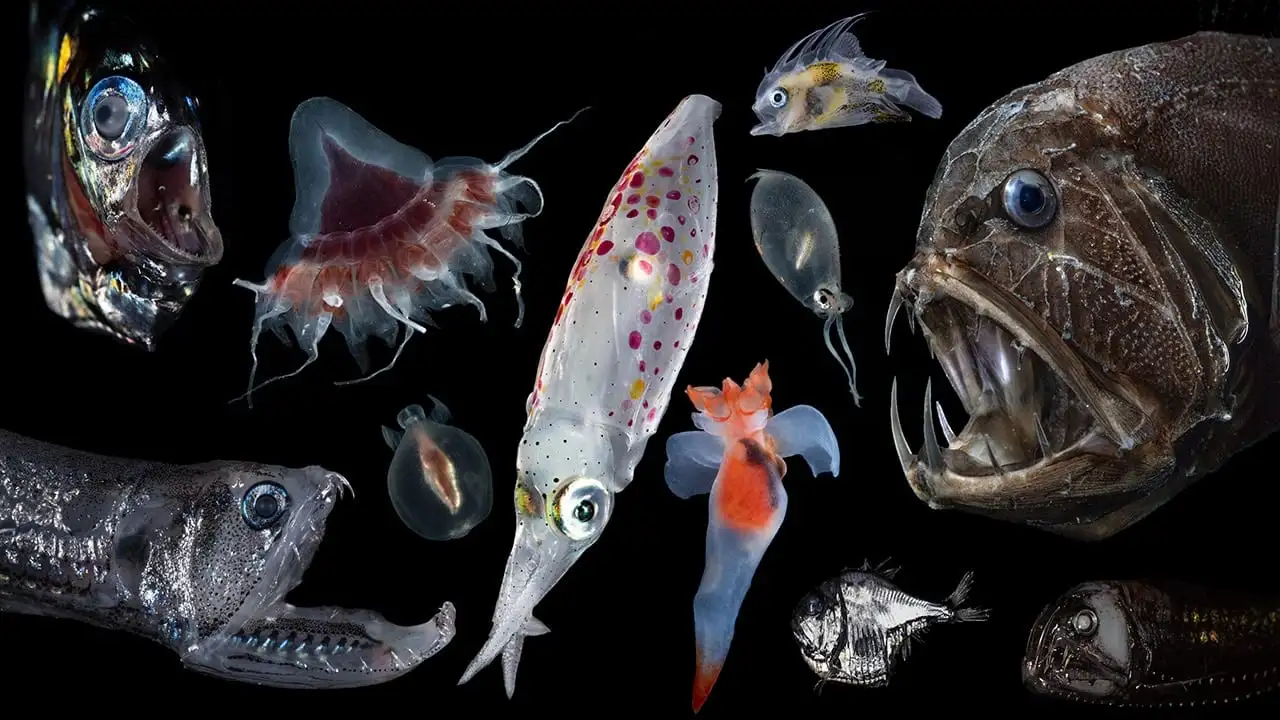
Via Woods Hole
The Strange Physics of Tiny Ocean Creatures
Many Twilight Zone animals live in a world where movement works differently from the environment familiar to humans. Large creatures experience water through normal motion and momentum, but extremely small organisms exist in a place where water resistance strongly affects every movement they make.
Scientists describe this as the difference between the inertial world and the viscous world. A human swimming through water can continue moving briefly after stopping, but a tiny marine creature would stop almost immediately because the surrounding water creates much greater resistance.
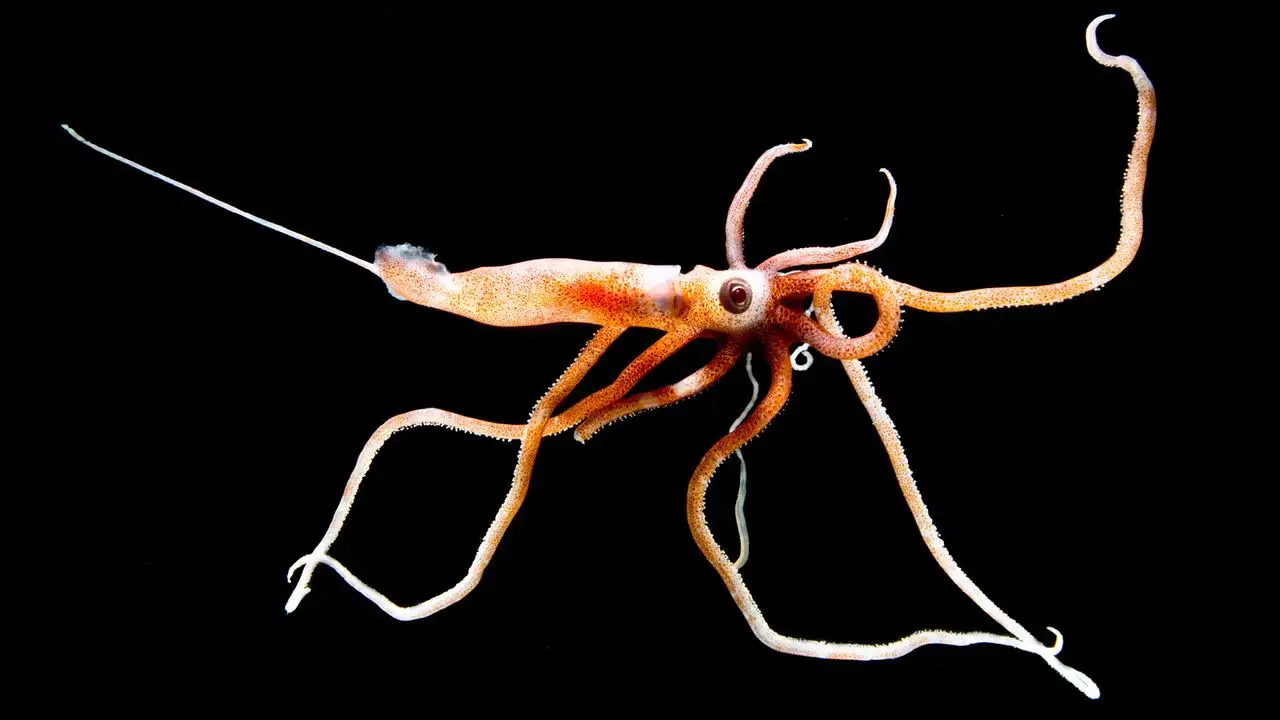
Via BBC
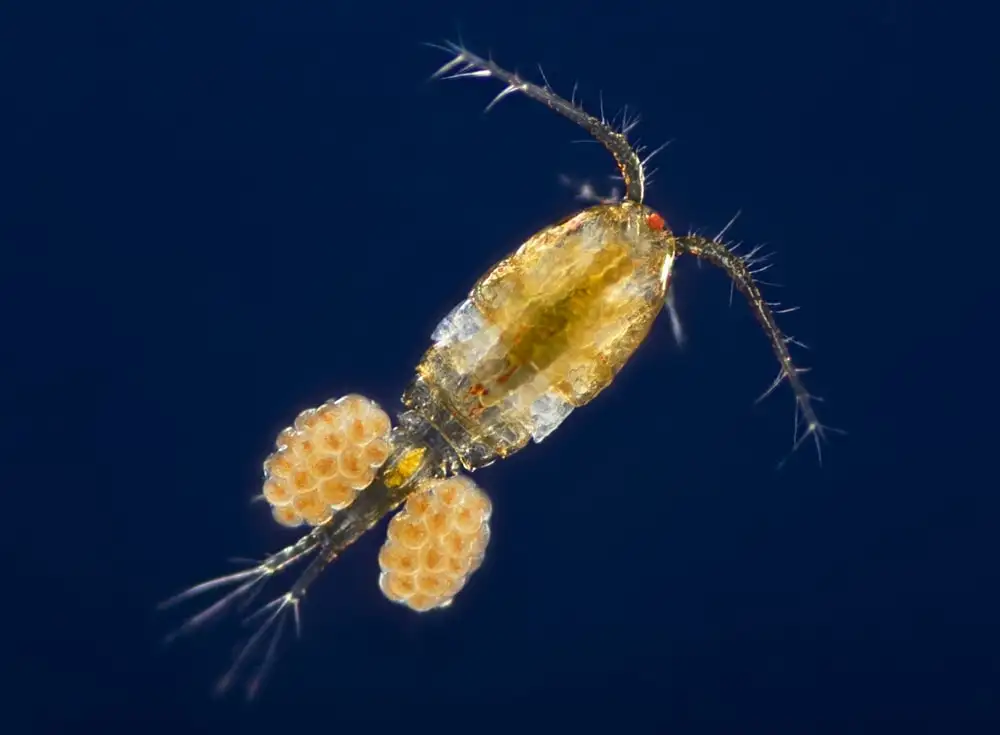
Copepods, tiny crustaceans often compared to insects of the ocean, have developed special body structures to survive in this challenging environment. Their delicate feeding appendages help capture tiny food particles because those particles cannot simply be pushed forward through the thick-feeling underwater surroundings.
Copepods and Other Tiny Ocean Travelers
Copepods are among the most abundant animals in the ocean and represent a major part of the deep scattering layer. These small creatures exist throughout global seas and play a significant role in connecting microscopic life with larger marine animals.
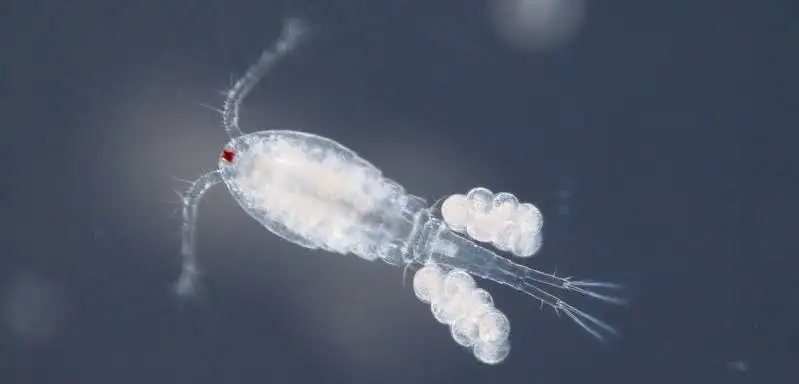
Via Hakai
Although many copepods are extremely small, their behaviors are surprisingly complex. Some species move quickly through the water, while others use specialized body parts to capture food and survive in environments where even basic movement requires careful adaptation.
The combined activity of countless copepods and other tiny organisms can influence ocean processes on a much larger scale. When trillions of these creatures move together every day, their collective actions may contribute to mixing nutrients and transporting materials through different ocean layers.
Via AlgeaBarn
How Ocean Migration Supports Climate Balance
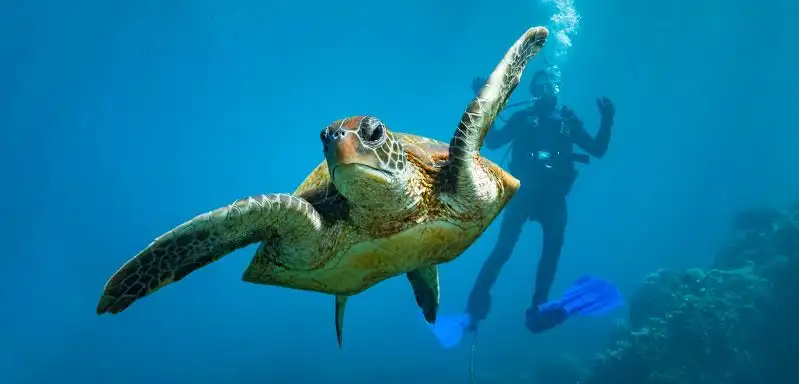
The daily movement of Twilight Zone creatures has an important connection with Earth's climate system. As these animals feed near the surface and return to deeper waters, they transport organic material that contains carbon from one part of the ocean to another.
This process is known as the biological carbon pump. Small marine organisms consume carbon-rich material near the surface and carry some of it into deeper waters, where the carbon can remain stored away from the atmosphere for extremely long periods.
Via Hakai Magazine
Scientists estimate that this natural migration helps move billions of tonnes of carbon into the deep ocean every year. Without these tiny travelers, the ocean's ability to regulate carbon levels and support global climate balance could be significantly affected.
Threats Facing the Twilight Zone Ecosystem
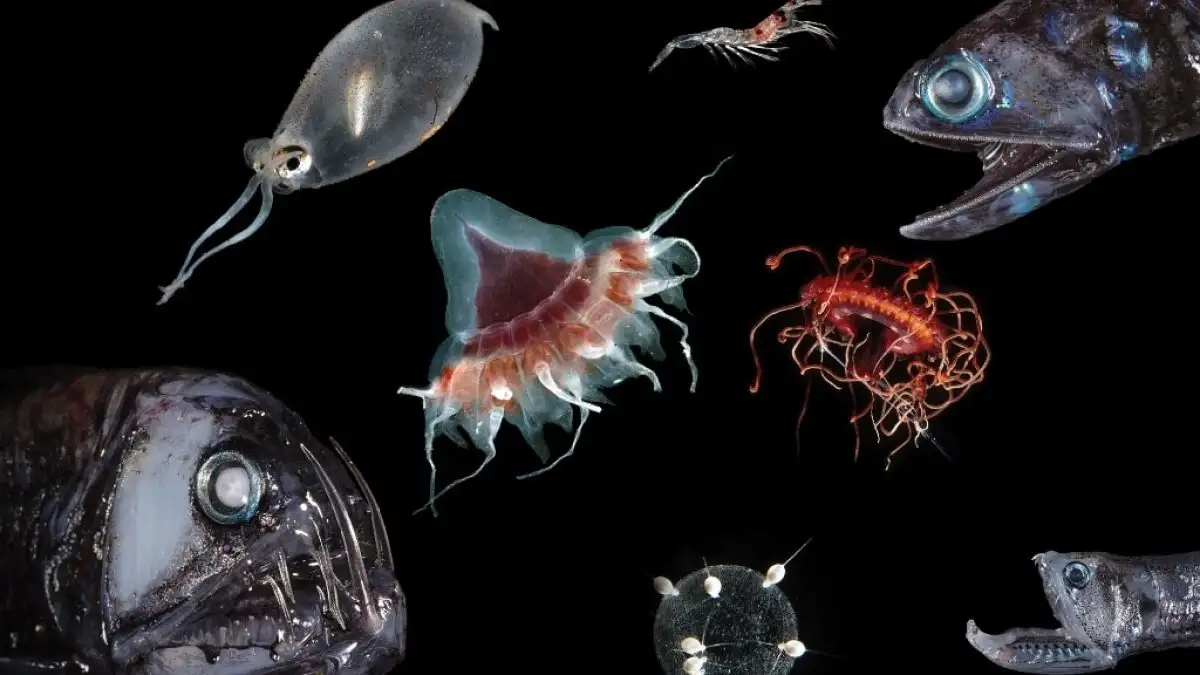
Despite its importance, the twilight zone faces growing challenges from environmental changes and increasing human activity. Rising ocean temperatures, changing conditions, and shifting habitats can affect the delicate relationships between species living throughout this deep underwater environment.
Via Earth
Climate change may alter how sunlight reaches different ocean layers, influencing the timing and behavior of migrating organisms. Temperature changes can also force species to move into new areas, affecting predators, prey, and the wider marine food chain.
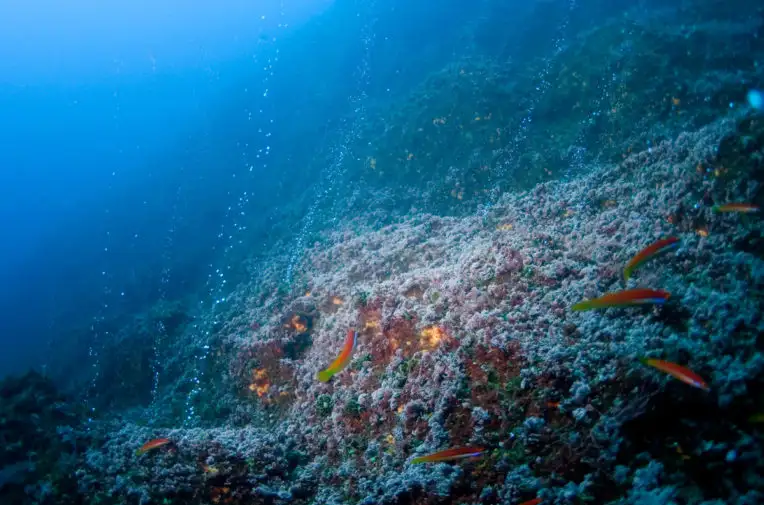
Human interest in deep-sea resources has created additional concerns. Some researchers worry that increased fishing activity in these regions could impact populations that are essential for maintaining ocean health and supporting natural climate processes.
Via Greenpeace
The Future of Understanding the Ocean Twilight Zone
Although scientists have studied ocean migration for many years, the twilight zone still contains countless mysteries waiting to be discovered. Researchers continue investigating how different species behave, how populations change, and how these movements influence the planet's largest ecosystem.
Understanding these tiny ocean creatures has become increasingly important as oceans experience rapid environmental changes. Learning more about their migration patterns and ecological roles can help scientists protect marine environments and make better decisions about ocean management.
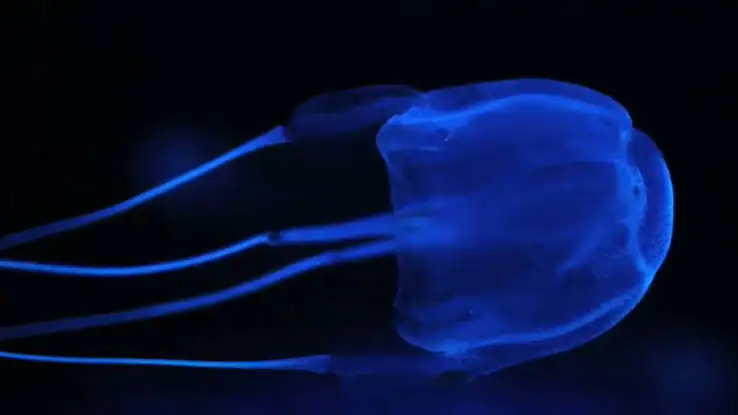
Via Ocean Twilight
The Twilight Zone reveals that even the smallest organisms can have a powerful influence on Earth. Trillions of tiny creatures moving through dark waters every night demonstrate how connected ocean life is and why protecting these hidden ecosystems remains essential for the future of the planet.