Unassigned
The Truth About the Power Struggle in Sudan

Sudan, once the largest country in Africa, is now broken. Since April 2023, a savage civil war has killed more than 150,000 people, driven 12 million from their homes, and pushed half the population toward starvation. In late October 2025, the Rapid Support Forces (RSF) captured el-Fasher, the last major city in Darfur still controlled by the army.
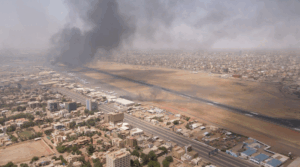 Via International Crisis Group
That victory has raised the terrifying possibility that Sudan could split apart for the second time in less than fifteen years. This 2,000-word guide explains, in plain language, who is fighting, why they are fighting, and what the world is doing almost nothing to stop it.
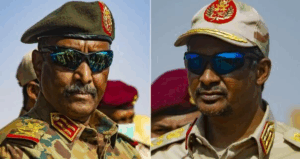 Via Radio Tamazuj
He started as a camel trader in Darfur, became a militia leader, and is now one of the richest and most powerful men in Africa. He is younger, richer, and commands fighters who are often better paid than regular soldiers. Both men helped overthrow dictator Omar al-Bashir in 2019 after huge street protests. For two years, they ruled together, promising to hand power to civilians.
In October 202,1, they changed their minds and staged a new coup. Civilians were pushed aside again. The final argument was simple: who would be in charge if the RSF ever joined the regular army? Neither general trusted the other to give up power. On 15 April 2023, guns started firing in Khartoum. The war had begun.
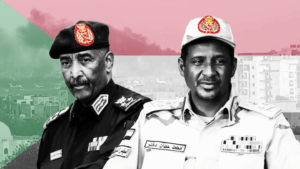 Via Financial Times
 Via The New York Times
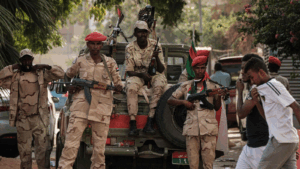
Hemedti turned the RSF into a business empire. His men fought as mercenaries in Yemen (earning money from Saudi Arabia and the UAE) and in Libya. More importantly, he took control of many of Sudan’s gold mines. Gold money bought loyalty, modern weapons, and pickup trucks with machine guns. Today, the RSF is almost as strong as the regular army, and in some places, stronger.
 Via NPR
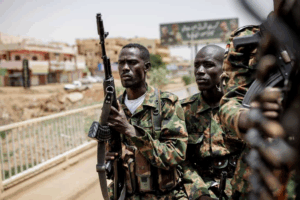
The army also retook almost all of Gezira, a huge agricultural area that feeds much of the country. Port Sudan on the Red Sea coast became the army’s new capital. Planes and ships bring supplies there, safe from RSF attack, most of the time. But the victory in the capital came at a terrible cost. Whole neighbourhoods are burned shells. Hospitals, universities, and markets, almost nothing works. The international airport was a graveyard of destroyed planes until it reopened for a few domestic flights in October 2025.
 Via CNN
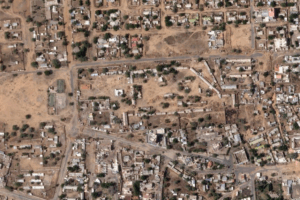
Survivors from West Darfur tell stories that sound like 2003 all over again. Armed men in RSF uniforms go house to house asking for tribe and ethnicity. Men and boys from Masalit, Fur, and Zaghawa communities are shot on the spot. Women and girls are raped. Some attackers shout that they want to “make the land Arab again.”
In January 2025, the United States government looked at the evidence and declared that the RSF and its allied militias are committing genocide against non-Arab communities in Darfur. The RSF calls it “tribal fighting” and says it has no control over local militias. Most experts and survivors disagree.
 Via Human Rights Watch
 Via Unicef
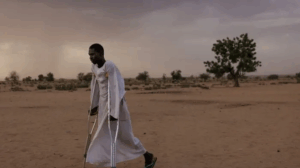
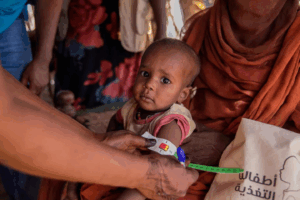
Communities trapped between shifting front lines often survive on leaves, dirty water, or a single meal shared among many. Families walk for days searching for safe ground, only to reach camps that have nothing left to give. With crops destroyed and aid blocked, hunger is not just a consequence of war; it is a deliberate strategy shaping who lives and who suffers.
 Via World Vision
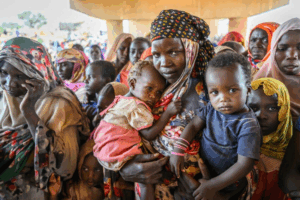
European countries followed. Planes that used to bring food and medicine now sit empty. Peace talks in Saudi Arabia, Bahrain, and Switzerland have all failed. In November 2025, the RSF said yes to a new American ceasefire plan. The army said no, claiming the RSF never respects truces, and they are often right.
 Via Council on Foreign Relations
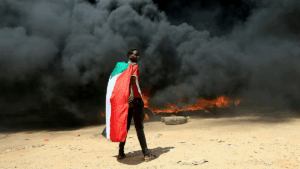
The army receives drones and missiles that experts believe come from Iran, flown in through Port Sudan. Even British-made parts have been found in RSF drones, causing anger in London. The UK government says it has strict rules against selling weapons that could reach Sudan, but lawmakers are demanding a full stop to sales to the UAE until the supply line is proven closed.
 Via The Economist
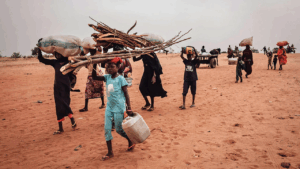
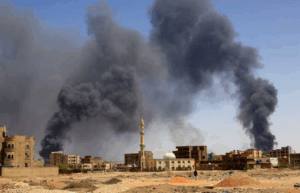
The economy is destroyed. The Sudanese pound has lost almost all value. A teacher’s monthly salary now buys a few kilograms of sugar. Young men have three choices: join the army, join the RSF, or try to escape the country. Thousands have drowned in the Mediterranean trying to reach Europe.
 Via International Crisis Group
If the RSF keeps its new “government” and the army keeps Port Sudan and Khartoum, Sudan could split into two countries: an Arab-dominated west allied with Gulf money and an army-ruled east tied to Egypt and the Red Sea trade. The people who marched for freedom and democracy in 2019 wanted one united Sudan with justice for everyone. Today they are hungry, homeless, and terrified.
Their revolution has turned into one of the worst crises on Earth, and the world has mostly turned its back. The war in Sudan is not complicated. Two greedy generals and their foreign backers are destroying a country while millions pay the price. Until the guns fall silent and food reaches the hungry, the nightmare will continue.
More in Unassigned
Via International Crisis Group
That victory has raised the terrifying possibility that Sudan could split apart for the second time in less than fifteen years. This 2,000-word guide explains, in plain language, who is fighting, why they are fighting, and what the world is doing almost nothing to stop it.
The Two Men Who Control Sudan’s Fate
At the centre of the war are two generals who used to be close partners. General Abdel Fattah al-Burhan is the commander of the Sudanese Armed Forces (SAF) and the man the United Nations still recognises as Sudan’s leader. He is a career soldier who spent decades climbing the ranks of the regular army. General Mohamed Hamdan Dagalo, better known as Hemedti, leads the Rapid Support Forces.
Via Radio Tamazuj
He started as a camel trader in Darfur, became a militia leader, and is now one of the richest and most powerful men in Africa. He is younger, richer, and commands fighters who are often better paid than regular soldiers. Both men helped overthrow dictator Omar al-Bashir in 2019 after huge street protests. For two years, they ruled together, promising to hand power to civilians.
In October 202,1, they changed their minds and staged a new coup. Civilians were pushed aside again. The final argument was simple: who would be in charge if the RSF ever joined the regular army? Neither general trusted the other to give up power. On 15 April 2023, guns started firing in Khartoum. The war had begun.
Via Financial Times
From Janjaweed to Rapid Support Forces
Most RSF fighters come from Arab nomadic tribes in Darfur. Their roots go back to the Janjaweed militias of the early 2000s. Those militias, armed by the government, killed hundreds of thousands of black African farmers and burned thousands of villages. The International Criminal Court later charged Omar al-Bashir with genocide for those crimes. In 2013, Bashir turned the Janjaweed into an official force called the Rapid Support Forces and gave command to Hemedti. The new name was supposed to clean the image, but many of the same fighters stayed.
Via The New York Times
Hemedti turned the RSF into a business empire. His men fought as mercenaries in Yemen (earning money from Saudi Arabia and the UAE) and in Libya. More importantly, he took control of many of Sudan’s gold mines. Gold money bought loyalty, modern weapons, and pickup trucks with machine guns. Today, the RSF is almost as strong as the regular army, and in some places, stronger.
The Army’s Fight Back
For the first year of the week, the RSF looked unstoppable. They seized most of Khartoum, large parts of Darfur, and the central farming state of Gezira. Hundreds of thousands fled. Then, starting in early 2025, the army began to push back. With new weapons and better organisation, SAF soldiers slowly cleared Khartoum street by street. In March 2025, General Burhan walked into the ruined presidential palace and announced, “Khartoum is free.”
Via NPR
The army also retook almost all of Gezira, a huge agricultural area that feeds much of the country. Port Sudan on the Red Sea coast became the army’s new capital. Planes and ships bring supplies there, safe from RSF attack, most of the time. But the victory in the capital came at a terrible cost. Whole neighbourhoods are burned shells. Hospitals, universities, and markets, almost nothing works. The international airport was a graveyard of destroyed planes until it reopened for a few domestic flights in October 2025.
The Fall of el-Fasher and the Fear of Another Genocide
El-Fasher was the last big city in Darfur that the army still held. For eighteen months, the RSF surrounded it, shelled it, and blocked food and medicine. In late October 2025, they broke through. When RSF fighters entered the city, many residents from non-Arab tribes tried to hide or flee. Early reports speak of bodies in the streets, houses looted and burned, and women and girls taken away. The same pattern happened in other Darfur cities that the RSF captured.
Via CNN
Survivors from West Darfur tell stories that sound like 2003 all over again. Armed men in RSF uniforms go house to house asking for tribe and ethnicity. Men and boys from Masalit, Fur, and Zaghawa communities are shot on the spot. Women and girls are raped. Some attackers shout that they want to “make the land Arab again.”
In January 2025, the United States government looked at the evidence and declared that the RSF and its allied militias are committing genocide against non-Arab communities in Darfur. The RSF calls it “tribal fighting” and says it has no control over local militias. Most experts and survivors disagree.
Via Human Rights Watch
Hunger as a Weapon
More than 24 million people, half of Sudan’s population, do not have enough food. Five million are one step away from famine. Both sides have blocked roads, stolen aid, and attacked farmers. Fields in Gezira, once the breadbasket of Sudan, have been burned or abandoned. Markets are empty. A bag of sorghum that cost $10 before the war now costs $150 when you can find it. Aid groups used to run more than 1,400 emergency kitchens. By late 2025, almost 80 % have closed because trucks cannot get through, or money has run out. Children with stick-thin arms and swollen bellies are a common sight in displacement camps. Hunger has become a tool to control entire regions.
Via Unicef
Communities trapped between shifting front lines often survive on leaves, dirty water, or a single meal shared among many. Families walk for days searching for safe ground, only to reach camps that have nothing left to give. With crops destroyed and aid blocked, hunger is not just a consequence of war; it is a deliberate strategy shaping who lives and who suffers.
Why the World Looks Away
Sudan’s war gets almost no attention compared to Ukraine or Gaza. Television cameras are not there. Social media is full of other crises. The head of the World Health Organisation said openly that race plays a part in why African suffering is ignored. Money has dried up, too. When the new U.S. administration took office in 202,5, it cut most humanitarian funding to Sudan.
Via World Vision
European countries followed. Planes that used to bring food and medicine now sit empty. Peace talks in Saudi Arabia, Bahrain, and Switzerland have all failed. In November 2025, the RSF said yes to a new American ceasefire plan. The army said no, claiming the RSF never respects truces, and they are often right.
Where the Weapons Come From
A United Nations arms embargo covers only Darfur, not the rest of Sudan. That loophole is deadly. Investigators have found brand-new weapons made in China, Russia, Turkey, Serbia, Yemen, Iran, and the UAE on both sides. Many RSF weapons arrive by plane at airstrips in Chad or Libya, then travel by truck into Darfur. Gold from RSF mines pays the bills.
Via Council on Foreign Relations
The army receives drones and missiles that experts believe come from Iran, flown in through Port Sudan. Even British-made parts have been found in RSF drones, causing anger in London. The UK government says it has strict rules against selling weapons that could reach Sudan, but lawmakers are demanding a full stop to sales to the UAE until the supply line is proven closed.
A Country on the Edge of Collapse
Sudan’s health system has almost disappeared. Only one in five hospitals is still working. Diseases like cholera and measles are spreading fast in camps. Schools are closed. Twelve million children cannot go to class. Many have not seen a classroom in three years.
Via The Economist
The economy is destroyed. The Sudanese pound has lost almost all value. A teacher’s monthly salary now buys a few kilograms of sugar. Young men have three choices: join the army, join the RSF, or try to escape the country. Thousands have drowned in the Mediterranean trying to reach Europe.
Explore the Real Cause of Sudan's Conflict
The RSF now controls almost all of Darfur and large parts of Kordofan and central Sudan. In November 2025, they announced their own government with Hemedti as president. The army still controls the north, the east, and the capital region. No one knows how long this frozen war can last. Neither side can deliver a knockout blow, but neither will compromise. Every month, the suffering grows worse.
Via International Crisis Group
If the RSF keeps its new “government” and the army keeps Port Sudan and Khartoum, Sudan could split into two countries: an Arab-dominated west allied with Gulf money and an army-ruled east tied to Egypt and the Red Sea trade. The people who marched for freedom and democracy in 2019 wanted one united Sudan with justice for everyone. Today they are hungry, homeless, and terrified.
Their revolution has turned into one of the worst crises on Earth, and the world has mostly turned its back. The war in Sudan is not complicated. Two greedy generals and their foreign backers are destroying a country while millions pay the price. Until the guns fall silent and food reaches the hungry, the nightmare will continue.