Unassigned
Sudan's War and the Two Men Leading It

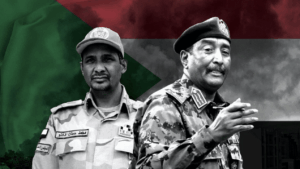
Sudan's civil war has torn the country apart, leaving millions in fear and hunger. At the center of this chaos stand two powerful generals - Abdel Fattah al-Burhan, who leads the Sudanese Armed Forces, and Muhammad Hamdan Dagalo, known as Hemedti, who commands the Rapid Support Forces.
 Via World Vision
These men, once allies, now fight each other in a battle that has killed tens of thousands and displaced over 12 million people. Their rivalry has deep roots in Sudan's history of conflict, where power grabs and old grudges keep the violence going. Understanding their roles helps explain why peace feels so far away, even as the world watches in horror.
 Via Human Rights Watch
A peace deal gave the south some freedom, but it fell apart in 1983 when the government tried to force Islamic rules on everyone. The second civil war lasted until 2005, claiming over two million lives and leading to South Sudan's independence in 2011. Even after that, peace was fragile. In Darfur, a western region the size of France, rebels rose in 2003 against neglect and poverty.
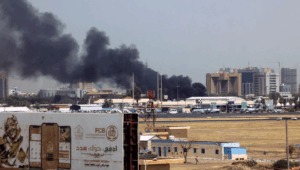
The government hit back hard, arming Arab militias called Janjaweed to crush them. This led to what many call genocide, with over 300,000 dead and millions displaced. The economy suffered too, as farms burned and trade stopped. Oil, which makes up most of Sudan's money, became a curse, fought over by all sides. These old wounds set the stage for today's war, where ethnic hate and resource grabs fuel the fire. Burhan and Hemedti both cut their teeth in these fights, learning to use force to climb the ranks.
 Via The Economist
 Via BBC
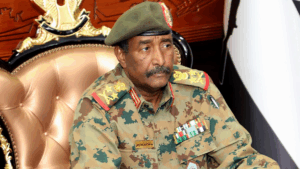
This angered protesters who wanted democracy. Burhan calls himself Sudan's leader, but he controls only parts of the east and center. He relies on a shaky alliance of army officers, Islamists, and tribal groups. Some in his circle block peace talks, fearing loss of influence. Burhan's goal is to wipe out the RSF and rebuild the old system, but his forces have bombed markets and blocked aid, worsening the crisis.
 Via Reuters
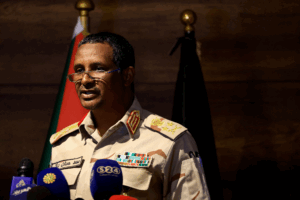
Smart and charming, Hemedti turned a fighter into a businessman. He seized gold mines, making billions from Sudan's shiny exports. By 2013, he formed the Rapid Support Forces, or RSF, a formal paramilitary under Bashir. The RSF grew to 100,000 men, fighting in Yemen for Gulf money and guarding Bashir. When protests toppled Bashir in 2019, Hemedti joined Burhan's council as deputy, playing both sides. He posed as a friend to the poor and non-Arabs, but his forces looted Khartoum in 2019, killing protesters.
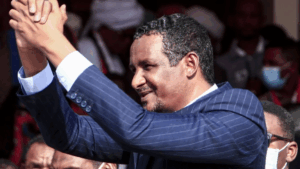
Hemedti dreams of ruling like a king, with the RSF as his private army and gold as his bank. He rejects the old state, pushing for family control over key sectors. Backed by the UAE, he funds his war through smuggling and mines. But his troops are known for rape, murder, and ethnic cleansing, targeting non-Arabs in Darfur. Hemedti's rise shows how warlords turn chaos into cash, but it has left Sudan scarred.
 Via Al Jazeera
 Via HistorySnob
Foreign backers poured in - UAE drones for Hemedti, Egyptian tanks for Burhan. By late 2023, the RSF held most of Darfur and half of Khartoum. The army fought back, retaking the capital in March 2025 after brutal street battles. But the war dragged on, with no winner in sight. Their feud isn't just personal; it's about who owns Sudan's future, from oil fields to gold veins.
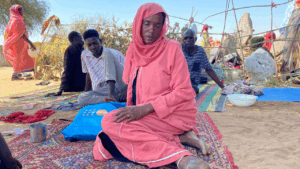 Via France 24
When RSF fighters stormed in, horror followed. They went house to house, pulling out men and boys, shooting them in the streets. Women and girls faced rape in front of their families. Videos, too gruesome to watch, show fighters laughing as they kill.
The El Fasher massacre claimed at least 2,500 lives in days, mostly non-Arabs like the Zaghawa and Fur. Over 62,000 fled to Chad, walking through deserts without water. The UN called it genocide, echoing Darfur's dark past. This victory splits Sudan - RSF rules the west, the army rules the east. It blocks aid routes, trapping more in famine. El Fasher's fall proves the war's cost, whole communities erased for two men's pride.
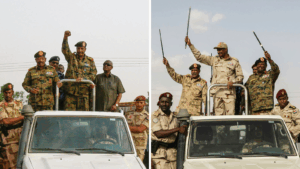 Via The New York Times
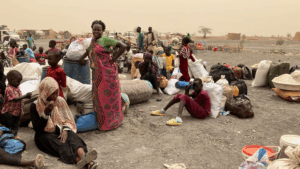 Via ABC News
Aid workers die too; over 100 have been attacked since 2023. These crimes aren't accidents; they're tools to terrorize. Videos of RSF joy in killing match, SAF videos of beheadings. Vengeance feeds the loop - one side's massacre sparks the other's revenge. Civilians pay, hiding in ruins, burying loved ones alone.
 Via Qantara
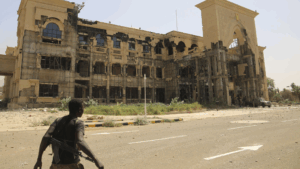
Inflation hits 300%, making bread a luxury. Over five million jobs gone, half in services. Banks freeze; cash shortages mean families can't buy medicine. Oil pipelines, key to revenue, leak from sabotage. Foreign aid, once a lifeline, stalls at borders. The war's cost? Poverty up to 65%, 28 million poor. Kids drop out of school for labor; women sell their bodies for food. Sudan's economy, once hopeful post-Bashir, is a ghost, looted by generals who fight over scraps.
 Via CARE
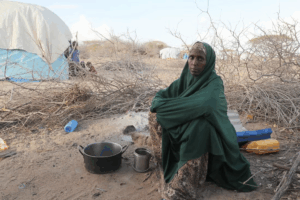
Kids swell from malnutrition, blind from vitamin loss. Health crumbles - 80% of hospitals wrecked, measles kills thousands. Sexual violence scars survivors, with over 8,000 cases reported, but most are hidden in shame. Education halts; 19 million kids out of class, easy recruits for militias. Mental wounds fester - trauma, suicide, endless grief. Families split, elders alone, youth radicalized. Sudan's people, resilient storytellers of old, now whisper survival tales in the dark.
 Via CNN
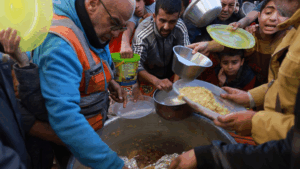
This proxy mess blocks peace. Sanctions hit leaders, but weapons flow via Libya. The US pushes truces, but allies like the UAE drag their feet. Refugees flood neighbors, sparking border fights. Sudan's pain becomes a global game, where big powers play while small lives are broken.
 Via Princeton Political Review
Yet, in their shadows, hope flickers. Youth chant for freedom; elders recall peace pacts. Sudan's soul, diverse, enduring, rejects endless war. If generals yield, a new dawn waits. But until then, the two men fuel flames that burn all.
More in Unassigned
Via World Vision
These men, once allies, now fight each other in a battle that has killed tens of thousands and displaced over 12 million people. Their rivalry has deep roots in Sudan's history of conflict, where power grabs and old grudges keep the violence going. Understanding their roles helps explain why peace feels so far away, even as the world watches in horror.
The Roots of Sudan’s Endless Strife
Sudan's troubles go back decades, long before Burhan and Hemedti took center stage. The country gained independence in 1956, but from the start, divisions between the Arab-Muslim north and the Christian-animist south sparked two major civil wars. The first ran from 1955 to 1972, killing hundreds of thousands over issues like land rights and religious laws.
Via Human Rights Watch
A peace deal gave the south some freedom, but it fell apart in 1983 when the government tried to force Islamic rules on everyone. The second civil war lasted until 2005, claiming over two million lives and leading to South Sudan's independence in 2011. Even after that, peace was fragile. In Darfur, a western region the size of France, rebels rose in 2003 against neglect and poverty.
The government hit back hard, arming Arab militias called Janjaweed to crush them. This led to what many call genocide, with over 300,000 dead and millions displaced. The economy suffered too, as farms burned and trade stopped. Oil, which makes up most of Sudan's money, became a curse, fought over by all sides. These old wounds set the stage for today's war, where ethnic hate and resource grabs fuel the fire. Burhan and Hemedti both cut their teeth in these fights, learning to use force to climb the ranks.
Via The Economist
Who is General Abdel Fattah al-Burhan?
Abdel Fattah al-Burhan was born in 1960 in a village north of Khartoum, Sudan's capital. He grew up in a Sufi Muslim family and joined the army young, training in Sudan, Jordan, and Egypt. By the early 2000s, he was a key officer in Darfur, leading troops against rebels. His unit worked with Janjaweed militias, accused of burning villages and killing civilians. Burhan rose fast, becoming a general and serving in Yemen's war from 2015, where Sudanese soldiers fought for Saudi Arabia against rebels. In 2019, massive protests ended Omar al-Bashir's 30-year rule. Burhan, then the army's inspector general, helped oust him and led the Transitional Military Council. He promised quick elections but clung to power. In 2021, he staged a coup, dissolving a shared government with civilians and arresting the prime minister.
Via BBC
This angered protesters who wanted democracy. Burhan calls himself Sudan's leader, but he controls only parts of the east and center. He relies on a shaky alliance of army officers, Islamists, and tribal groups. Some in his circle block peace talks, fearing loss of influence. Burhan's goal is to wipe out the RSF and rebuild the old system, but his forces have bombed markets and blocked aid, worsening the crisis.
Who Is Muhammad Hamdan Dagalo, Known as Hemedti?
Hemedti's story starts in the dusty plains of Darfur, where he was born around 1974 to a camel-trading Arab family from the Rizeigat tribe. He dropped out of school early and herded camels across borders to Libya and Chad. In the 1990s, violence hit his trade routes, killing relatives. This pushed him into the Janjaweed, brutal militias backed by the government to fight Darfur rebels. Hemedti led attacks that razed villages, earning the nickname "Butcher of Darfur" after a 2004 raid killed over 100, including children.
Via Reuters
Smart and charming, Hemedti turned a fighter into a businessman. He seized gold mines, making billions from Sudan's shiny exports. By 2013, he formed the Rapid Support Forces, or RSF, a formal paramilitary under Bashir. The RSF grew to 100,000 men, fighting in Yemen for Gulf money and guarding Bashir. When protests toppled Bashir in 2019, Hemedti joined Burhan's council as deputy, playing both sides. He posed as a friend to the poor and non-Arabs, but his forces looted Khartoum in 2019, killing protesters.
Hemedti dreams of ruling like a king, with the RSF as his private army and gold as his bank. He rejects the old state, pushing for family control over key sectors. Backed by the UAE, he funds his war through smuggling and mines. But his troops are known for rape, murder, and ethnic cleansing, targeting non-Arabs in Darfur. Hemedti's rise shows how warlords turn chaos into cash, but it has left Sudan scarred.
Via Al Jazeera
The Spark - From Allies to Enemies
Burhan and Hemedti were once a team. After Bashir's fall, they shared power in the Sovereign Council, promising civilians a say. But cracks showed fast. The 2019 deal called for the army to hand over control by 2022, but Burhan's 2021 coup kept soldiers in charge. Hemedti, eyeing more power, resisted merging his RSF into the regular army. Fights over who got what jobs boiled over. Tensions peaked in April 2023. The RSF seized army bases in Khartoum, claiming Burhan planned to sideline them. Gunfire echoed through the capital, turning allies into foes. What started as a power grab spread nationwide. Both sides shelled cities, looted homes, and recruited kids.
Via HistorySnob
Foreign backers poured in - UAE drones for Hemedti, Egyptian tanks for Burhan. By late 2023, the RSF held most of Darfur and half of Khartoum. The army fought back, retaking the capital in March 2025 after brutal street battles. But the war dragged on, with no winner in sight. Their feud isn't just personal; it's about who owns Sudan's future, from oil fields to gold veins.
The Fall of El Fasher - A Turning Point in Blood
El Fasher, the last army holdout in Darfur, fell to the RSF on October 26, 2025, after an 18-month siege. This dusty city of 250,000 was a lifeline for refugees, with camps swollen from past wars. For months, RSF drones bombed hospitals and markets, while army shells rained down. Food ran out; kids starved as prices soared.
Via France 24
When RSF fighters stormed in, horror followed. They went house to house, pulling out men and boys, shooting them in the streets. Women and girls faced rape in front of their families. Videos, too gruesome to watch, show fighters laughing as they kill.
The El Fasher massacre claimed at least 2,500 lives in days, mostly non-Arabs like the Zaghawa and Fur. Over 62,000 fled to Chad, walking through deserts without water. The UN called it genocide, echoing Darfur's dark past. This victory splits Sudan - RSF rules the west, the army rules the east. It blocks aid routes, trapping more in famine. El Fasher's fall proves the war's cost, whole communities erased for two men's pride.
Via The New York Times
Atrocities on Both Sides - A Cycle of Vengeance
War in Sudan spares no one. Both Burhan's army and Hemedti's RSF commit horrors that break international law. The RSF leads in brutality, especially in Darfur. Their "combing operations" mean door-to-door killings, often by ethnicity. In El Geneina, they slaughtered thousands of Masalit, burning bodies in mass graves. Rape is a weapon - girls as young as nine are assaulted, forced into slavery. Looting empties homes; gold mines fund more guns. The army isn't innocent. SAF airstrikes hit crowded markets, killing hundreds in Omdurman. They block UN trucks, starving rebel areas. Islamists in their ranks torture suspects, using electricity on prisoners. Both recruit children, some as young as 10, to carry bombs.
Via ABC News
Aid workers die too; over 100 have been attacked since 2023. These crimes aren't accidents; they're tools to terrorize. Videos of RSF joy in killing match, SAF videos of beheadings. Vengeance feeds the loop - one side's massacre sparks the other's revenge. Civilians pay, hiding in ruins, burying loved ones alone.
A Shattered Economy - From Breadbasket to Ruins
Before the war, Sudan was Africa's third-biggest gold producer, with oil and farms feeding millions. Now, it's collapsed. Fighting has shrunk GDP by 48%, a $15 billion hole. Factories in Khartoum lie bombed; farms in Gezira, the breadbasket, sit idle as irrigation canals dry. Gold smuggling thrives, Hemedti's RSF controls mines, exporting billions while locals starve.
Via Qantara
Inflation hits 300%, making bread a luxury. Over five million jobs gone, half in services. Banks freeze; cash shortages mean families can't buy medicine. Oil pipelines, key to revenue, leak from sabotage. Foreign aid, once a lifeline, stalls at borders. The war's cost? Poverty up to 65%, 28 million poor. Kids drop out of school for labor; women sell their bodies for food. Sudan's economy, once hopeful post-Bashir, is a ghost, looted by generals who fight over scraps.
The Human Toll - Hunger, Disease, and Despair
No number captures Sudan's pain, but they try. Over 150,000 dead, many civilians in crossfire. Twelve million displaced, the world's biggest crisis. Half flee inside Sudan, cramming into camps like Zamzam, where cholera spreads in mud. The other half crosses to Chad or Ethiopia, straining weak neighbors. Famine grips Darfur; 25 million face hunger, eight million in emergency.
Via CARE
Kids swell from malnutrition, blind from vitamin loss. Health crumbles - 80% of hospitals wrecked, measles kills thousands. Sexual violence scars survivors, with over 8,000 cases reported, but most are hidden in shame. Education halts; 19 million kids out of class, easy recruits for militias. Mental wounds fester - trauma, suicide, endless grief. Families split, elders alone, youth radicalized. Sudan's people, resilient storytellers of old, now whisper survival tales in the dark.
Foreign Hands in the Fire - Meddlers and Money
Sudan's war isn't just local; outsiders fan the flames. The UAE arms Hemedti's RSF with drones from China, eyeing gold and ports. Egypt backs Burhan, fearing Nile water loss if chaos spreads. Saudi Arabia and Qatar fund both, hedging bets. Russia, via Wagner, grabs gold for guns; Iran sends drones to the army. Turkey mediates but sells arms too.
Via CNN
This proxy mess blocks peace. Sanctions hit leaders, but weapons flow via Libya. The US pushes truces, but allies like the UAE drag their feet. Refugees flood neighbors, sparking border fights. Sudan's pain becomes a global game, where big powers play while small lives are broken.
Explore the Two Men Behind Sudan's Civil War
Burhan and Hemedti embody Sudan's curse - men shaped by war, blind to its end. Burhan, the stern officer, clings to army pride, ignoring civilian cries. Hemedti, the slick trader, builds an empire on blood, charming the world while his men rape. Their fight splits Sudan, dooming generations to trauma.
Via Princeton Political Review
Yet, in their shadows, hope flickers. Youth chant for freedom; elders recall peace pacts. Sudan's soul, diverse, enduring, rejects endless war. If generals yield, a new dawn waits. But until then, the two men fuel flames that burn all.