Unassigned
Rare Fossil Shows Megalodon Biting Whale Bone

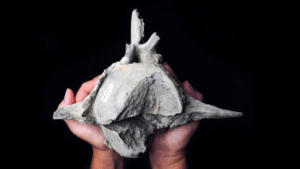
In 2008, scientists made an amazing find in Venezuela. They dug up a fossil from the Paraguaná Formation that showed a huge megalodon tooth stuck right into a whale's lower back bone. This bone, called a lumbar vertebra, belonged to an ancient whale from about four to five million years ago. The tooth was from a megalodon, a giant shark that ruled the seas back then.
 Via Popular Science
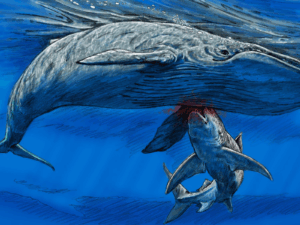
This discovery gave experts a rare look at how these massive sharks hunted and attacked their prey. It was like finding a snapshot frozen in time of a fierce ocean battle. The tooth was lodged deep, showing the power behind the shark's bite. Researchers think the shark went after the whale, bit it hard, and left the tooth behind during the fight.
This find helps you understand the food chain in ancient oceans, where big predators like megalodons fed on large marine animals. The site in Venezuela is known for its rich fossils from the Pliocene era, a time when the Earth was warmer and seas were full of life. The team that found it included paleontologists who study old bones and teeth. They carefully removed the fossil to keep it intact.
 Via Live Science
This piece is a key example of predator-prey interactions from millions of years ago. It shows that megalodons didn't just scavenge dead animals; they actively hunted live ones, even big whales. This evidence changes how you think about these sharks, painting them as bold attackers rather than just opportunistic eaters.
 Via National History Museum
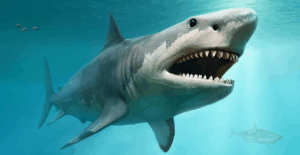
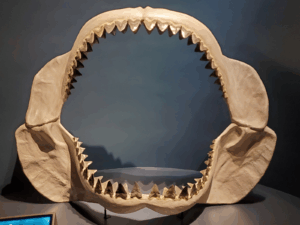
Megalodons could grow up to 60 feet long, which is about the length of a school bus. They weighed as much as 50 to 100 tons, making them heavier than many modern whales. These sharks had a body like today's great white sharks, but much larger. Their jaws could open wide enough to swallow a car.
Megalodons swam in warm, shallow seas around the world. Fossils of their teeth have been found on every continent except Antarctica. They were top predators, meaning nothing hunted them except maybe other megalodons. Their size and strength let them rule the ocean food web.
 Via Wikipedia
Young megalodons might have lived in safer coastal areas, while adults ventured into deeper waters. People know about them mostly from teeth and a few vertebrae because shark skeletons are made of cartilage, which doesn't fossilize well. This makes finds like the one in 2008 even more special, as they give clues about their behavior.
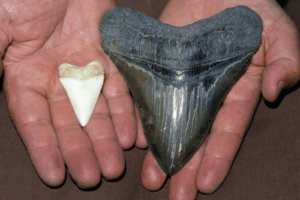 Via Britannica
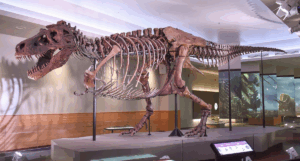
Scientists estimate that a megalodon's bite force was over 40,000 pounds per square inch. That's stronger than a T. rex's bite and way more than a great white shark's. These teeth grew in rows, with new ones replacing old ones that fell out. A single megalodon might have gone through thousands of teeth in its lifetime. The serrations helped grip slippery prey and tear chunks off.
In the 2008 fossil, the tooth was embedded at an angle, suggesting a powerful chomp that snapped it off. This shows how forceful their attacks were. Teeth like these have been found with bite marks on other fossils, proving megalodons crushed bones easily. Their design made them ideal for hunting large animals, turning the ocean into a dangerous place for whales.
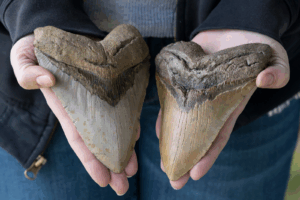 Via Natural History Curiosities
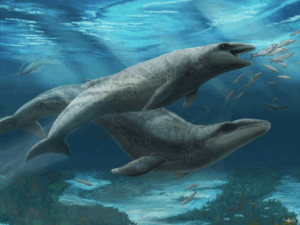 Via Live Science
Ancient whales migrated long distances, just like today, which might have brought them into megalodon territories. Other fossils show whale bones with multiple bite marks, indicating sharks sometimes scavenged dead whales, too. But the embedded tooth points to a live attack, where the whale tried to fight back or escape.
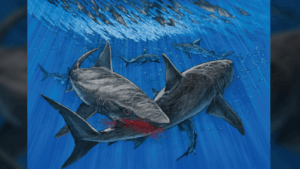 Via Live Science
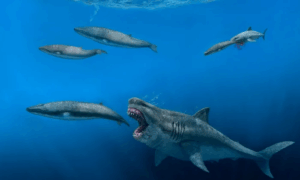
In the case of the 2008 fossil, the shark probably bit into the whale's spine. The force was so great that the tooth got stuck and broke off as the whale thrashed. The whale might have been injured but not killed right away, swimming away with the tooth lodged in its bone. Over time, the wound could have started to heal, but infection or weakness might have led to its death.
Researchers think the carcass then floated, attracting scavengers, before sinking to the bottom, where it fossilized. This scene, pieced together from the fossil, shows the brutal side of nature. The tooth's position shows that the shark attacked from an angle, perhaps to avoid the whale's tail flukes.
 Via The Guardian
 Via The Wire Science
This fossil supports theories that megalodons targeted vital areas to bring down prey quickly. It also shows that whales evolved defenses, like thicker skins or group living, in response to such predators. Overall, it adds to the knowledge of evolution and how species adapted over time.
 Via New Scientist
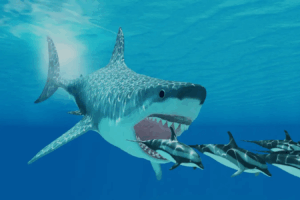
Modern sharks hunt seals and fish, but megalodons went after whales, which required bigger jaws. The embedded tooth fossil highlights this difference; no modern shark tooth has been found stuck in a large whale bone like that. Great whites sometimes lose teeth in prey, but they don't crush vertebrae the same way. This comparison shows how oceans have changed.
 Via EurekAlert!
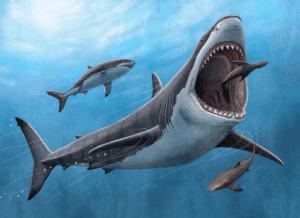
Competition from smaller, faster sharks might have hurt them, too. Orcas, which hunt in packs, could have challenged young megalodons. The giant size that helped them hunt also meant they needed lots of food, so shortages would hit hard. Fossils like the 2008 one show they were thriving before, making their end sudden. Today, you see echoes in how climate affects marine life, reminding people to care for oceans.
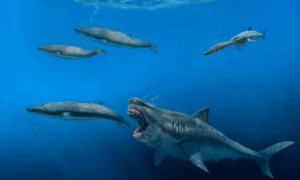 Via The Guardian
The 2008 fossil-inspired stories, but it's grounded in science. Another fact: baby megalodons were born live and were already 6 feet long. Myths say they ate dinosaurs, but dinosaurs were gone long before. These facts make megalodons fascinating without the hype.
The megalodon tooth in the whale vertebra tells a story of power and survival. It reminds you of the ocean's wild past and how life adapts. This discovery connects you to prehistoric times, showing nature's cycles. As people learn more, they appreciate the balance in today's seas.
More in Unassigned
Via Popular Science
This discovery gave experts a rare look at how these massive sharks hunted and attacked their prey. It was like finding a snapshot frozen in time of a fierce ocean battle. The tooth was lodged deep, showing the power behind the shark's bite. Researchers think the shark went after the whale, bit it hard, and left the tooth behind during the fight.
This find helps you understand the food chain in ancient oceans, where big predators like megalodons fed on large marine animals. The site in Venezuela is known for its rich fossils from the Pliocene era, a time when the Earth was warmer and seas were full of life. The team that found it included paleontologists who study old bones and teeth. They carefully removed the fossil to keep it intact.
Via Live Science
This piece is a key example of predator-prey interactions from millions of years ago. It shows that megalodons didn't just scavenge dead animals; they actively hunted live ones, even big whales. This evidence changes how you think about these sharks, painting them as bold attackers rather than just opportunistic eaters.
What Was the Megalodon?
The megalodon was one of the biggest sharks that ever swam in the oceans. Its name means "big tooth," which fits because its teeth were huge. Scientists believe it lived from about 23 million years ago to around 3.6 million years ago. That's during the Miocene and Pliocene epochs, when the world looked different from today.
Via National History Museum
Megalodons could grow up to 60 feet long, which is about the length of a school bus. They weighed as much as 50 to 100 tons, making them heavier than many modern whales. These sharks had a body like today's great white sharks, but much larger. Their jaws could open wide enough to swallow a car.
Megalodons swam in warm, shallow seas around the world. Fossils of their teeth have been found on every continent except Antarctica. They were top predators, meaning nothing hunted them except maybe other megalodons. Their size and strength let them rule the ocean food web.
Via Wikipedia
Young megalodons might have lived in safer coastal areas, while adults ventured into deeper waters. People know about them mostly from teeth and a few vertebrae because shark skeletons are made of cartilage, which doesn't fossilize well. This makes finds like the one in 2008 even more special, as they give clues about their behavior.
The Power of Megalodon Teeth
Megalodon teeth were built for destruction. Each one could be up to seven inches long, bigger than a human hand. They had sharp, serrated edges like a steak knife, perfect for slicing through flesh and bone. The tooth found in the whale vertebra was several inches long and showed these features clearly.
Via Britannica
Scientists estimate that a megalodon's bite force was over 40,000 pounds per square inch. That's stronger than a T. rex's bite and way more than a great white shark's. These teeth grew in rows, with new ones replacing old ones that fell out. A single megalodon might have gone through thousands of teeth in its lifetime. The serrations helped grip slippery prey and tear chunks off.
In the 2008 fossil, the tooth was embedded at an angle, suggesting a powerful chomp that snapped it off. This shows how forceful their attacks were. Teeth like these have been found with bite marks on other fossils, proving megalodons crushed bones easily. Their design made them ideal for hunting large animals, turning the ocean into a dangerous place for whales.
Via Natural History Curiosities
Ancient Whales - The Unlucky Prey
During the time of megalodons, whales were evolving into the giants you know today. The whale in the 2008 discovery was likely a mysticete, an early baleen whale that filtered food from water. These whales could be 30 to 50 feet long, but still smaller than some modern ones. They swam in groups for safety, but a lone whale might have been an easy target. Fossils show that whales back then had thicker bones to support their weight in water. Whales were a prime meal for megalodons because they were big and full of blubber, which is high in energy. The vertebra in the find had signs of damage around the tooth, like cracks from the impact. This suggests the shark aimed for the back to disable the whale.
Via Live Science
Ancient whales migrated long distances, just like today, which might have brought them into megalodon territories. Other fossils show whale bones with multiple bite marks, indicating sharks sometimes scavenged dead whales, too. But the embedded tooth points to a live attack, where the whale tried to fight back or escape.
How the Attack Might Have Unfolded
Imagine a sunny day millions of years ago in the Caribbean Sea. A whale is swimming peacefully, maybe looking for krill to eat. Suddenly, from below, a massive shadow rises. The megalodon, with its keen senses, detects the whale's movements. Sharks like this could smell blood from miles away and feel vibrations in the water. It charges up, jaws open wide, aiming for the whale's side or back.
Via Live Science
In the case of the 2008 fossil, the shark probably bit into the whale's spine. The force was so great that the tooth got stuck and broke off as the whale thrashed. The whale might have been injured but not killed right away, swimming away with the tooth lodged in its bone. Over time, the wound could have started to heal, but infection or weakness might have led to its death.
Researchers think the carcass then floated, attracting scavengers, before sinking to the bottom, where it fossilized. This scene, pieced together from the fossil, shows the brutal side of nature. The tooth's position shows that the shark attacked from an angle, perhaps to avoid the whale's tail flukes.
Via The Guardian
Why This Fossil Matters to Science
This 2008 discovery is a big deal for paleontologists, people who study ancient life. It gives direct proof of how megalodons interacted with whales. Before this, most evidence was just bite marks or scattered teeth. An embedded tooth is rare because it shows the exact moment of contact. It helps scientists model ancient ecosystems, like who ate whom. This find also dates to the Pliocene, filling gaps in the fossil record for that region. Studying it, experts used scans to see inside the bone without breaking it. They learned about the shark's hunting style, which was ambush-based like modern great whites.
Via The Wire Science
This fossil supports theories that megalodons targeted vital areas to bring down prey quickly. It also shows that whales evolved defenses, like thicker skins or group living, in response to such predators. Overall, it adds to the knowledge of evolution and how species adapted over time.
Megalodon vs. Modern Sharks
Today's great white sharks are like mini versions of megalodons. Great whites grow to about 20 feet, while megalodons were three times that. Both have similar body shapes and teeth, but megalodons had more power. A great white's bite is strong, but nothing like the ancient giant's.
Via New Scientist
Modern sharks hunt seals and fish, but megalodons went after whales, which required bigger jaws. The embedded tooth fossil highlights this difference; no modern shark tooth has been found stuck in a large whale bone like that. Great whites sometimes lose teeth in prey, but they don't crush vertebrae the same way. This comparison shows how oceans have changed.
The Mystery of Megalodon's Extinction
Megalodons vanished about 3.6 million years ago, at the end of the Pliocene. Scientists think climate change played a role. The Earth cooled, and sea levels dropped, shrinking warm shallow habitats. Food sources like whales migrated to colder waters, where megalodons couldn't follow easily.
Via EurekAlert!
Competition from smaller, faster sharks might have hurt them, too. Orcas, which hunt in packs, could have challenged young megalodons. The giant size that helped them hunt also meant they needed lots of food, so shortages would hit hard. Fossils like the 2008 one show they were thriving before, making their end sudden. Today, you see echoes in how climate affects marine life, reminding people to care for oceans.
Explore the Megalodon vs. Whale Attack Fossil
Many myths surround megalodons. Some people think they still exist in deep seas, but no evidence supports that. Movies show them as monsters, but they were real animals. A fun fact: one megalodon jaw could fit several people inside. Their teeth are collected worldwide, some as big as dinner plates.
Via The Guardian
The 2008 fossil-inspired stories, but it's grounded in science. Another fact: baby megalodons were born live and were already 6 feet long. Myths say they ate dinosaurs, but dinosaurs were gone long before. These facts make megalodons fascinating without the hype.
The megalodon tooth in the whale vertebra tells a story of power and survival. It reminds you of the ocean's wild past and how life adapts. This discovery connects you to prehistoric times, showing nature's cycles. As people learn more, they appreciate the balance in today's seas.