Unassigned
How Tsunamis Make Japan a High-Risk Nation

On the first day of 2024, while people around the world were cheering for the new year, Japan faced a scary disaster. A strong earthquake with a magnitude of 7.6 shook the country. It happened in the western part, and it caused a lot of damage. Buildings fell down, fires started in some places, and power went out for thousands of homes. Sadly, dozens of people lost their lives. But this wasn't just one quake. More than 155 earthquakes hit Japan in just one day, some small and some bigger.
 Via National Geographic
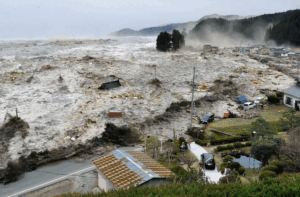
Along with the shaking, waves from the sea, about one meter high, crashed onto the west coast. Japan's weather experts warned about a big tsunami, but later they said it wasn't as bad as feared. Still, the earthquake left a mess behind. This event made people wonder two big things: Why does Japan get so many earthquakes and tsunamis? And how does the country handle them so well that not as many people die compared to other places?
 Via Smithsonian Magazine
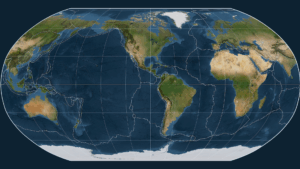
This heat creates moving currents, kind of like boiling water in a pot, and these currents make the plates shift slowly over time. They move just a few centimeters each year, but that's enough to cause trouble when they bump into each other. When plates collide or slide past one another, the ground shakes, and that's an earthquake.
Countries sitting right where these plates meet are the ones that feel the most quakes. Japan is in a tough spot because it's where four big plates come together: the Pacific Plate, the Philippine Plate, the Eurasian Plate, and the North American Plate. That's like being at a busy intersection where accidents happen often.
 Via Live Science
 Via NIWA
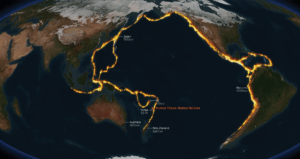
Imagine the Ring of Fire like a belt of danger wrapping around the ocean, and Japan is right in the middle of it. Other countries on plate edges, like Nepal near the Himalayas, where the Indian and Eurasian plates meet, also get bad quakes. But places in the center of plates, such as most of Australia or Russia, hardly ever feel strong ones because they're away from the action.
 Via Nature
The worst earthquakes usually come from convergent or transform boundaries because of the huge forces involved. Around Japan, the Pacific Plate creates a special kind of convergent boundary called a subduction zone. Here, one plate dives deep under another, sinking into the hot mantle below. This diving action creates deep trenches in the ocean floor.
These trenches are like giant ditches underwater, much deeper than the rest of the sea. They can be 3 to 4 kilometers deeper than nearby areas. The deepest spot on Earth, the Mariana Trench, is 10.9 kilometers down, and it's part of this system. Close to Japan, there's the Japan Trench, which is 8.4 kilometers deep. Because Japan is so near these trenches, earthquakes here can quickly turn into tsunamis.
 Via National Geographic
 Via Britannica
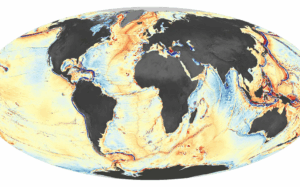
Japan gets more tsunamis than most places because of its location. Look at a map of ocean depths. The water around most countries is shallow near the shore, shown in light colors. But near Japan's east side, it's dark blue, meaning very deep, right up to the coast. This setup makes tsunamis faster and more powerful when they arrive. Other countries might have shallower seas that slow down waves, giving more warning time.
 Via ABC News
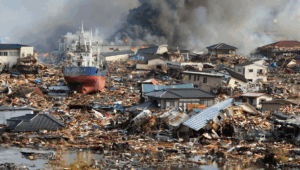
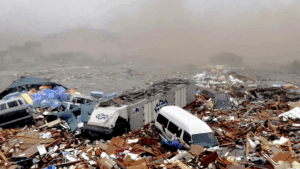
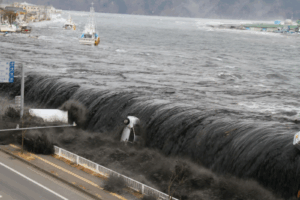
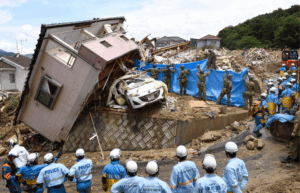
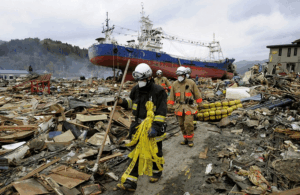
The quake triggered a tsunami with waves up to 40 meters high in some spots. It flooded towns, destroyed homes, and caused a nuclear accident at Fukushima. There, the waves damaged reactors, leading to leaks of harmful radiation that spread into the ocean. About 20,000 people died or went missing in that disaster. It was a wake-up call for Japan.
Before that, there was the 1995 Kobe earthquake, which killed over 6,000 people and showed that even modern buildings could fail if not built right. These events teach Japan lessons each time, helping it improve safety. Even the 2024 quake on the Noto Peninsula, a land area sticking out into the Sea of Japan, reminded everyone of the risks. The epicenter was under the sea, about 500 kilometers from Tokyo, but the shakes were felt even there.
 Via Nature
 Via BBC
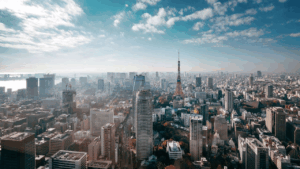
This lets the building sway on its own, staying steady even if the earth moves. A great example is the Tokyo Skytree, a tall tower that uses this tech. During the 2011 quake, it didn't get damaged at all. These rules mean that in Japan, a 7.6 quake might kill fewer than 100 people, while in other countries, it could kill thousands. They test buildings with giant shake tables that mimic quakes, ensuring everything works.
 Via The Independent
These are costly but can save lives. In high-risk areas with lots of people, they construct evacuation towers, tall structures where folks can climb to safety quickly since tsunamis give little warning. These towers are built on high ground and can hold many people. Japan has top-notch warning systems, too. Sensors in the ocean detect quakes and send alerts to phones and TVs in seconds.
They do regular drills, so everyone knows to head to high ground or towers when sirens sound. Along the coast, which is 22,000 miles long, about 40% has sea walls, huge concrete barriers to stop waves. But they're not perfect. In 2011, some walls were too short, and waves went over them. After that, Japan made the walls taller and stronger.
 Via Telengana Today
 Via Fortune
The government invests in science, with experts studying plates and predicting risks. While no one can stop nature, Japan shows how smart building and quick action can save lives. The 2024 event was bad, but it could have been worse without all this prep. Japan isn't just surviving; it's leading the way in disaster readiness. If another big one comes, they'll be ready, turning danger into a story of resilience.
More in Unassigned
Via National Geographic
Along with the shaking, waves from the sea, about one meter high, crashed onto the west coast. Japan's weather experts warned about a big tsunami, but later they said it wasn't as bad as feared. Still, the earthquake left a mess behind. This event made people wonder two big things: Why does Japan get so many earthquakes and tsunamis? And how does the country handle them so well that not as many people die compared to other places?
Understanding Earth's Tectonic Plates
To know why Japan has so many earthquakes, you need to look at how the Earth is built. The outer layer of the planet is like a giant puzzle made of big pieces called tectonic plates. There are about 16 main ones. These plates are made from the Earth's crust and the top part of the mantle below it. Deep inside the Earth, in the core, there's a lot of heat.
Via Smithsonian Magazine
This heat creates moving currents, kind of like boiling water in a pot, and these currents make the plates shift slowly over time. They move just a few centimeters each year, but that's enough to cause trouble when they bump into each other. When plates collide or slide past one another, the ground shakes, and that's an earthquake.
Countries sitting right where these plates meet are the ones that feel the most quakes. Japan is in a tough spot because it's where four big plates come together: the Pacific Plate, the Philippine Plate, the Eurasian Plate, and the North American Plate. That's like being at a busy intersection where accidents happen often.
Via Live Science
The Pacific Ring of Fire
One plate stands out as extra active, the Pacific Plate. Its edges are so busy with movement that scientists call the area around it the Pacific Ring of Fire. This ring is a huge circle that goes around the Pacific Ocean, touching places like Japan, Indonesia, and parts of the Americas. It's famous for having the most earthquakes on Earth; about 90% of all quakes happen here. Not only that, but 75% of the world's active volcanoes are in this ring too. Volcanoes form when plates push against each other, letting hot rock from below come up. For Japan, being on this ring means constant risk. The plates don't just cause shaking; they can also trigger tsunamis when the movement happens under the ocean.
Via NIWA
Imagine the Ring of Fire like a belt of danger wrapping around the ocean, and Japan is right in the middle of it. Other countries on plate edges, like Nepal near the Himalayas, where the Indian and Eurasian plates meet, also get bad quakes. But places in the center of plates, such as most of Australia or Russia, hardly ever feel strong ones because they're away from the action.
Different Ways Plates Collide
Not all plate meetings are the same. There are a few types of boundaries where plates interact. One is called a convergent boundary, where two plates smash into each other, and one slides under the other. This can make mountains or deep ocean holes. Another is divergent, where plates pull apart, letting new land form in between. Then there's transform, where plates slide sideways past each other, like rubbing your hands together.
Via Nature
The worst earthquakes usually come from convergent or transform boundaries because of the huge forces involved. Around Japan, the Pacific Plate creates a special kind of convergent boundary called a subduction zone. Here, one plate dives deep under another, sinking into the hot mantle below. This diving action creates deep trenches in the ocean floor.
These trenches are like giant ditches underwater, much deeper than the rest of the sea. They can be 3 to 4 kilometers deeper than nearby areas. The deepest spot on Earth, the Mariana Trench, is 10.9 kilometers down, and it's part of this system. Close to Japan, there's the Japan Trench, which is 8.4 kilometers deep. Because Japan is so near these trenches, earthquakes here can quickly turn into tsunamis.
Via National Geographic
Why Tsunamis Hit Japan Hard
Tsunamis are giant waves caused by underwater earthquakes or volcanoes. When plates move suddenly under the sea, they push the water up, creating waves that race across the ocean. These waves can be small in deep water but grow huge when they reach shallow coasts. Japan is extra vulnerable because its coastline is close to the Japan Trench and the Ring of Fire. The deep sea near Japan means that when an earthquake happens, the waves don't have far to travel before hitting land. This gives people less time to escape. In fact, the word "tsunami" comes from Japanese words: "tsu" for harbor and "nami" for wave. It means "harbor wave" because these waves often flood ports.
Via Britannica
Japan gets more tsunamis than most places because of its location. Look at a map of ocean depths. The water around most countries is shallow near the shore, shown in light colors. But near Japan's east side, it's dark blue, meaning very deep, right up to the coast. This setup makes tsunamis faster and more powerful when they arrive. Other countries might have shallower seas that slow down waves, giving more warning time.
A History of Disasters in Japan
Japan has faced earthquakes and tsunamis for thousands of years because of its spot on the plates. Records go back centuries, showing how people have dealt with them. For example, in 1700, a big quake hit, causing waves that even reached across the Pacific. But the most famous recent one was in 2011, called the Tohoku earthquake. It was a massive 9.0 magnitude, the strongest ever recorded in Japan.
Via ABC News
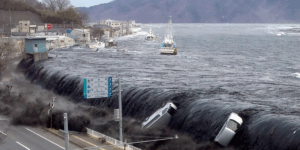
The quake triggered a tsunami with waves up to 40 meters high in some spots. It flooded towns, destroyed homes, and caused a nuclear accident at Fukushima. There, the waves damaged reactors, leading to leaks of harmful radiation that spread into the ocean. About 20,000 people died or went missing in that disaster. It was a wake-up call for Japan.
Before that, there was the 1995 Kobe earthquake, which killed over 6,000 people and showed that even modern buildings could fail if not built right. These events teach Japan lessons each time, helping it improve safety. Even the 2024 quake on the Noto Peninsula, a land area sticking out into the Sea of Japan, reminded everyone of the risks. The epicenter was under the sea, about 500 kilometers from Tokyo, but the shakes were felt even there.
Via Nature
How Japan Builds to Survive Earthquakes
Japan knows disasters are coming, so it's become an expert at preparing. Their buildings follow strict rules to stay standing during quakes. There are three levels of standards. The basic one, called Taishin, sets minimum sizes for pillars, walls, and beams so the structure can handle shaking without falling. It's like making sure a table has strong legs. For taller buildings, there's Seishin, which adds things like dampers, devices that soak up the quake's energy, like shock absorbers in a car. They also put thick rubber pads under the foundation to cushion vibrations. The top level is Menshin, the most advanced. Here, the whole building is separated from the ground using layers of lead, steel, and rubber.
Via BBC
This lets the building sway on its own, staying steady even if the earth moves. A great example is the Tokyo Skytree, a tall tower that uses this tech. During the 2011 quake, it didn't get damaged at all. These rules mean that in Japan, a 7.6 quake might kill fewer than 100 people, while in other countries, it could kill thousands. They test buildings with giant shake tables that mimic quakes, ensuring everything works.
Defenses Against Tsunamis
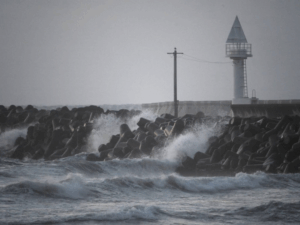
Fighting tsunamis is harder than earthquakes because water is unpredictable. But Japan tries many ways to protect the coasts. One is planting "tsunami forests", rows of trees along the shore that slow down waves and reduce their power. Trees act like a natural barrier, absorbing some of the force. They also build coastal dikes, which are long walls made of rocks or concrete to block water.
Via The Independent
These are costly but can save lives. In high-risk areas with lots of people, they construct evacuation towers, tall structures where folks can climb to safety quickly since tsunamis give little warning. These towers are built on high ground and can hold many people. Japan has top-notch warning systems, too. Sensors in the ocean detect quakes and send alerts to phones and TVs in seconds.
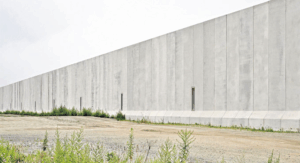
They do regular drills, so everyone knows to head to high ground or towers when sirens sound. Along the coast, which is 22,000 miles long, about 40% has sea walls, huge concrete barriers to stop waves. But they're not perfect. In 2011, some walls were too short, and waves went over them. After that, Japan made the walls taller and stronger.
Via Telengana Today
Explore Why Japan is a Tsunami Hotspot
Despite the dangers, Japan thrives. Their location on the plates brings hot springs from volcanoes, which are great for tourism and energy. But the real strength is in their people and planning. From early warning apps to quake-proof homes, everything is designed for safety. Kids practice evacuations in school, and buildings have emergency kits.
Via Fortune
The government invests in science, with experts studying plates and predicting risks. While no one can stop nature, Japan shows how smart building and quick action can save lives. The 2024 event was bad, but it could have been worse without all this prep. Japan isn't just surviving; it's leading the way in disaster readiness. If another big one comes, they'll be ready, turning danger into a story of resilience.