Unassigned
Why Deep Sea Creatures Are Rising to the Surface

Deep-sea creatures inhabit environments of crushing pressure and eternal darkness far below the ocean surface. These animals rarely venture into sunlit waters where humans observe marine life. Recent years reveal a growing number of unusual sightings worldwide.
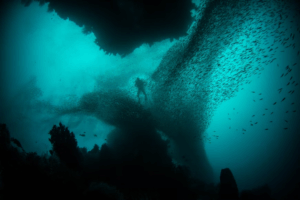 Strange fish wash ashore or appear in fishing nets more often than ever before. This pattern challenges long-held understandings of ocean behavior and raises urgent questions about environmental changes.
 The 2011 disaster in Japan followed discoveries of approximately twenty dead oarfish along coastal areas. These incidents reinforced traditional warnings passed down through generations. Modern science questions direct causal links between sightings and seismic activity. Cultural respect persists despite evolving explanations for surface appearances.
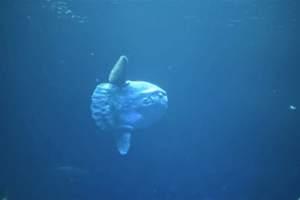 California waters produced three separate observations throughout 2024. Mexican divers encountered a living oarfish in February 2025. These events contrast sharply with historical records where sightings remained exceptionally rare. The first filmed footage of a live oarfish only occurred in 2001 after decades of deep-sea exploration efforts.
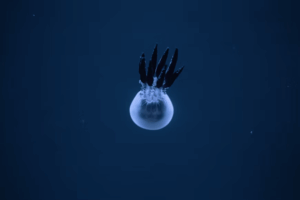 Russian fishing crews captured smooth lumpfish specimens initially mistaken for extraterrestrial organisms. The brain-like texture of their bodies created widespread confusion among observers. Spanish coastal waters yielded a black sea devil anglerfish far from its usual habitat. This predatory species employs bioluminescent lures to attract prey in complete darkness.
 Satellite imagery provides more detailed Mars surface maps than Earth's underwater topography. Deep-sea regions remain largely unknown territories even in the twenty-first century. This limited knowledge base complicates efforts to understand emerging behavioral changes in marine populations.
 The Mariana Trench location requires submersibles capable of withstanding eleven thousand meters of water pressure. Standard scuba equipment functions only in the uppermost ocean layers near coastlines. Remote-operated vehicles and sonar mapping provide the most current data about deeper regions.
 These microscopic organisms form the foundation of the entire marine food web. Larger predators, including whales, sharks, dolphins, and sea turtles, concentrate their activities here. Sunlight intensity diminishes rapidly with increasing depth below the surface. Red wavelengths disappear first, followed progressively by orange, yellow, and green colors.
 The enlarged eye scans upward for faint surface light silhouettes. The smaller eye detects bioluminescent signals from the surrounding darkness. Red body coloration provides effective camouflage since red light never reaches these depths. Bloody-belly comb jellies display similar crimson hues for identical protective reasons.
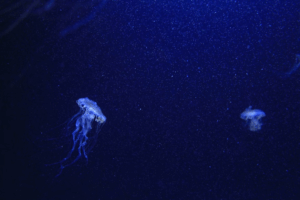 Communication signals travel through light pulses between individuals of the same species. Sea angels demonstrate dramatic transformations from a gentle appearance to aggressive hunters. Transparent bodies glow internally when stomachs remain empty. Rapid tentacle deployment captures prey before bioluminescence ceases upon feeding completion.
 Basketball-sized eyes represent the largest visual organs in the animal kingdom. Such massive ocular development enables prey detection in near-total darkness. Vampire squid connect eight arms with extensive webbing resembling theatrical capes. Marine snow particles constitute their primary food source rather than blood meals.
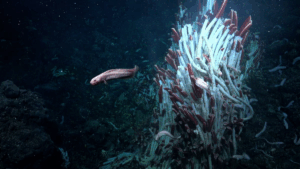
 Permanent parasitic attachment to females ensures reproductive success exclusively. Multiple males fuse to a single female, creating a combined organism. Yeti crabs cultivate bacterial colonies on densely haired appendages near hydrothermal vents. These microorganisms oxidize sulfur compounds for energy in chemosynthetic processes.
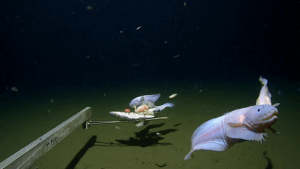
 These cephalopods never migrate upward from their extreme depth habitats. The hadal zone encompasses trenches deeper than six thousand meters in total. Pressure exceeds one thousand atmospheres in these ultimate oceanic depths. Life persists through specialized biochemical and physiological adaptations.
 Via Smithsonian Magazine
This phenomenon became known as the deep scattering layer phenomenon. The scale of movement remained hidden from surface observation for centuries. Modern acoustic technology confirms the global distribution of these migrations.
 Via National Geographic
Creatures feed on surface phytoplankton under the cover of darkness safely. Daylight hours bring increased predation risk from larger surface hunters. Migration timing synchronizes with sunrise and sunset cycles precisely.
 Via Natural World Facts
Oxygen dissolved in warm surface layers fails to reach deeper regions. Deep-sea habitats experience progressive oxygen depletion over time. Species adapted to stable conditions face existential threats rapidly.
 Via Eos
Seabed mineral extraction targets polymetallic nodules near hydrothermal vents. Scaly-foot snails incorporate iron sulfide into protective outer shells. These gastropods maintain proportionally massive hearts for their body size. Three known populations face habitat destruction from mining operations. Sediment plumes and artificial lighting disrupt delicate ecosystem balances permanently.
 Via Scientific American
Deep-sea processes regulate global climate through carbon sequestration mechanisms. Phytoplankton function analogously to terrestrial forests in atmospheric regulation. Oxygen production from marine photosynthesis sustains breathable air composition. Fisheries and coastal communities depend on stable ocean food webs. Biodiversity loss cascades through interconnected marine systems unpredictably.
 Via Scientific American
Conservation measures preserve both scientific discovery potential and planetary stability. Surface sightings serve as visible warnings of deeper systemic issues. Collective action determines the future of these mysterious realms.
More in Unassigned
Strange fish wash ashore or appear in fishing nets more often than ever before. This pattern challenges long-held understandings of ocean behavior and raises urgent questions about environmental changes.
Ancient Legends Surrounding the Oarfish
Oarfish have carried deep cultural significance in Japanese folklore for centuries. Local beliefs connect their rare appearances to impending natural disasters. Earthquakes top the list of predicted events when these serpentine fish surface. Fishermen treat live catches with reverence and release them immediately.
The 2011 disaster in Japan followed discoveries of approximately twenty dead oarfish along coastal areas. These incidents reinforced traditional warnings passed down through generations. Modern science questions direct causal links between sightings and seismic activity. Cultural respect persists despite evolving explanations for surface appearances.
Global Surge in Oarfish Encounters
Documented oarfish sightings multiplied dramatically in recent years across multiple continents. A Japanese fisherman hauled in a nearly six-meter specimen during routine operations in January 2023. The creature displayed a long ribbon-like body with sticky white skin resembling rubber. Another extraordinary catch later that year netted fifty oarfish simultaneously.
California waters produced three separate observations throughout 2024. Mexican divers encountered a living oarfish in February 2025. These events contrast sharply with historical records where sightings remained exceptionally rare. The first filmed footage of a live oarfish only occurred in 2001 after decades of deep-sea exploration efforts.
Expanding List of Surface Intruders
Oarfish represent merely one species among many deep dwellers now appearing in shallow waters. Giant phantom jellyfish possess tentacles exceeding ten meters in length under normal conditions. These massive invertebrates typically reside between one and two kilometers below the surface. Antarctic expeditions recently documented them at depths of only eighty meters.
Russian fishing crews captured smooth lumpfish specimens initially mistaken for extraterrestrial organisms. The brain-like texture of their bodies created widespread confusion among observers. Spanish coastal waters yielded a black sea devil anglerfish far from its usual habitat. This predatory species employs bioluminescent lures to attract prey in complete darkness.
The Immensity of Earth's Oceans
Water covers seventy-one percent of the planet's surface area in vast interconnected bodies. Five primary oceans contain ninety-seven percent of all earthly water resources. The Pacific, Atlantic, Indian, Arctic, and Southern oceans host ninety-four percent of global wildlife species. Human exploration has barely mapped five percent of the ocean floor despite technological advances.
Satellite imagery provides more detailed Mars surface maps than Earth's underwater topography. Deep-sea regions remain largely unknown territories even in the twenty-first century. This limited knowledge base complicates efforts to understand emerging behavioral changes in marine populations.
Extreme Challenges of Deep Sea Exploration
Reaching the ocean's greatest depths demands specialized equipment and extensive training. Twelve astronauts accumulated three hundred hours of moon surface activity during multiple missions. Only three individuals have visited Challenger Deep for a combined three hours total.
The Mariana Trench location requires submersibles capable of withstanding eleven thousand meters of water pressure. Standard scuba equipment functions only in the uppermost ocean layers near coastlines. Remote-operated vehicles and sonar mapping provide the most current data about deeper regions.
Vertical Divisions of the Marine Environment
Ocean waters organize into distinct layers based on light penetration and depth measurements. The sunlight zone extends from the surface down to two hundred meters maximum. Photosynthesis sustains phytoplankton and macroalgae exclusively within this uppermost layer.
These microscopic organisms form the foundation of the entire marine food web. Larger predators, including whales, sharks, dolphins, and sea turtles, concentrate their activities here. Sunlight intensity diminishes rapidly with increasing depth below the surface. Red wavelengths disappear first, followed progressively by orange, yellow, and green colors.
The Twilight Zone and Color Adaptations
Water between two hundred and one thousand meters in depth constitutes the twilight zone. Only blue and violet wavelengths reach these intermediate levels consistently. Creatures evolve specific visual and pigmentation strategies for survival in dim conditions. Strawberry squid develop asymmetrical eyes with one significantly larger than the other.
The enlarged eye scans upward for faint surface light silhouettes. The smaller eye detects bioluminescent signals from the surrounding darkness. Red body coloration provides effective camouflage since red light never reaches these depths. Bloody-belly comb jellies display similar crimson hues for identical protective reasons.
Bioluminescence as a Survival Mechanism
Chemical reactions produce light in numerous twilight zone inhabitants through bioluminescence. Luciferin and luciferase molecules combine to generate cold light emission efficiently. This process serves multiple critical functions in dark environments. Predators attract prey using glowing lures attached to modified body parts. Potential victims create counter-illumination to blend with downwelling surface light.
Communication signals travel through light pulses between individuals of the same species. Sea angels demonstrate dramatic transformations from a gentle appearance to aggressive hunters. Transparent bodies glow internally when stomachs remain empty. Rapid tentacle deployment captures prey before bioluminescence ceases upon feeding completion.
Unique Anatomical Features in Deep Dwellers
Barreleye fish possess transparent cranial domes revealing internal eye structures. Green tubular eyes rotate within protective shields to track potential food sources. These specialized organs focus exclusively upward toward minimal available light. Giant squid achieve lengths of thirteen meters, including tentacles, in mature specimens.
Basketball-sized eyes represent the largest visual organs in the animal kingdom. Such massive ocular development enables prey detection in near-total darkness. Vampire squid connect eight arms with extensive webbing resembling theatrical capes. Marine snow particles constitute their primary food source rather than blood meals.
The Midnight Zone and Extreme Adaptations
Complete darkness begins beyond one thousand meters in the midnight zone. Anglerfish females develop bioluminescent esca lures on modified dorsal spines. These glowing appendages attract prey within striking distance in perpetual night. Male anglerfish measure one-tenth the size of females in most species.
Permanent parasitic attachment to females ensures reproductive success exclusively. Multiple males fuse to a single female, creating a combined organism. Yeti crabs cultivate bacterial colonies on densely haired appendages near hydrothermal vents. These microorganisms oxidize sulfur compounds for energy in chemosynthetic processes.
Abyssal and Hadal Zone Mysteries
The abyssal zone spans four thousand to six thousand meters below sea level. Titanic wreckage rests at three thousand eight hundred ten meters within this region. Dumbo octopuses propel themselves using large ear-like fin structures gracefully.
These cephalopods never migrate upward from their extreme depth habitats. The hadal zone encompasses trenches deeper than six thousand meters in total. Pressure exceeds one thousand atmospheres in these ultimate oceanic depths. Life persists through specialized biochemical and physiological adaptations.
Historical Discovery of Mass Migrations
World War II naval sonar operations detected anomalous seabed movements nightly. Sound waves reflected from dense concentrations of ascending marine organisms. Millions of fish, squid, and plankton rose hundreds of meters after sunset consistently.
Via Smithsonian Magazine
This phenomenon became known as the deep scattering layer phenomenon. The scale of movement remained hidden from surface observation for centuries. Modern acoustic technology confirms the global distribution of these migrations.
Diel Vertical Migration Patterns
Billions of organisms participate in daily upward and downward movements worldwide. This diel vertical migration represents Earth's largest animal movement by biomass. The total migrating mass exceeds the human global population weight by twenty-five times.
Via National Geographic
Creatures feed on surface phytoplankton under the cover of darkness safely. Daylight hours bring increased predation risk from larger surface hunters. Migration timing synchronizes with sunrise and sunset cycles precisely.
Climate Change Impacts on Ocean Structure
Oceans absorb ninety percent of the excess heat from global temperature increases. Surface waters warm significantly while deeper layers maintain colder temperatures. Thermal stratification prevents the vertical mixing of water columns effectively.
Via Natural World Facts
Oxygen dissolved in warm surface layers fails to reach deeper regions. Deep-sea habitats experience progressive oxygen depletion over time. Species adapted to stable conditions face existential threats rapidly.
Predictions for Future Deep Sea Changes
Scientific models project a one-degree Celsius warming in abyssal zones by 2100. Deep-dwelling species migrate four to eleven times faster than surface counterparts. Extinction risks rise dramatically for undiscovered species, particularly. Annual deep-sea discoveries continue despite increasing environmental pressures. Carbon storage capacity diminishes as phytoplankton communities alter distribution.
Via Eos
Seabed mineral extraction targets polymetallic nodules near hydrothermal vents. Scaly-foot snails incorporate iron sulfide into protective outer shells. These gastropods maintain proportionally massive hearts for their body size. Three known populations face habitat destruction from mining operations. Sediment plumes and artificial lighting disrupt delicate ecosystem balances permanently.
International Response to Mining Proposals
Thirty-two nations publicly oppose commercial deep-sea mining initiatives currently. Environmental organizations collect millions of petition signatures globally. The International Seabed Authority reviews applications under intense political pressure. No operational licenses exist for commercial extraction activities yet. Prevention remains possible, unlike previous terrestrial mining damage.
Via Scientific American
Deep-sea processes regulate global climate through carbon sequestration mechanisms. Phytoplankton function analogously to terrestrial forests in atmospheric regulation. Oxygen production from marine photosynthesis sustains breathable air composition. Fisheries and coastal communities depend on stable ocean food webs. Biodiversity loss cascades through interconnected marine systems unpredictably.
Explore Why Deep Sea Life is Reaching the Surface
The deep ocean represents humanity's last unexplored wilderness area. Creatures evolved over millions of years in stable extreme conditions. Rapid anthropogenic changes outpace natural adaptation capabilities significantly.
Via Scientific American
Conservation measures preserve both scientific discovery potential and planetary stability. Surface sightings serve as visible warnings of deeper systemic issues. Collective action determines the future of these mysterious realms.