Unassigned
Nvidia Develops Powerful AI Chip for the Chinese Market

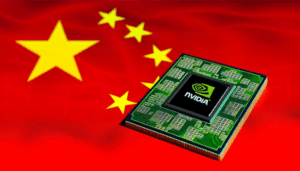
Nvidia is developing a new artificial intelligence chip for the Chinese market based on its latest Blackwell architecture. The upcoming chip, tentatively called the B30A, is expected to surpass the H20 model currently allowed for sale in China. Sources familiar with the plans say the chip is being designed to meet the technical demands of Chinese clients while complying with U.S. export regulations.
This development reflects Nvidia’s continued focus on retaining market share in China. With AI adoption growing rapidly across industries, the company sees a strategic opportunity to provide high-performance chips. The B30A is positioned to offer a balance between advanced computing power and regulatory compliance, which is critical in the current geopolitical environment.
 Via Digital Watch Observatory
It is anticipated that the B30A microprocessor will incorporate capabilities like Nvidia's NVLink technology and high-bandwidth memory, facilitating effective processor-to-processor communication. By maintaining compatibility with existing software tools, Nvidia aims to ensure a smooth transition for Chinese data centers that rely on its ecosystem.
 Via NVIDIA
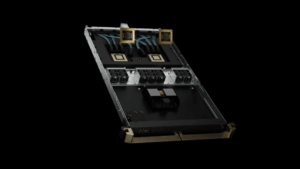
Despite its lower raw performance compared to the B300, the single-die configuration provides sufficient processing capabilities for AI tasks. The design is particularly suited for inference workloads, which require high efficiency rather than maximum computing power. Nvidia’s approach ensures the chip remains competitive without breaching U.S. export limitations.
 Via The Wall Street Journal
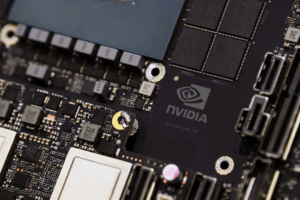
High-bandwidth memory and NVLink are essential for data-intensive AI operations, such as training large neural networks or handling vast datasets. These capabilities ensure Chinese clients can efficiently integrate the B30A into existing AI workflows while maintaining compatibility with Nvidia’s software ecosystem. The chip’s performance enhancements aim to meet the growing computational demands of AI applications.
 Via NewsBytes
Early testing is a critical step in the chip’s deployment strategy. It allows both Nvidia and Chinese clients to assess performance, identify potential issues, and ensure the chip aligns with market needs. By providing samples for evaluation, Nvidia demonstrates its commitment to supporting China’s AI development while adhering to U.S. regulatory guidelines.
 Via The New York Times
The uncertainty over export approval underscores the complex geopolitical environment in which Nvidia operates. While the company is pursuing market opportunities in China, it must navigate U.S. export control laws designed to limit access to advanced AI technology. This balancing act is a major factor in determining the chip’s timeline and availability.
 Via South China Morning Post
While the proposal opens the possibility for B30A sales, it has faced skepticism from U.S. legislators. Lawmakers worry that even limited access to advanced AI chips could erode U.S. technological leadership. The revenue-sharing plan reflects an attempt to balance commercial interests with national security priorities, but its implementation remains uncertain.
 Via AI Business
Huawei’s chips also face manufacturing constraints due to the limited access to advanced EUV lithography equipment under U.S. sanctions. While Huawei’s products are capable in some areas, they cannot fully replace Nvidia’s hardware for high-performance AI training tasks. As a result, Nvidia chips continue to be integral for many Chinese AI applications.
 Via Forbes
Nvidia’s development of China-specific chips represents an effort to maintain commercial engagement despite political and regulatory pressures. At the same time, the U.S. government’s export restrictions and proposed revenue-sharing arrangements reflect broader concerns about preserving American technological leadership in AI. The balance between market access and security continues to shape the industry.
 Via NewsBytes
The RTX6000D has fewer production requirements and is less expensive than the H20. Nvidia plans to deliver small batches to Chinese clients beginning in September. This chip targets AI inference workloads, enabling cost-effective deployment for applications such as natural language processing and recommendation systems.
 Via Merge Society
The combination of advanced technology and regulatory compliance allows Nvidia to compete with domestic rivals like Huawei. While Huawei has made progress in AI chip design, it remains constrained by manufacturing capabilities and software ecosystem limitations. Nvidia’s offerings continue to provide a performance advantage that is difficult to replicate fully with domestic alternatives.
 Via Los Angeles Times
The company emphasizes that all products are developed with regulatory approval and are intended for legitimate commercial use. This careful approach allows Nvidia to navigate the complex intersection of technology, market demand, and geopolitics while continuing to innovate in AI chip design.
 Via Reply
The strategic use of Nvidia’s chips helps Chinese firms maintain competitiveness in AI development. While domestic alternatives are emerging, the combination of performance, software compatibility, and early availability makes Nvidia chips essential for cutting-edge projects. This dynamic illustrates the ongoing importance of foreign technology in China’s AI ecosystem.
Along with performance, Nvidia’s chips offer access to a mature software ecosystem, including the widely used CUDA platform. This ecosystem simplifies the deployment and optimization of AI models, giving Chinese researchers and companies a reliable framework for experimentation and scaling. The reliance on hardware and software highlights the integrated role Nvidia plays in supporting advanced AI initiatives.
 Via Houston Public Media
 Via Notebookcheck
These developments also underscore the growing influence of AI hardware on national security and economic strategy. Access to cutting-edge chips not only enables technological advancement but also shapes the competitive landscape for industries reliant on artificial intelligence. Nvidia’s careful navigation of regulatory frameworks illustrates how multinational corporations must weigh commercial opportunity and strategic responsibility.
More in Unassigned
Via Digital Watch Observatory
It is anticipated that the B30A microprocessor will incorporate capabilities like Nvidia's NVLink technology and high-bandwidth memory, facilitating effective processor-to-processor communication. By maintaining compatibility with existing software tools, Nvidia aims to ensure a smooth transition for Chinese data centers that rely on its ecosystem.
Single-Die Design and Computing Performance
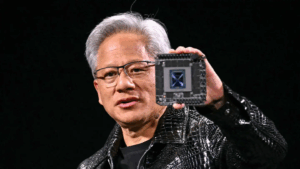
All of the main components of the B30A chip will be integrated into a single, continuous piece of silicon thanks to its single-die design. Compared to dual-die arrangements, this method lowers production costs and streamlines manufacturing. The single-die design is expected to provide around half the raw processing power of the dual-die B300 accelerator card from Nvidia, according to sources.
Via NVIDIA
Despite its lower raw performance compared to the B300, the single-die configuration provides sufficient processing capabilities for AI tasks. The design is particularly suited for inference workloads, which require high efficiency rather than maximum computing power. Nvidia’s approach ensures the chip remains competitive without breaching U.S. export limitations.
High-Bandwidth Memory and NVLink Technology
The B30A will include high-bandwidth memory, allowing for faster data access during complex AI computations. Additionally, it will feature Nvidia’s NVLink technology, which enables rapid communication between processors. These features are improvements over the H20 chip, which is based on Nvidia’s older Hopper architecture.
Via The Wall Street Journal
High-bandwidth memory and NVLink are essential for data-intensive AI operations, such as training large neural networks or handling vast datasets. These capabilities ensure Chinese clients can efficiently integrate the B30A into existing AI workflows while maintaining compatibility with Nvidia’s software ecosystem. The chip’s performance enhancements aim to meet the growing computational demands of AI applications.
Testing and Sample Delivery Timeline
Nvidia hopes to deliver B30A chip samples to Chinese clients as early as next month. While the specifications are not fully finalized, the company is preparing for early testing to allow clients to evaluate performance under real-world conditions. These sample deliveries will help Nvidia gather feedback and make any necessary adjustments before full-scale production.
Via NewsBytes
Early testing is a critical step in the chip’s deployment strategy. It allows both Nvidia and Chinese clients to assess performance, identify potential issues, and ensure the chip aligns with market needs. By providing samples for evaluation, Nvidia demonstrates its commitment to supporting China’s AI development while adhering to U.S. regulatory guidelines.
Regulatory Hurdles in the U.S
Approval from U.S. authorities remains uncertain due to national security concerns and the potential technological edge the B30A could provide China. Despite President Trump signaling that modified versions of Nvidia chips could be allowed in China, regulatory clearance is far from guaranteed. U.S. lawmakers have expressed caution over the possible implications for American AI leadership.
Via The New York Times
The uncertainty over export approval underscores the complex geopolitical environment in which Nvidia operates. While the company is pursuing market opportunities in China, it must navigate U.S. export control laws designed to limit access to advanced AI technology. This balancing act is a major factor in determining the chip’s timeline and availability.
Trump’s Proposal for Revenue Sharing
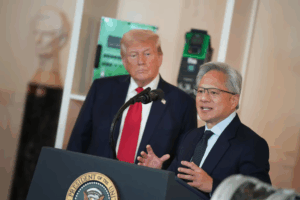
President Trump proposed that Nvidia and AMD could sell scaled-down versions of next-generation chips in China under a deal that would give the U.S. government 15 percent of revenue from these sales. This unprecedented proposal is intended to allow Chinese firms access to AI technology while generating revenue for the U.S. government.
Via South China Morning Post
While the proposal opens the possibility for B30A sales, it has faced skepticism from U.S. legislators. Lawmakers worry that even limited access to advanced AI chips could erode U.S. technological leadership. The revenue-sharing plan reflects an attempt to balance commercial interests with national security priorities, but its implementation remains uncertain.
Challenges for Chinese AI Data Centers
Chinese AI data centers face difficulties transitioning from Nvidia GPUs to domestic alternatives such as Huawei chips. Software compatibility remains a major hurdle, as Nvidia’s CUDA platform is widely used for AI model training, whereas Huawei’s CANN platform requires adjustments. These challenges slow the adoption of fully domestic hardware in public and private AI infrastructures.
Via AI Business
Huawei’s chips also face manufacturing constraints due to the limited access to advanced EUV lithography equipment under U.S. sanctions. While Huawei’s products are capable in some areas, they cannot fully replace Nvidia’s hardware for high-performance AI training tasks. As a result, Nvidia chips continue to be integral for many Chinese AI applications.
Geopolitical Implications of AI Chip Sales
The introduction of the B30A chip highlights the tensions between U.S. national security interests and China’s technological ambitions. Advanced AI chips are viewed as a strategic asset, and the degree to which China can access these technologies remains a contentious issue in U.S.-China trade relations.
Via Forbes
Nvidia’s development of China-specific chips represents an effort to maintain commercial engagement despite political and regulatory pressures. At the same time, the U.S. government’s export restrictions and proposed revenue-sharing arrangements reflect broader concerns about preserving American technological leadership in AI. The balance between market access and security continues to shape the industry.
RTX6000D - A China-Specific AI Inference Chip
In addition to the B30A, Nvidia is developing a separate AI chip for inference tasks called the RTX6000D. This chip is designed to comply with U.S. export thresholds, including a memory bandwidth of 1,398 gigabytes per second, which is just below the 1.4-terabyte limit imposed by recent restrictions.
Via NewsBytes
The RTX6000D has fewer production requirements and is less expensive than the H20. Nvidia plans to deliver small batches to Chinese clients beginning in September. This chip targets AI inference workloads, enabling cost-effective deployment for applications such as natural language processing and recommendation systems.
Maintaining Market Share in China
Nvidia aims to retain its influence in China despite regulatory challenges and domestic competition. By offering compatible chips like the RTX6000D and B30A, Nvidia guarantees that Chinese developers will be able to continue using its software and hardware ecosystem. Maintaining market presence is critical as China expands its AI capabilities.
Via Merge Society
The combination of advanced technology and regulatory compliance allows Nvidia to compete with domestic rivals like Huawei. While Huawei has made progress in AI chip design, it remains constrained by manufacturing capabilities and software ecosystem limitations. Nvidia’s offerings continue to provide a performance advantage that is difficult to replicate fully with domestic alternatives.
Future Roadmap and Strategic Planning
Nvidia’s roadmap includes ongoing development of next-generation AI chips beyond the B30A and RTX6000D. The company has plans for chips designed to handle both training and inference tasks, including high-performance models intended for global markets. Strategic planning ensures that Nvidia can respond to regulatory changes and evolving AI demands in multiple regions.
Via Los Angeles Times
The company emphasizes that all products are developed with regulatory approval and are intended for legitimate commercial use. This careful approach allows Nvidia to navigate the complex intersection of technology, market demand, and geopolitics while continuing to innovate in AI chip design.
Impact on AI Development in China
Access to Nvidia’s AI chips has significant implications for China’s AI research and deployment. Chinese AI data centers rely on advanced GPUs for model training and large-scale inference. Chips like the B30A and RTX6000D provide a foundation for high-performance applications in fields ranging from natural language processing to scientific computing.
Via Reply
The strategic use of Nvidia’s chips helps Chinese firms maintain competitiveness in AI development. While domestic alternatives are emerging, the combination of performance, software compatibility, and early availability makes Nvidia chips essential for cutting-edge projects. This dynamic illustrates the ongoing importance of foreign technology in China’s AI ecosystem.
Along with performance, Nvidia’s chips offer access to a mature software ecosystem, including the widely used CUDA platform. This ecosystem simplifies the deployment and optimization of AI models, giving Chinese researchers and companies a reliable framework for experimentation and scaling. The reliance on hardware and software highlights the integrated role Nvidia plays in supporting advanced AI initiatives.
Via Houston Public Media
Discover Nvidia's Plan for a More Powerful China AI Chip
Nvidia’s development of B30A and RTX6000D chips for China highlights the complex intersection of technology, regulation, and international relations. The company’s efforts demonstrate the challenges faced by global tech firms operating under strict export controls while attempting to serve key markets. The evolution of AI chip development in China will depend on regulatory approvals, geopolitical dynamics, and the performance of domestic alternatives. Nvidia’s strategy underscores the importance of balancing innovation, compliance, and market access. The outcome will have far-reaching implications for the global AI industry and the technological competition between the United States and China.
Via Notebookcheck
These developments also underscore the growing influence of AI hardware on national security and economic strategy. Access to cutting-edge chips not only enables technological advancement but also shapes the competitive landscape for industries reliant on artificial intelligence. Nvidia’s careful navigation of regulatory frameworks illustrates how multinational corporations must weigh commercial opportunity and strategic responsibility.