Unassigned
"Macrohard" - Musk's Bold New AI Rival to Microsoft

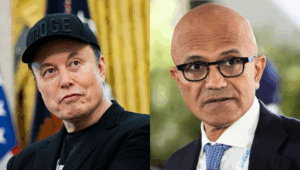
Elon Musk has announced a bold new initiative under his AI venture, xAI, called Macrohard. The project is designed to explore whether a software company like Microsoft can be replicated entirely using artificial intelligence. Musk described Macrohard as a “purely AI software company” capable of handling all aspects of software development without human intervention.
The announcement on X, formerly Twitter, emphasized both the humorous nature of the name and the serious ambitions behind the project. Macrohard represents a radical step in AI-driven software, aiming to automate coding, testing, bug fixing, and even simulating user interactions.
 Via American Hospital Association
Musk argued that since companies like Microsoft do not manufacture physical hardware themselves, it is theoretically possible to replace the human workforce with AI agents. The plan envisions a company where multiple AI agents coordinate to develop, test, and deliver software at a pace and scale unmatched by traditional methods.
 Via Mashable India
The AI agents can also replicate human interactions with software in virtual environments, testing products before they reach real-world users. Musk believes this could dramatically reduce development costs while accelerating time-to-market for new software products. Despite the playful name, Macrohard has been registered as a trademark and shows clear strategic intent.
The trademark filings cover a wide range of AI-driven applications, including software for text and speech generation, design and coding tools, and even AI-powered video game creation. This suggests that the project is not merely a joke or a publicity stunt but a deliberate attempt to explore the limits of AI in enterprise software.
 Via Decrypt
 Via EV-a2z
By simulating user interactions, coding practices, and testing procedures, the system can theoretically refine software autonomously. This infrastructure forms the backbone of Musk’s vision to challenge the dominance of established software giants in the enterprise market.
 Via LinkedIn
AI agents may replicate functionality, but replicating the human ingenuity behind software innovation remains a difficult hurdle. Microsoft’s entrenched position in enterprise networks is another obstacle. The company has decades of experience, trusted client relationships, and an established ecosystem of tools and services.
Convincing businesses to switch from familiar products like Office 365 or Azure requires more than technical capability; it demands trust and reliability, factors that have historically favored established providers. Macrohard’s AI-driven approach will need to demonstrate tangible benefits beyond novelty to gain traction in this environment.
 Via Pew Research Center
 Via ScanX
By demonstrating that software creation can be largely automated, it may encourage similar experiments in industries such as finance, healthcare, and logistics. The potential for disruption is significant, but success depends on the system’s ability to scale and deliver reliable software at enterprise quality levels.
 Via MobileAppDaily
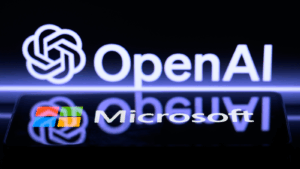
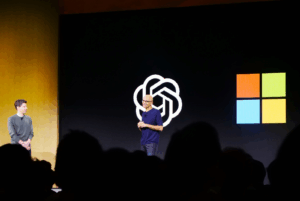
Musk has criticized Microsoft’s partnership with OpenAI, framing it as prioritizing profit over broader societal benefits. Legal disputes and competitive rhetoric highlight the tension between Macrohard and existing software giants. Microsoft’s response is likely to include both technological advancements and strategic partnerships, further increasing the challenges Macrohard faces in gaining market share.
 Via Windows Central
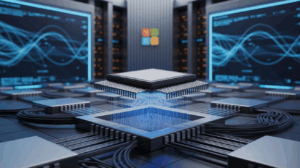
Running hundreds of AI agents across multiple tasks simultaneously requires not only processing power but robust software architecture and error-handling mechanisms. Infrastructure costs are another major consideration. Procuring and maintaining millions of high-performance GPUs is capital-intensive, and supply constraints can affect timelines and budgets.
The technical challenges are compounded by the need to continually update AI models and ensure compatibility with a range of enterprise environments. Execution risks remain high, and the outcome depends on both engineering capability and strategic deployment.
 Via UP-TO-DATE WebDesign
 Via EZO
Laws designed to protect consumers and ensure responsible AI use may impact product timelines, operational flexibility, and profitability. Successfully addressing these regulatory challenges is crucial for Macrohard to be seen as a viable competitor to established software companies.
 Via ITP Net
Success depends not only on technological innovation but also on strategic positioning, marketing, and the ability to build trust with enterprise clients. Macrohard’s approach could influence competitors to adopt multi-agent AI strategies, potentially reshaping development processes across the industry.
Even if Macrohard does not immediately capture market share, its experiments may accelerate innovation in AI-driven software and prompt existing companies to adopt more automated workflows. Investors evaluating Macrohard must weigh multiple factors. Technical execution, infrastructure costs, regulatory compliance, and competitive response all play a role in determining the venture’s potential.
 Via GeekWire
Early signs from xAI suggest promising results, but real-world enterprise adoption remains untested. The combination of high risk and potentially high reward makes Macrohard a speculative but intriguing opportunity. Diversification remains critical for investors in this space.
Exposure to AI-native companies such as xAI and Nvidia should be balanced with investments in traditional software firms adapting to AI, including Microsoft and Adobe. This strategy allows participation in potential gains while mitigating risks associated with unproven technologies and regulatory uncertainties.
 Via CDOTrends
 Via Fast Company Middle East
The synergy between Macrohard and Musk’s other ventures also allows for continuous feedback and refinement of AI models. Data from Tesla’s autonomous systems and Neuralink’s brain-computer interface research can inform Macrohard’s algorithms, helping AI agents learn more effectively and adapt to complex scenarios.
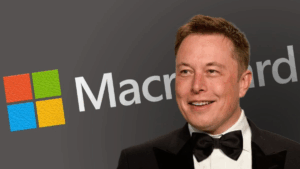 Via Pix Geeks
The scale of ambition alone sets it apart from conventional AI experiments, making it a unique venture in the enterprise software landscape. Despite its promise, significant hurdles remain for Macrohard. AI continues to face inherent limitations in areas requiring creativity, nuanced decision-making, and empathy, skills that human developers bring to enterprise software projects.
For investors and industry observers, the path forward requires a careful balance of optimism and caution. The success of Macrohard hinges not only on technical execution and system reliability but also on strategic positioning within the enterprise market and the pace at which businesses embrace AI-driven workflows.
More in Unassigned
Via American Hospital Association
Musk argued that since companies like Microsoft do not manufacture physical hardware themselves, it is theoretically possible to replace the human workforce with AI agents. The plan envisions a company where multiple AI agents coordinate to develop, test, and deliver software at a pace and scale unmatched by traditional methods.
The Concept of Macrohard AI
Macrohard is powered by xAI’s Grok AI models, which serve as the brain behind the system. These models can generate code, understand images and video, produce text and speech, and simulate complex enterprise workflows. They are designed to coordinate hundreds of specialized AI agents simultaneously, creating a fully integrated system.
Via Mashable India
The AI agents can also replicate human interactions with software in virtual environments, testing products before they reach real-world users. Musk believes this could dramatically reduce development costs while accelerating time-to-market for new software products. Despite the playful name, Macrohard has been registered as a trademark and shows clear strategic intent.
The trademark filings cover a wide range of AI-driven applications, including software for text and speech generation, design and coding tools, and even AI-powered video game creation. This suggests that the project is not merely a joke or a publicity stunt but a deliberate attempt to explore the limits of AI in enterprise software.
Via Decrypt
Integration with xAI’s Supercomputing Infrastructure
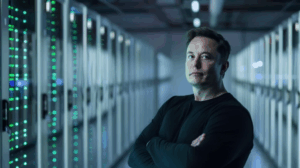
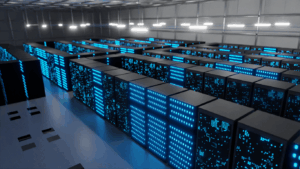
Macrohard is expected to rely heavily on xAI’s Colossus supercomputer located in Memphis. This system is designed to support hundreds of thousands of Nvidia GPUs, providing the processing power needed to run hundreds of specialized AI agents simultaneously. The combination of Grok models and supercomputing capacity allows Macrohard to attempt large-scale software simulations that would otherwise require vast teams of human developers. The integration with Colossus aims to create a self-reinforcing ecosystem, where AI agents continually learn from each other and improve over time.
Via EV-a2z
By simulating user interactions, coding practices, and testing procedures, the system can theoretically refine software autonomously. This infrastructure forms the backbone of Musk’s vision to challenge the dominance of established software giants in the enterprise market.
Challenges of Replacing Human Developers
Despite its promise, Macrohard faces significant technical challenges. AI excels in tasks such as pattern recognition, repetitive coding, and automated testing, but struggles with creativity, empathy, and nuanced decision-making. Software development often requires problem-solving that goes beyond predictable patterns, including negotiation with clients and anticipating user needs.
Via LinkedIn
AI agents may replicate functionality, but replicating the human ingenuity behind software innovation remains a difficult hurdle. Microsoft’s entrenched position in enterprise networks is another obstacle. The company has decades of experience, trusted client relationships, and an established ecosystem of tools and services.
Convincing businesses to switch from familiar products like Office 365 or Azure requires more than technical capability; it demands trust and reliability, factors that have historically favored established providers. Macrohard’s AI-driven approach will need to demonstrate tangible benefits beyond novelty to gain traction in this environment.
Via Pew Research Center
Macrohard’s Potential Market Impact
If successful, Macrohard could reshape the $1.2 trillion enterprise software market. Musk projects that AI-driven development could reduce costs by 70 percent and accelerate product launches by 40 percent. The economic implications extend beyond cost savings; it could alter how software companies organize teams, allocate resources, and innovate. Traditional development cycles may be compressed, potentially changing industry standards and competitive dynamics. By demonstrating that AI can manage entire workflows, it may encourage other industries to experiment with fully automated operations. Macrohard could also set a precedent for fully AI-operated companies in other sectors.
Via ScanX
By demonstrating that software creation can be largely automated, it may encourage similar experiments in industries such as finance, healthcare, and logistics. The potential for disruption is significant, but success depends on the system’s ability to scale and deliver reliable software at enterprise quality levels.
Microsoft’s Strategic Response
Microsoft is well-positioned to respond to Macrohard, given its investments in AI and integration of advanced tools into Windows and Office. The company has partnered with OpenAI and invested billions to ensure that AI features enhance its products. Microsoft’s deep enterprise relationships provide resilience against new competitors, and its ongoing AI initiatives continue to strengthen its position.
Via MobileAppDaily
Musk has criticized Microsoft’s partnership with OpenAI, framing it as prioritizing profit over broader societal benefits. Legal disputes and competitive rhetoric highlight the tension between Macrohard and existing software giants. Microsoft’s response is likely to include both technological advancements and strategic partnerships, further increasing the challenges Macrohard faces in gaining market share.
Technical Execution and Scalability
For investors and industry observers, Macrohard’s ability to execute technically is a critical factor. The system must handle real-world enterprise demands reliably and consistently. While xAI’s Grok models have shown promise in early tests, scalability remains unproven.
Via Windows Central
Running hundreds of AI agents across multiple tasks simultaneously requires not only processing power but robust software architecture and error-handling mechanisms. Infrastructure costs are another major consideration. Procuring and maintaining millions of high-performance GPUs is capital-intensive, and supply constraints can affect timelines and budgets.
The technical challenges are compounded by the need to continually update AI models and ensure compatibility with a range of enterprise environments. Execution risks remain high, and the outcome depends on both engineering capability and strategic deployment.
Via UP-TO-DATE WebDesign
Regulatory and Compliance Considerations
Macrohard also faces regulatory risks. AI adoption in sectors such as healthcare, finance, and government requires compliance with strict rules governing data privacy, security, and ethical use. These rules can make adoption more difficult or raise operating expenses. Compliance challenges are further complicated by international differences in AI regulation, meaning that Macrohard must navigate a complex legal landscape to operate globally. Regulatory scrutiny could also affect investor confidence.
Via EZO
Laws designed to protect consumers and ensure responsible AI use may impact product timelines, operational flexibility, and profitability. Successfully addressing these regulatory challenges is crucial for Macrohard to be seen as a viable competitor to established software companies.
Competitive Dynamics and Industry Implications
The broader AI arms race in enterprise software is intensifying. Microsoft, OpenAI, and other tech giants are accelerating their AI initiatives, making the competitive environment increasingly complex. Macrohard’s entry into this landscape raises the stakes, but it also highlights the difficulty of challenging entrenched players.
Via ITP Net
Success depends not only on technological innovation but also on strategic positioning, marketing, and the ability to build trust with enterprise clients. Macrohard’s approach could influence competitors to adopt multi-agent AI strategies, potentially reshaping development processes across the industry.
Even if Macrohard does not immediately capture market share, its experiments may accelerate innovation in AI-driven software and prompt existing companies to adopt more automated workflows. Investors evaluating Macrohard must weigh multiple factors. Technical execution, infrastructure costs, regulatory compliance, and competitive response all play a role in determining the venture’s potential.
Via GeekWire
Early signs from xAI suggest promising results, but real-world enterprise adoption remains untested. The combination of high risk and potentially high reward makes Macrohard a speculative but intriguing opportunity. Diversification remains critical for investors in this space.
Exposure to AI-native companies such as xAI and Nvidia should be balanced with investments in traditional software firms adapting to AI, including Microsoft and Adobe. This strategy allows participation in potential gains while mitigating risks associated with unproven technologies and regulatory uncertainties.
Via CDOTrends
Macrohard Within Musk’s Broader Ecosystem
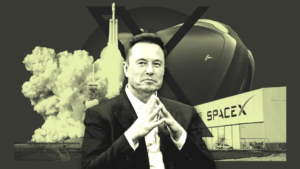
Macrohard fits within Musk’s broader vision of AI and robotics integration. Tesla has been reframed as an “AI robotics company,” with initiatives such as robotaxis and humanoid robots demonstrating Musk’s long-term commitment to automation. The integration of Macrohard with Tesla, Neuralink, and xAI infrastructure could create synergies that enhance learning, development, and operational efficiency. By leveraging cross-company data and AI insights, Macrohard can potentially improve its models and workflows. The combination of autonomous driving data, brain-computer interface research, and large-scale AI computation forms a unique environment for experimentation and innovation. Musk’s ecosystem provides a foundation that few competitors can match.
Via Fast Company Middle East
The synergy between Macrohard and Musk’s other ventures also allows for continuous feedback and refinement of AI models. Data from Tesla’s autonomous systems and Neuralink’s brain-computer interface research can inform Macrohard’s algorithms, helping AI agents learn more effectively and adapt to complex scenarios.
Discover Elon Musk's "Macrohard" AI Challenge to Microsoft
Elon Musk’s Macrohard represents one of the most ambitious attempts to fully automate enterprise software development using artificial intelligence. The project aims to go beyond simple coding tasks, targeting the broader processes that define software companies, including management, quality assurance, testing, and user interaction simulations.
Via Pix Geeks
The scale of ambition alone sets it apart from conventional AI experiments, making it a unique venture in the enterprise software landscape. Despite its promise, significant hurdles remain for Macrohard. AI continues to face inherent limitations in areas requiring creativity, nuanced decision-making, and empathy, skills that human developers bring to enterprise software projects.
For investors and industry observers, the path forward requires a careful balance of optimism and caution. The success of Macrohard hinges not only on technical execution and system reliability but also on strategic positioning within the enterprise market and the pace at which businesses embrace AI-driven workflows.