Unassigned
Etruscan Love Shown In Ancient Funerary Art
The Etruscans were one of the most important ancient peoples of Italy. Their world grew in the area that is now linked with Tuscany and nearby regions. This land sat between the Arno and Tiber Rivers, giving them access to rich soil, trade routes, and valuable resources.
Their culture became strong between the 9th and 2nd centuries B.C., long before Rome became the main power in the region. Etruscan society was known for skill, wealth, and a lively way of life. They worked in city planning, water systems, farming, metalwork, and trade.
 Via Stefano Rome Tours
Their towns were organized, their goods were valued, and their influence spread across the central Mediterranean. Even after Rome absorbed them, many parts of Etruscan culture continued to shape Roman life, including religious customs, public ceremonies, and symbols of power. This civilization is sometimes less famous than ancient Greece and Rome, but its role was not small.
Etruscan ideas helped shape the world that came after them. Their art, tombs, jewelry, and religious objects give people a close look at their values. These surviving works show a society that cared deeply about beauty, family, faith, celebration, and the journey after death.
 Via Artnet News
 Via Visit Tuscany
Trade helped Etruscan art grow in special ways. They exchanged goods with places such as Greece, Egypt, and the Near East. These contacts brought new styles, shapes, and ideas into Etruscan workshops. They did not simply copy foreign art. They mixed outside influence with their own taste and created a style that was rich, graceful, and deeply personal.
 Via History Today
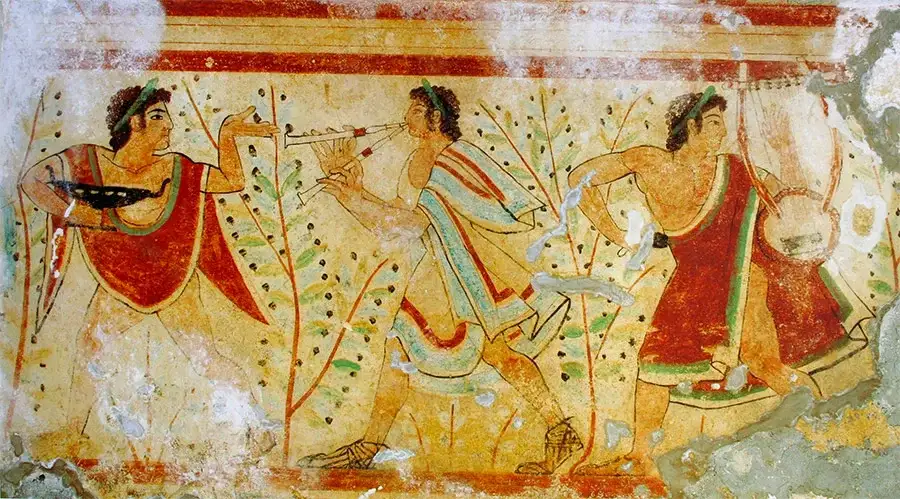
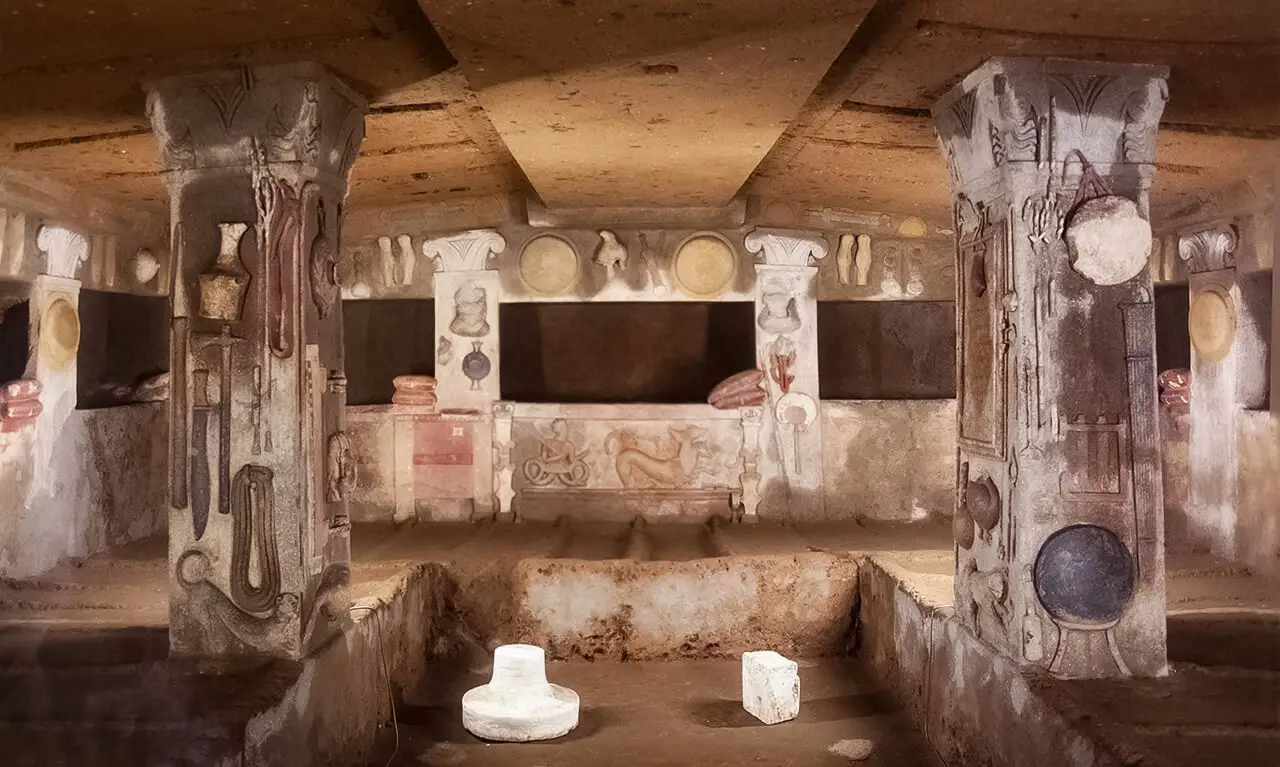
Many tomb paintings show joyful scenes rather than sadness. Banquets, musicians, dancers, and animals appear in bright colors. These images suggest that the Etruscans saw the afterlife as a place connected to pleasure, memory, and family bonds. A tomb could look almost like a home or a place of gathering. This made death feel tied to the same joys that shaped daily life.
The Tomb of the Leopards is a strong example of this style. Its paintings show a banquet scene beneath leopards, with figures enjoying music and food. Such art does not focus only on loss. It also celebrates life, comfort, and social connection. Through these tombs, the Etruscans left behind a message that beauty and human warmth could continue even after death.
 Via Stefano Rome Tours
 Via Ancient World Magazine
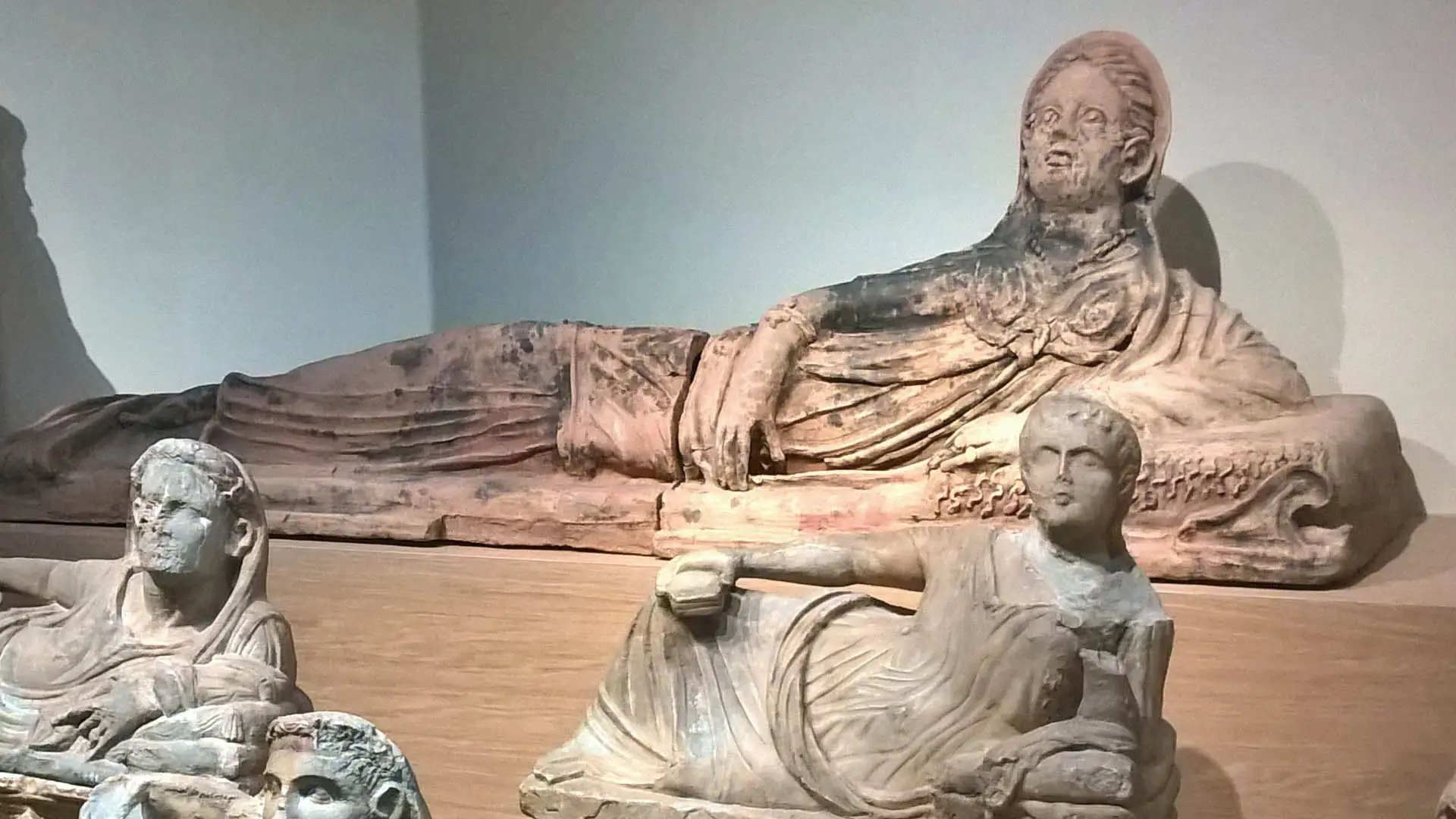
This respect can be seen clearly in funerary art. Women were shown beside men, sharing space and meaning. They were dressed with care, shown with jewelry, and placed in scenes of comfort and honor. These images help modern viewers understand that Etruscan family life included a more visible role for women than many people might expect from the ancient world.
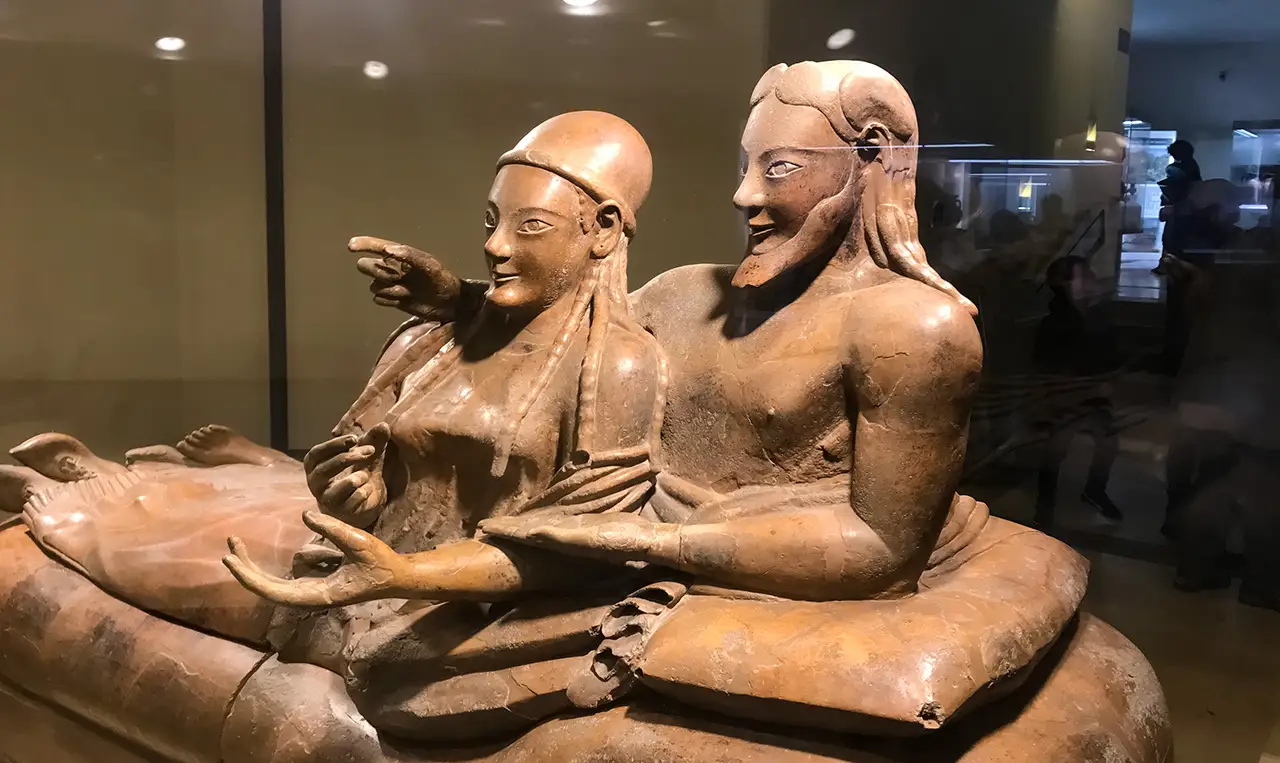 Via Rome Cabs
This work was not a coffin in the modern sense. It was a funerary urn, made to hold cremated remains. The couple appears as if they are taking part in a feast. The man may once have held a wine cup, while the woman may have held a small vessel linked to ritual or personal care. The missing objects do not weaken the message. The pose itself tells a powerful story of shared life.
The woman’s position is especially important. She sits beside the man, not behind him. Her presence is central to the scene, and she appears calm, graceful, and equal in the moment. This was different from many Greek customs, where women were less often shown sharing public banquet space with men. The Etruscan sculpture turns a funeral object into an image of partnership and lasting affection.
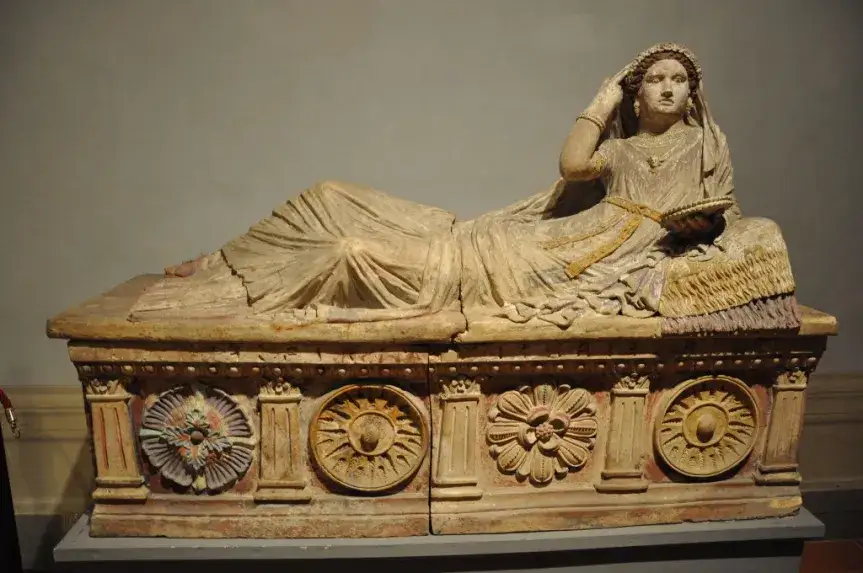 Via The Artistic Adventure Of Mankind
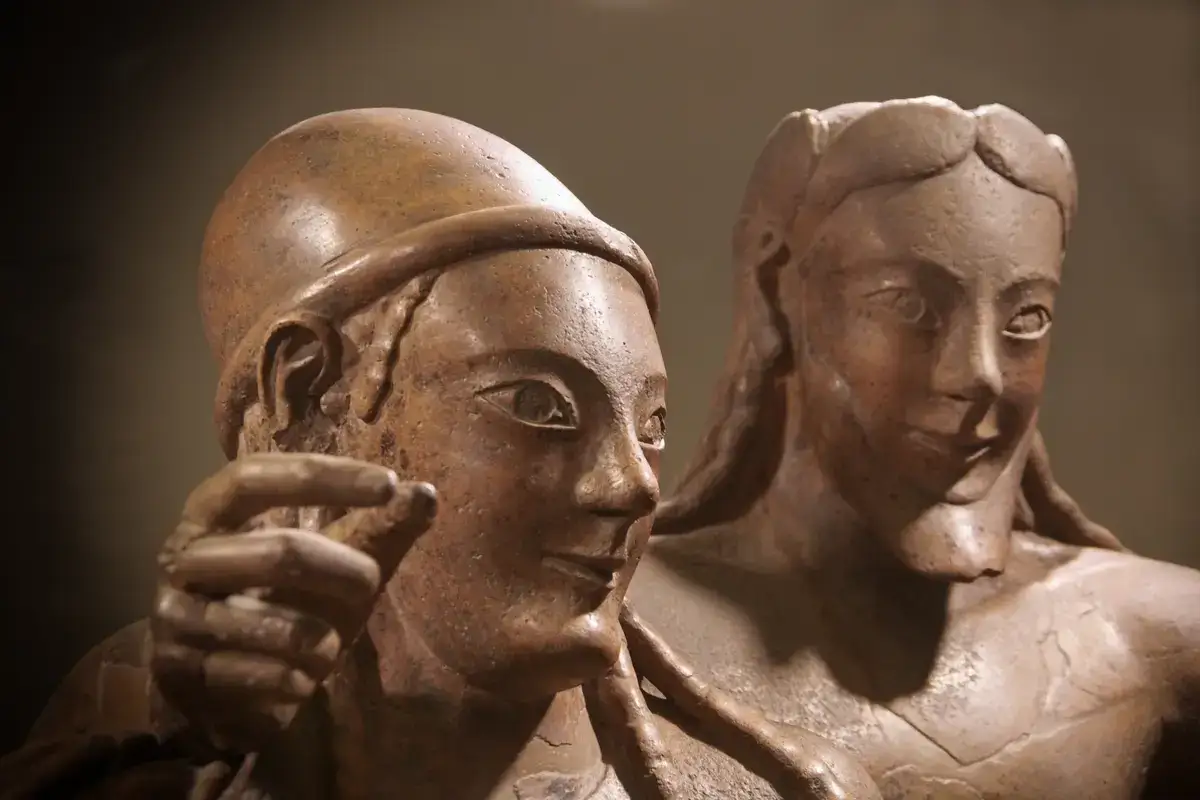 Via The Epoch Times
The work also shows how Etruscan art joined the earthly world with the spiritual one. The couple is shown in a social act, not in a cold or fearful death scene. Banqueting, touching, smiling, and reclining together all point to comfort and closeness. The sculpture suggests that love, status, and memory could travel with the dead into the next world.
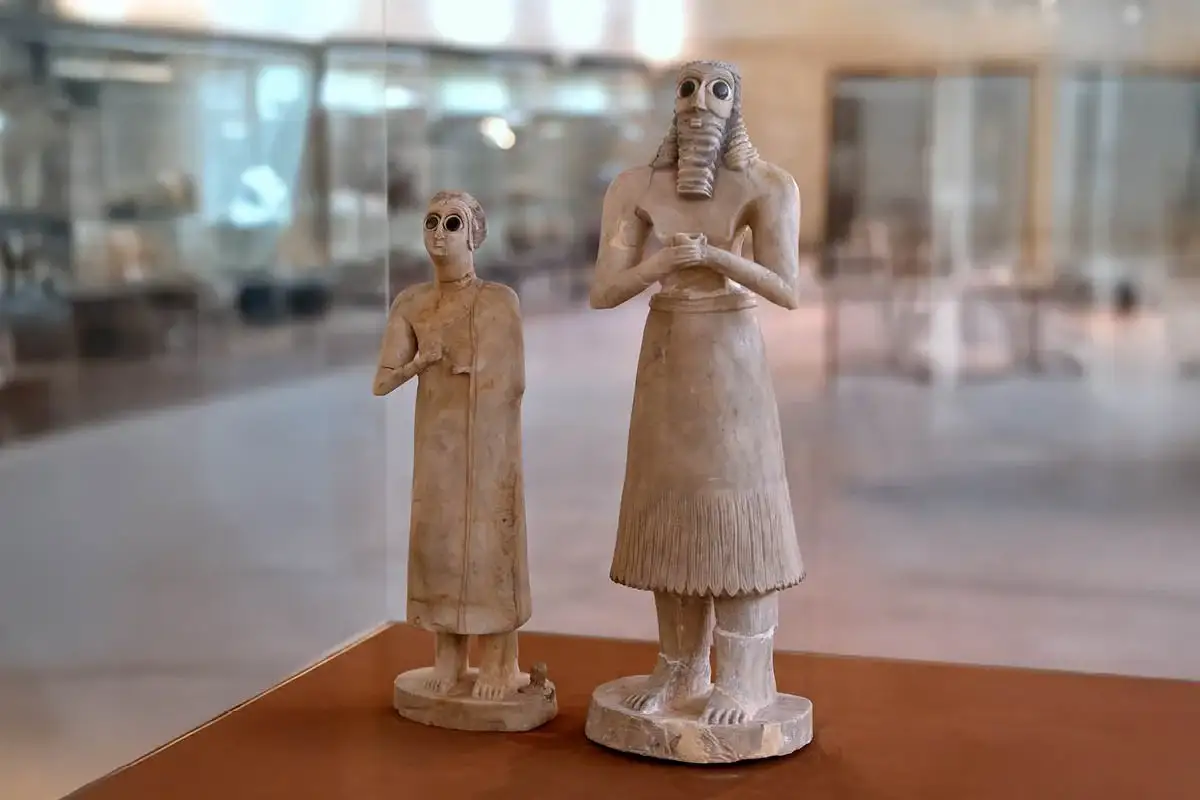 Via The Art Newbie
This kind of image helps explain why Etruscan art still attracts attention. It is not only beautiful because of its age or craftsmanship. It speaks to feelings that people still understand today. Family, memory, partnership, and the wish to be remembered with love are not limited to one time or place. The Etruscans used art to make these feelings visible.
Modern museums and scholars continue to study Etruscan culture because much about it remains mysterious. Their literature did not survive in the way Greek and Roman writing did, so art carries much of the story. Each tomb, sculpture, and painted wall adds another piece to the picture. The embrace of the “Sarcophagus of the Spouses” remains one of the clearest signs of how deeply they valued love and remembrance.
 Via The Epoch Times
 Via New Acropolis Library
The “Sarcophagus of the Spouses” stands as a lasting symbol of that belief. It shows two people joined in memory, not separated by death. Their calm smiles, shared couch, and gentle closeness turn clay into something deeply moving. Through this artwork, Etruscan love still speaks across centuries, reminding people that human connection is one of history’s most lasting treasures.
More in UnassignedVia Stefano Rome Tours
Their towns were organized, their goods were valued, and their influence spread across the central Mediterranean. Even after Rome absorbed them, many parts of Etruscan culture continued to shape Roman life, including religious customs, public ceremonies, and symbols of power. This civilization is sometimes less famous than ancient Greece and Rome, but its role was not small.
Etruscan ideas helped shape the world that came after them. Their art, tombs, jewelry, and religious objects give people a close look at their values. These surviving works show a society that cared deeply about beauty, family, faith, celebration, and the journey after death.
Via Artnet News
Art And Daily Life
Etruscan art gives one of the clearest pictures of this ancient culture. Many written records did not survive, so paintings, sculptures, and objects from tombs are very important. Their art was not made only for decoration. It showed how people lived, what they believed, and how they wanted to be remembered. Scenes of music, meals, dancing, and family life appear often in their surviving works. The Etruscans were also excellent metalworkers. Their land was rich in metals, and they became famous for bronze objects, fine jewelry, and luxury goods. Gold pieces made with delicate methods such as filigree and granulation show great control and patience. These works prove that Etruscan artists understood both beauty and technical skill. Their creations were admired in their own time and remain impressive today.Via Visit Tuscany
Trade helped Etruscan art grow in special ways. They exchanged goods with places such as Greece, Egypt, and the Near East. These contacts brought new styles, shapes, and ideas into Etruscan workshops. They did not simply copy foreign art. They mixed outside influence with their own taste and created a style that was rich, graceful, and deeply personal.
Tombs Filled With Life
Etruscan tombs were often built with great care because the afterlife mattered deeply to them. They believed death was not just an ending. It was part of a larger spiritual journey. Wealthy families built large burial spaces and filled them with painted walls, fine objects, and items linked to comfort and status. These tombs were meant to honor the dead and support them beyond this life.
Via History Today
Many tomb paintings show joyful scenes rather than sadness. Banquets, musicians, dancers, and animals appear in bright colors. These images suggest that the Etruscans saw the afterlife as a place connected to pleasure, memory, and family bonds. A tomb could look almost like a home or a place of gathering. This made death feel tied to the same joys that shaped daily life.
The Tomb of the Leopards is a strong example of this style. Its paintings show a banquet scene beneath leopards, with figures enjoying music and food. Such art does not focus only on loss. It also celebrates life, comfort, and social connection. Through these tombs, the Etruscans left behind a message that beauty and human warmth could continue even after death.
Via Stefano Rome Tours
Women In Etruscan Society
Women held a notable place in Etruscan society compared with many other ancient cultures in the West. They appear in art with confidence, status, and dignity. Etruscan women could take part in banquets, religious events, and public life in ways that were unusual for women in some nearby societies. Their presence in tomb art shows that they were not hidden from social memory. They could also inherit property and were often honored in family burials. This suggests that Etruscan families valued women as important members of society, not only as background figures. Inscriptions and artworks show women with names, identity, and status. Their role was strong enough that ancient writers from other cultures noticed it, sometimes with surprise.Via Ancient World Magazine
This respect can be seen clearly in funerary art. Women were shown beside men, sharing space and meaning. They were dressed with care, shown with jewelry, and placed in scenes of comfort and honor. These images help modern viewers understand that Etruscan family life included a more visible role for women than many people might expect from the ancient world.
Sarcophagus Of The Spouses
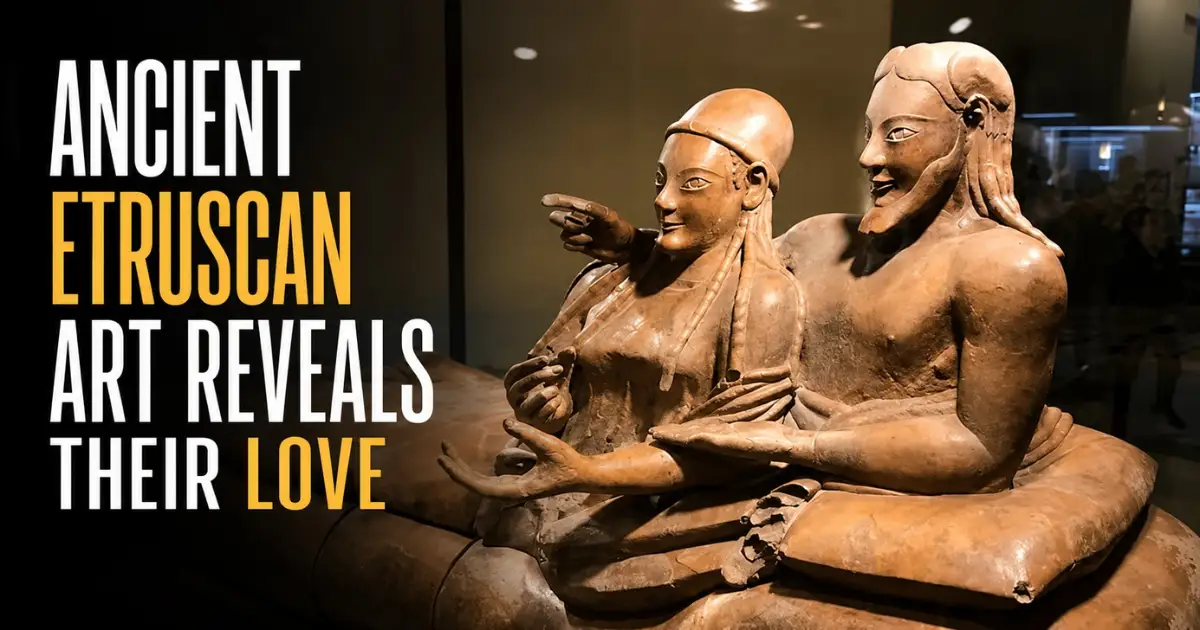
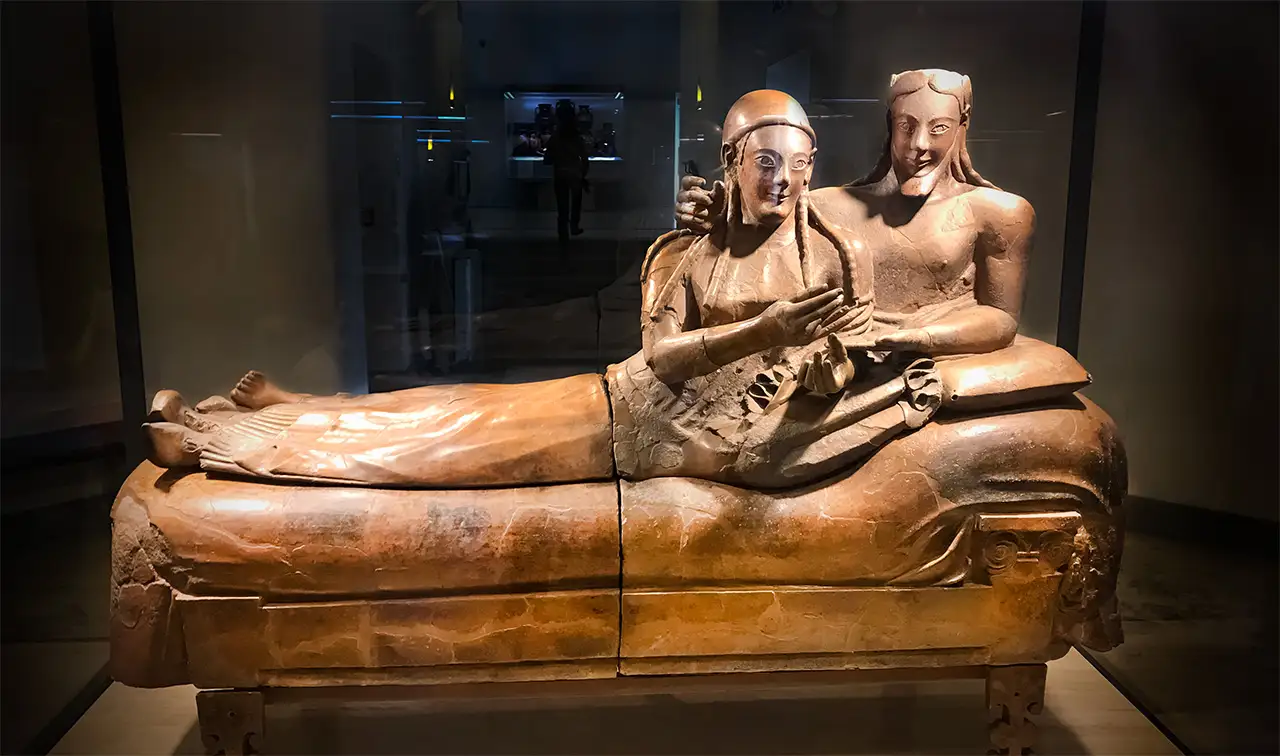
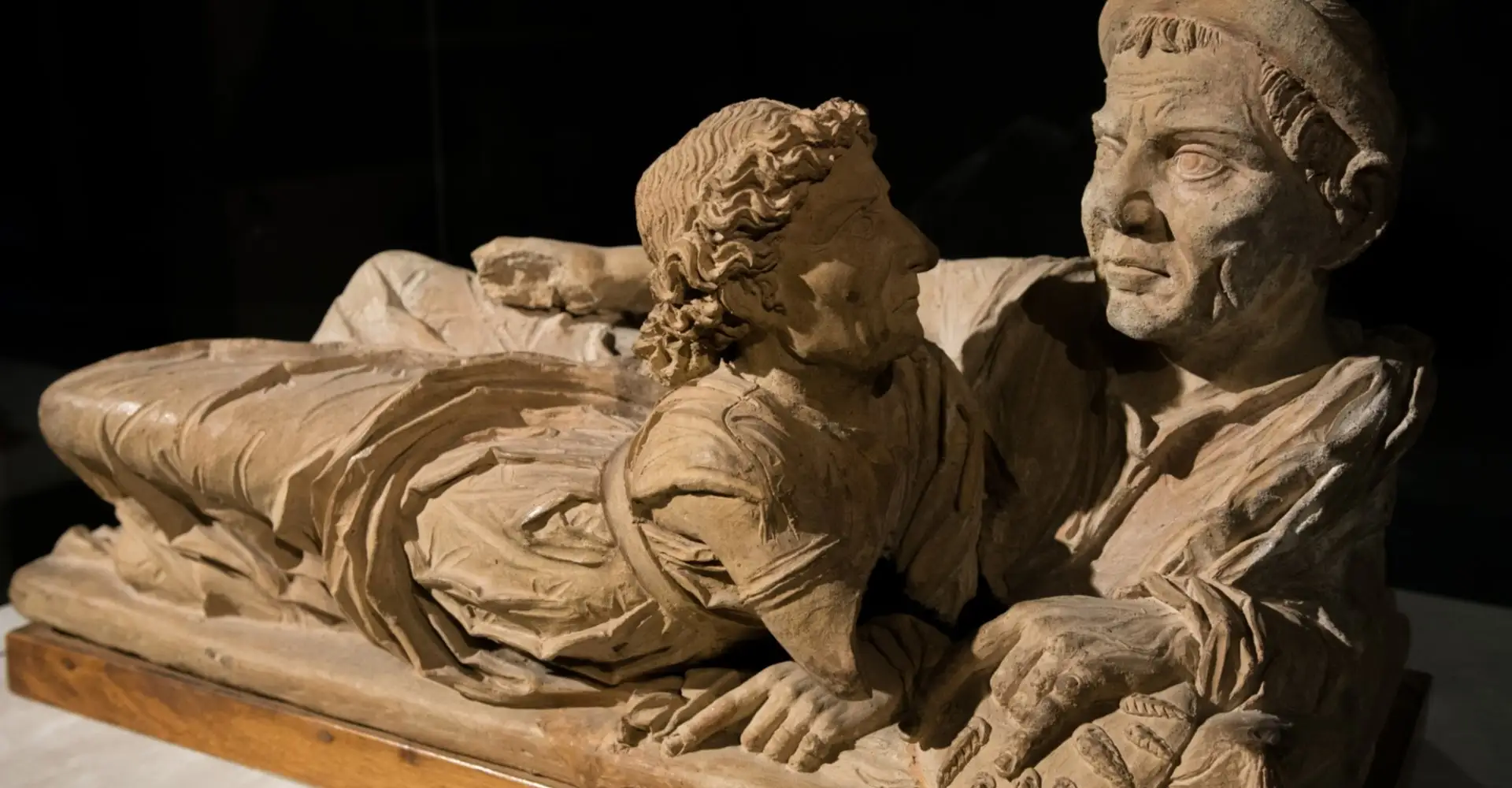
The “Sarcophagus of the Spouses” is one of the most famous works of Etruscan art. It was made from terracotta around the late 6th century B.C. and was found in Cerveteri, an important Etruscan burial area. The sculpture shows a husband and wife reclining together on a banqueting couch. Their bodies are close, their faces are calm, and their pose feels warm and connected.Via Rome Cabs
This work was not a coffin in the modern sense. It was a funerary urn, made to hold cremated remains. The couple appears as if they are taking part in a feast. The man may once have held a wine cup, while the woman may have held a small vessel linked to ritual or personal care. The missing objects do not weaken the message. The pose itself tells a powerful story of shared life.
The woman’s position is especially important. She sits beside the man, not behind him. Her presence is central to the scene, and she appears calm, graceful, and equal in the moment. This was different from many Greek customs, where women were less often shown sharing public banquet space with men. The Etruscan sculpture turns a funeral object into an image of partnership and lasting affection.
Via The Artistic Adventure Of Mankind
Style And Meaning
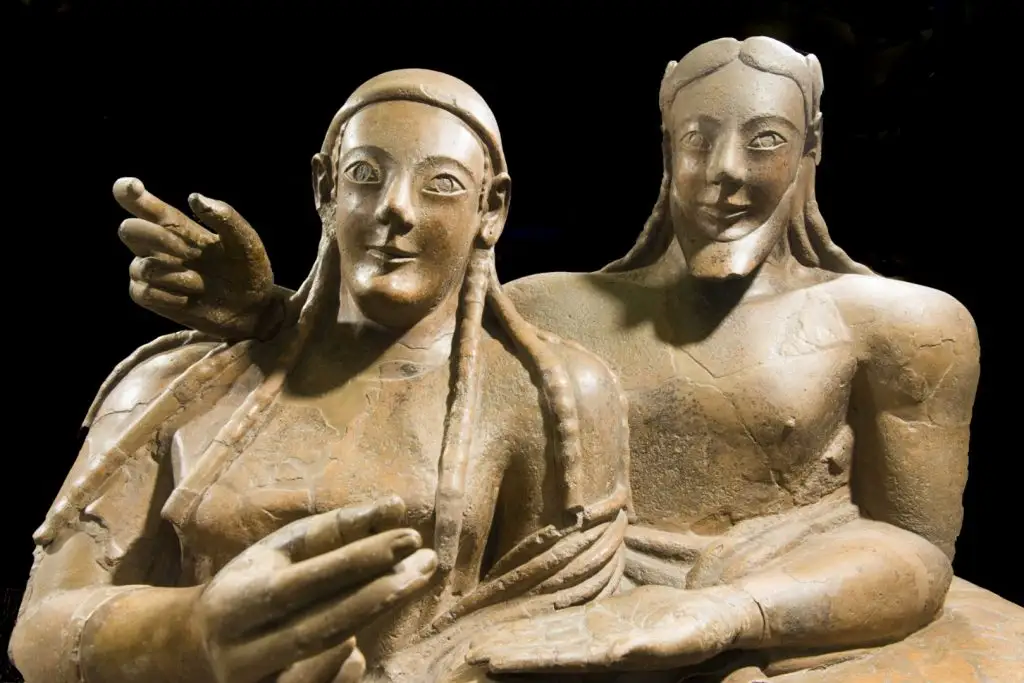
The figures in the sculpture have a gentle expression often called the archaic smile. This kind of smile was common in ancient art and was not meant to copy a real facial expression exactly. It gave the face a sense of life, calmness, and quiet mystery. On the “Sarcophagus of the Spouses,” the smiles make the couple feel present and emotionally close. Their clothing and details also carry meaning. The woman wears a special headdress, and her shoes show influence from eastern styles. These choices point to fashion, wealth, and cultural exchange. The sculpture once had bright painted colors, which would have made it look even more lively. Today, much of that color is gone, but the shape and emotion still remain strong.Via The Epoch Times
The work also shows how Etruscan art joined the earthly world with the spiritual one. The couple is shown in a social act, not in a cold or fearful death scene. Banqueting, touching, smiling, and reclining together all point to comfort and closeness. The sculpture suggests that love, status, and memory could travel with the dead into the next world.
Love Beyond Death
Etruscan funerary art often feels human because it shows emotion in simple and direct ways. The “Sarcophagus of the Spouses” does this better than almost any other surviving piece. A husband and wife are shown together, sharing the same space and the same moment. Their closeness gives the artwork its lasting power. It feels less like a distant artifact and more like a quiet tribute to love.Via The Art Newbie
This kind of image helps explain why Etruscan art still attracts attention. It is not only beautiful because of its age or craftsmanship. It speaks to feelings that people still understand today. Family, memory, partnership, and the wish to be remembered with love are not limited to one time or place. The Etruscans used art to make these feelings visible.
Modern museums and scholars continue to study Etruscan culture because much about it remains mysterious. Their literature did not survive in the way Greek and Roman writing did, so art carries much of the story. Each tomb, sculpture, and painted wall adds another piece to the picture. The embrace of the “Sarcophagus of the Spouses” remains one of the clearest signs of how deeply they valued love and remembrance.
Via The Epoch Times
Why It Still Matters
The Etruscans may have been absorbed into Roman society, but their identity did not disappear completely. Their ideas, symbols, and artistic habits lived on in different ways. Many Roman customs had roots in Etruscan practice, including parts of religion, public ceremony, and entertainment. Their impact on Western culture is larger than many casual readers may realize. Their funerary art is especially important because it preserves private and emotional parts of ancient life. Grand buildings can show power, but tomb art often shows values. Etruscan tombs reveal a society that saw death through the lens of family, beauty, ritual, and celebration. They wanted the dead to be honored with scenes that felt full of life.
Via New Acropolis Library
The “Sarcophagus of the Spouses” stands as a lasting symbol of that belief. It shows two people joined in memory, not separated by death. Their calm smiles, shared couch, and gentle closeness turn clay into something deeply moving. Through this artwork, Etruscan love still speaks across centuries, reminding people that human connection is one of history’s most lasting treasures.