Unassigned
Do Software Engineers Have a Future with AI Rising?

In 2025, the world of technology is evolving at an unprecedented pace, with artificial intelligence at the forefront of this transformation. AI is no longer just a buzzword; it's an integral part of daily operations across industries, including software engineering. While early AI systems had limitations, advancements in machine learning, natural language processing, and generative models have made them more reliable.
This shift is reshaping how software is conceived, offering both opportunities and challenges for professionals in the field. Software engineers are finding that AI tools can handle routine tasks, allowing them to focus on innovative problem-solving and strategic planning. AI assists in generating initial code structures, optimizing algorithms, and even predicting potential system failures before they occur.
 Via Torrens University Australia
This integration has led to faster product cycles and more efficient teams. However, it also raises questions about job security and the need for skill evolution. As AI continues to mature, it's clear that the role of the software engineer is not diminishing but transforming. Engineers who adapt will thrive, leveraging AI as a collaborator rather than a competitor.
 Via Science
This prediction stems from trends showing rapid improvements in AI's ability to understand and replicate complex programming patterns. Engineers worry about job displacement, with surveys revealing that around a third of developers believe AI could replace their roles in the coming years. The uncertainty highlights the need for proactive career planning.
This anxiety is fueled by real-world examples where AI has automated tasks like debugging and optimization, traditionally requiring human expertise. Additionally, the rise of no-code and low-code platforms empowers non-technical users to build applications, potentially reducing demand for entry-level programmers. Such shifts are reshaping how organizations approach software development.
 Via Fast Company
Economic pressures, such as cost-cutting in tech firms, amplify these fears, as companies seek AI solutions to streamline operations. Despite these concerns, many experts argue that AI will augment rather than eliminate jobs, creating new opportunities in AI oversight and ethical implementation. This perspective suggests a future of collaboration rather than replacement.
 Via Developer Tech News
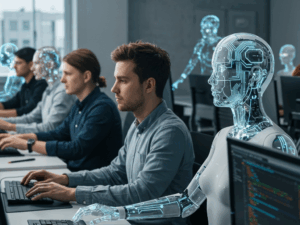
This has led to a more agile development environment where teams can iterate quickly based on real-time feedback. One major change is in the automation of repetitive tasks. AI tools handle code refactoring, where they identify inefficient sections and propose streamlined alternatives, saving hours of work.
In bug detection, machine learning algorithms scan codebases for vulnerabilities, predicting issues based on historical data and preventing costly fixes later. The DevOps pipeline has evolved, too, with AI monitoring deployments and scaling resources automatically to maintain performance. This results in smoother integrations and fewer downtime incidents.
 Via Forbes
AI enhances collaboration through natural language interfaces, allowing developers to query systems in plain English for insights or code suggestions. Personalization is another area of impact; AI tailors user experiences in applications by analyzing behavior patterns, leading to more intuitive software. Overall, these advancements are making development more accessible, though they require developers to verify AI outputs to ensure accuracy and security.
 Via TechGenies
Developers benefit from its high-level APIs for quick prototyping, though it demands computational resources and careful debugging. PyTorch complements this with its dynamic graph approach, enabling flexible model adjustments during runtime. This tool excels in research and experimentation, supporting specialized libraries for vision, text, and audio processing.
Its Pythonic interface integrates well with existing workflows, boosting developer efficiency in iterative development. However, it may require tuning for optimal performance and faces challenges in mature deployment features compared to competitors. GitHub Copilot has advanced to provide context-aware code completions, suggesting entire functions based on project specifics.
 Via Forbes
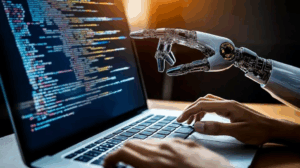
It reduces syntax errors and speeds up coding, acting as a virtual pair programmer. While it supports multiple languages, users must review suggestions to avoid inaccuracies or security risks. Emerging agents like Devin and Honeycomb take this further, executing full workflows autonomously, from planning to testing. These tools allow developers to focus on high-level design, though they introduce dependencies on AI reliability.
Other innovations include local inference tools like Ollama, enabling offline AI usage for secure environments, and computer-using agents that interact with software interfaces. These support developers by automating interactions, but challenges like regulatory compliance and intellectual property concerns persist. Overall, these tools empower engineers to tackle more ambitious projects efficiently.
Via Exclaim IT
 Via TechGig
Companies are also investing in training programs to reskill their workforce, recognizing that up to 80 percent of programming jobs will still require human input. This human-centric approach emphasizes the irreplaceable value of creativity and contextual judgment. Such initiatives ensure employees remain adaptable as technology evolves.
Interdisciplinary knowledge is crucial. Developers with expertise in specific domains, like finance or healthcare, can apply AI more effectively to solve industry challenges. By focusing on these areas, engineers can position themselves as indispensable assets in an AI-augmented landscape. This blend of technical skill and domain insight creates a competitive edge.
 Via Distillery Tech
 Via Travis Media
Domain knowledge enhances relevance, as AI applications vary by industry. Lifelong learning ensures adaptability in a fast-evolving field, with participation in communities and conferences keeping skills sharp. Collaboration skills facilitate working with diverse teams, while business acumen helps in making decisions that drive value. Developers should aim to be expert-generalists, balancing breadth and depth to respond to market demands.
 Via Forbes
Creativity in designing user interfaces and algorithms remains a human domain, where intuition drives innovation beyond pattern recognition. As AI is implemented more, engineers will focus on architecture, ethical considerations, and integration, ensuring systems are robust and fair. This shift promises more fulfilling work, with engineers acting as strategists in AI-human collaborations.
This transformation will emphasize lifelong learning, as engineers continually update their knowledge of emerging technologies. Skills in AI governance, data security, and compliance will become highly valuable, ensuring systems meet regulatory standards and societal expectations.
 Via Student Hub Uganda
 Via BairesDev
Predictions include multimodal AI for diverse inputs and customizable models for specific needs. While AGI looms, it will likely augment roles, creating opportunities in AI management. Engineers who embrace these changes will find abundant prospects in this dynamic field.
More in Unassigned
Via Torrens University Australia
This integration has led to faster product cycles and more efficient teams. However, it also raises questions about job security and the need for skill evolution. As AI continues to mature, it's clear that the role of the software engineer is not diminishing but transforming. Engineers who adapt will thrive, leveraging AI as a collaborator rather than a competitor.
Growing worries
As AI capabilities expand, concerns among software engineers are mounting. A significant portion of the workforce fears that automation could render traditional coding roles obsolete. Studies indicate that by the mid-2030s, AI might handle a substantial amount of code generation independently, combining elements like machine learning and natural language processing to produce functional software with minimal human input.
Via Science
This prediction stems from trends showing rapid improvements in AI's ability to understand and replicate complex programming patterns. Engineers worry about job displacement, with surveys revealing that around a third of developers believe AI could replace their roles in the coming years. The uncertainty highlights the need for proactive career planning.
This anxiety is fueled by real-world examples where AI has automated tasks like debugging and optimization, traditionally requiring human expertise. Additionally, the rise of no-code and low-code platforms empowers non-technical users to build applications, potentially reducing demand for entry-level programmers. Such shifts are reshaping how organizations approach software development.
Via Fast Company
Economic pressures, such as cost-cutting in tech firms, amplify these fears, as companies seek AI solutions to streamline operations. Despite these concerns, many experts argue that AI will augment rather than eliminate jobs, creating new opportunities in AI oversight and ethical implementation. This perspective suggests a future of collaboration rather than replacement.
Current picture - How AI changes the software development world today
In 2025, AI is deeply embedded in the software development lifecycle, revolutionizing processes from ideation to deployment. Developers now use AI to automate mundane activities, such as code reviews and testing, which accelerates project timelines and reduces errors. AI-driven platforms analyze vast datasets to suggest optimizations, making software more efficient without extensive manual intervention.
Via Developer Tech News
This has led to a more agile development environment where teams can iterate quickly based on real-time feedback. One major change is in the automation of repetitive tasks. AI tools handle code refactoring, where they identify inefficient sections and propose streamlined alternatives, saving hours of work.
In bug detection, machine learning algorithms scan codebases for vulnerabilities, predicting issues based on historical data and preventing costly fixes later. The DevOps pipeline has evolved, too, with AI monitoring deployments and scaling resources automatically to maintain performance. This results in smoother integrations and fewer downtime incidents.
Via Forbes
AI enhances collaboration through natural language interfaces, allowing developers to query systems in plain English for insights or code suggestions. Personalization is another area of impact; AI tailors user experiences in applications by analyzing behavior patterns, leading to more intuitive software. Overall, these advancements are making development more accessible, though they require developers to verify AI outputs to ensure accuracy and security.
Tools to replace - or rather support software developers
AI tools in 2025 are designed to support rather than supplant software developers, enhancing their capabilities across various tasks. TensorFlow remains a cornerstone for machine learning applications, offering scalable libraries that support everything from model training to deployment on diverse hardware. Its integration with cloud services allows seamless handling of large datasets, making it ideal for complex projects.
Via TechGenies
Developers benefit from its high-level APIs for quick prototyping, though it demands computational resources and careful debugging. PyTorch complements this with its dynamic graph approach, enabling flexible model adjustments during runtime. This tool excels in research and experimentation, supporting specialized libraries for vision, text, and audio processing.
Its Pythonic interface integrates well with existing workflows, boosting developer efficiency in iterative development. However, it may require tuning for optimal performance and faces challenges in mature deployment features compared to competitors. GitHub Copilot has advanced to provide context-aware code completions, suggesting entire functions based on project specifics.
Via Forbes
It reduces syntax errors and speeds up coding, acting as a virtual pair programmer. While it supports multiple languages, users must review suggestions to avoid inaccuracies or security risks. Emerging agents like Devin and Honeycomb take this further, executing full workflows autonomously, from planning to testing. These tools allow developers to focus on high-level design, though they introduce dependencies on AI reliability.
Other innovations include local inference tools like Ollama, enabling offline AI usage for secure environments, and computer-using agents that interact with software interfaces. These support developers by automating interactions, but challenges like regulatory compliance and intellectual property concerns persist. Overall, these tools empower engineers to tackle more ambitious projects efficiently.
Via Exclaim IT
Bridging the skill gap
The integration of AI in software development has highlighted a skill gap that engineers must address to remain competitive. While AI automates many routine tasks, human roles are shifting toward oversight, strategy, and innovation. Reports show that demand for AI-related positions, such as data scientists and machine learning engineers, has surged, more than doubling in recent years. This trend underscores the need for developers to upskill in areas like statistics, data mining, and MLOps. To bridge this gap, engineers should pursue continuous learning through online courses, certifications, and hands-on projects. Understanding AI fundamentals allows them to integrate these technologies effectively, ensuring they can guide AI tools rather than be directed by them.
Via TechGig
Companies are also investing in training programs to reskill their workforce, recognizing that up to 80 percent of programming jobs will still require human input. This human-centric approach emphasizes the irreplaceable value of creativity and contextual judgment. Such initiatives ensure employees remain adaptable as technology evolves.
Interdisciplinary knowledge is crucial. Developers with expertise in specific domains, like finance or healthcare, can apply AI more effectively to solve industry challenges. By focusing on these areas, engineers can position themselves as indispensable assets in an AI-augmented landscape. This blend of technical skill and domain insight creates a competitive edge.
Via Distillery Tech
Crucial skills for software developers in the age of AI
In the AI era, software developers need a blend of technical and soft skills to thrive. On the technical side, proficiency in machine learning and data science is vital. This includes mastering algorithms, data preprocessing, and enabling engineers to build and refine AI systems. Knowledge of neural networks and deep learning frameworks like TensorFlow and PyTorch is essential for handling advanced applications in image and sequence processing. Natural language processing skills are increasingly important, involving techniques for text analysis and generation. Developers should also manage technical debt effectively, prioritizing issues while aligning with business goals. Soft skills, such as critical thinking and problem-solving, allow engineers to dissect complex problems and devise innovative solutions.
Via Travis Media
Domain knowledge enhances relevance, as AI applications vary by industry. Lifelong learning ensures adaptability in a fast-evolving field, with participation in communities and conferences keeping skills sharp. Collaboration skills facilitate working with diverse teams, while business acumen helps in making decisions that drive value. Developers should aim to be expert-generalists, balancing breadth and depth to respond to market demands.
Will there be a need for software engineers in the future?
Indeed, even if their jobs will change, software developers will continue to be crucial.. AI excels at automation but lacks the human ability to handle nuanced, creative tasks. Engineers provide the contextual understanding needed to align software with business objectives and user needs, adapting to changing requirements that AI cannot fully grasp.
Via Forbes
Creativity in designing user interfaces and algorithms remains a human domain, where intuition drives innovation beyond pattern recognition. As AI is implemented more, engineers will focus on architecture, ethical considerations, and integration, ensuring systems are robust and fair. This shift promises more fulfilling work, with engineers acting as strategists in AI-human collaborations.
This transformation will emphasize lifelong learning, as engineers continually update their knowledge of emerging technologies. Skills in AI governance, data security, and compliance will become highly valuable, ensuring systems meet regulatory standards and societal expectations.
Via Student Hub Uganda
Discover How AI Is Reshaping Software Engineering
AI will further redefine software development, with concepts like Software 2.0 emphasizing data-driven neural networks over traditional coding. Developers may curate datasets for training AI, focusing on data quality and analysis rather than writing code. Autonomous AI agents will handle more workflows, but human oversight will ensure alignment with goals. This evolution also demands stronger collaboration between technical and non-technical teams, as understanding business objectives becomes just as important as writing efficient algorithms. Effective communication skills will help engineers translate AI capabilities into practical solutions that meet organizational goals.
Via BairesDev
Predictions include multimodal AI for diverse inputs and customizable models for specific needs. While AGI looms, it will likely augment roles, creating opportunities in AI management. Engineers who embrace these changes will find abundant prospects in this dynamic field.