Entertainment / Music

10 Iconic Songs About Death That Help People Cope With Grief
Music has always held a special place at funerals, memorials, and quiet moments of mourning. When someone loses a person they love, the pain can feel so large that ordinary words seem useless. A song can step in and say what the heart cannot, giving shape to feelings that are hard to explain out loud.
That is why so many people reach for music during the hardest seasons of their lives, often without even realizing why it helps. Some of the most famous artists in history have written about dying, death, and the long road of grief.

Via HubPages
A few of these songs came straight from real tragedy in the songwriters’ own lives. Others began with a completely different idea, yet listeners still found deep meaning in them. Either way, these tracks have become trusted companions for millions of people who needed something to hold on to after a painful loss.
Not every song on this list would fit a funeral service, and some carry a darker mood than others. Still, each one can offer comfort during lonely nights, long drives, or moments when sadness suddenly returns. The songs below are paired by the feelings they share, moving from anger and heartbreak to acceptance and hope. Here are 10 songs about death that help when words simply are not enough.

Via Vulture
Welcome to the Black Parade and The Show Must Go On
My Chemical Romance released “Welcome to the Black Parade” in 2006 as the title track of their concept album “The Black Parade.” Its early working title was “The Five of Us Are Dying,” which makes its meaning hard to miss. The album follows a character called the Patient, a man facing the end of his life, and in this song he recalls a childhood memory as death draws near.
Its lyrics build toward a powerful promise to carry on, growing louder and more determined as the song goes on. Queen’s “The Show Must Go On” shares that same spirit of pushing forward when the end is close. It appeared on the 1991 album “Innuendo,” recorded while Freddie Mercury was seriously ill with AIDS.

Guitarist Brian May has said the band never discussed the meaning directly, but the song gave a voice to the feelings Mercury’s brave fight stirred in all of them. May worried Mercury was too weak to hit the demanding vocals, yet Mercury delivered one of his strongest performances ever. Both songs turn the fear of death into a statement of courage.
Mercury passed away in November 1991, only weeks after the single was released, which gives every line extra weight. The Black Parade, meanwhile, became one of the biggest rock anthems of its decade and remains a concert favorite. For people in mourning, these two songs work like a firm hand on the shoulder, reminding them that strength and hope can live alongside even the deepest pain.

Via Rock Sound
The Masterplan and Do You Realize??
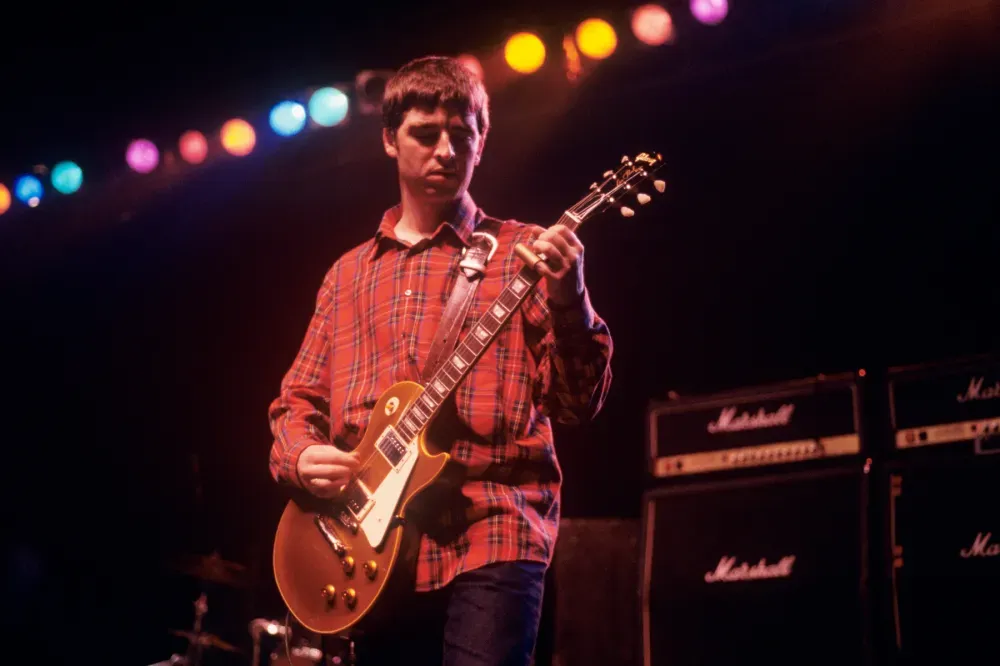
“The Masterplan” first appeared in 1995 as a B-side to “Wonderwall,” one of the most famous songs Oasis ever released. Noel Gallagher has called it the best song he has ever written, and it later gave its name to a 1998 compilation album. Gallagher, rarely known for deep lyrics, admitted this one touches on people’s fear of growing old.
He suggested that nobody truly knows what life has planned, so people should simply live the way they choose because there may be no grand design. The Flaming Lips explored a similar truth in “Do You Realize??,” released in 2002 on the album “Yoshimi Battles the Pink Robots.”
Via Rolling Stone Australia
The song sounds bright and almost poppy at first, then quickly asks listeners to accept that everyone they know will one day die. It refuses to sink into despair, urging people instead to cherish their loved ones while they still can. The track later became the official state rock song of Oklahoma, the band’s home state.
Together, these songs help people make peace with life’s uncertainty. Lead singer Wayne Coyne has said fans told the band about playing the song at a parent’s hospital bedside or after a family member was badly hurt. He described the band as deeply grateful to have a song people turn to during their heaviest moments. Both tracks offer honesty instead of easy answers, and that honesty can feel strangely comforting when life seems fragile.

Via CT 24
Tears in Heaven and Candle in the Wind
“Tears in Heaven” is one of the most heartbreaking songs ever written because it comes from a true story. In March 1991, Eric Clapton’s 4-year-old son, Conor, died after falling from a 53rd-floor window in New York City. Clapton wrote the song with Will Jennings while his grief was still raw.
He later explained that music became a healing tool for him almost without planning it, and the 1992 release went on to win three Grammy Awards, including Song of the Year. Elton John’s “Candle in the Wind” also speaks to lives cut short. First released in 1973, its lyrics by Bernie Taupin focus on Marilyn Monroe, though Taupin said it could have been about any star who died young, such as James Dean.

Via Snope
For him, the song was about beauty frozen in time. In 1997, Elton John performed a rewritten version at the televised funeral of Diana, Princess of Wales, and the recording became one of the best-selling singles in history. Both songs carry the ache of losing someone far too soon.
Clapton’s soft guitar and simple questions about meeting again in heaven speak directly to parents and families facing unthinkable loss. Elton John’s tribute, meanwhile, gave millions of mourners a shared moment to grieve together. Even listeners who have not faced such tragedy can feel the love behind every line, which is why both songs still bring tears and comfort decades later.

Via Connect Hearing
Paint It, Black and Little Talks
Grief is complicated, and anger is often described as one of its stages. For anyone furious at the unfairness of loss, the Rolling Stones’ “Paint It, Black” captures that feeling perfectly. Released in 1966, the song’s lyrics seem to come from a man who has lost the woman he loves and wants the whole world to turn as dark as his heart.
The band did not set out to write a song about mourning, but listeners found their own meaning in its restless, haunting sound. “Little Talks” by the Icelandic band Of Monsters and Men captures a different side of complicated grief. The 2011 song sounds upbeat, with cheerful horns and a catchy chorus, yet the band describes it as a ghost story.

Via uDiscover Music
Singer Nanna Bryndís Hilmarsdóttir said it was inspired by the very old house she moved into, where an elderly couple had lived until the woman passed away. The song imagines a conversation between them in which one may not fully hear the other.
These two songs show that grief does not always look gentle or simple. One gives space to rage and darkness, while the other explores the strange feeling of living among memories of someone who is gone. Many people who have lost a partner relate to sensing a loved one who is no longer there. By naming these messy emotions, both songs help listeners feel understood rather than alone in their confusion.

Via Iceland Review
You’ll Never Walk Alone, and My Heart Will Go On
“You’ll Never Walk Alone” began in the 1945 Rodgers and Hammerstein musical “Carousel,” and Gerry and the Pacemakers took it to No. 1 in the U.K. in 1963. Today it is best known as the anthem of Liverpool FC. Its lyrics encourage someone left behind to keep walking through the storm, suggesting the person who died remains close in spirit.
Mourners sang it after the Bradford City stadium fire and the Hillsborough disaster, and a 2020 version by Captain Tom Moore and Michael Ball topped the U.K. charts. Celine Dion’s “My Heart Will Go On” carries a similar message of love that outlasts death. Recorded in 1997 for the film “Titanic,” the song was written by James Horner and Will Jennings and won the Academy Award for Best Original Song.

Via The Hollywood Reporter
Its lyrics reflect the grief Rose carries for the rest of her life after Jack dies, even in her happiest moments. Dion, who has faced plenty of personal loss herself, delivers it with soaring emotion. Both songs offer something many grieving people need most, which is hope.
They suggest that love does not end when a life does, and that the people left behind are never truly alone. That message has made both tracks popular choices at funerals and memorial services around the world. Families often choose them to honor a bond that death could not break, and they continue to comfort listeners everywhere.

Via Allure
Finding Comfort Through Songs of Loss
Grief does not follow a set schedule, and it rarely moves in a straight line. Some days feel manageable, while others bring waves of sadness without warning. Songs like these can offer support on both kinds of days, givin
g people something to lean on when talking feels impossible. They serve as a reminder that others have walked the same painful road and somehow found a way to keep going.

Via Billboard
Each song on this list approaches death from a different angle. Some focus on anger and confusion, others on heartbreak, and many on the lasting power of love. That variety matters because no two people grieve in exactly the same way. A song that feels right for one person may not fit another at all, and that is perfectly normal during such a personal and difficult time.

Via Rolling Stone
For anyone carrying the weight of loss, music can be a quiet and steady friend. Listening, singing along, or simply sitting with a melody can release feelings that words cannot reach. These songs prove that even in the darkest moments, people do not have to feel completely alone. When words fail, music is often waiting to help them heal, one note at a time.