Unassigned
Using AI to Unlock the Ancient Indus Valley Language

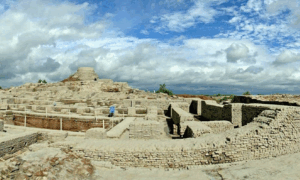
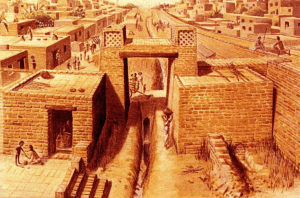
The Indus Valley Civilization, one of the world's oldest urban societies, thrived around 4,500 years ago in what is now Pakistan and northwest India. This ancient culture built planned cities with advanced drainage systems, baked brick houses, and bustling trade networks. Yet, despite these achievements, much about their daily lives remains hidden.
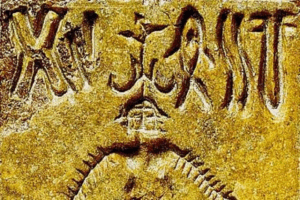
At the heart of this mystery lies their script, a collection of symbols etched on seals, pottery, and tablets. These markings, used for over 700 years, hold clues to a forgotten language. For more than a century, experts have puzzled over them without success. The script's secrets tease people with glimpses of a lost world, from trade deals to religious rituals.
 Via Long Now Foundation
Why has it stayed locked away? Short inscriptions and a lack of clues make it tough. But hope flickers with new tools like artificial intelligence and even cash prizes for solvers. This undeciphered code continues to draw scholars, sparking debates and dreams of revelation.
 Via The Financial Express
The symbols appeared on everyday items- clay tags for goods, copper tablets, and even tiny cubes. This spread suggested the script played a big role in society, perhaps for labeling cargo or marking ownership. Early explorers noted patterns, like repeated signs next to animal motifs.
But without longer texts, progress stalled. The script faded with the civilization around 1900 BCE, leaving no bridge to later Indian writings. This sudden end turned the symbols into ghosts of history, whispering unanswered questions about who these people were and how they spoke.
 Via Britannica
 Via Business Standard
No vowels show up clearly, and the mix of simple and complex forms puzzles experts. Is it a full language, a shorthand for merchants, or just emblems for clans? The variety across sites, from city centers to remote villages, shows that it unified a vast region.
 Via Dawn
This idea gained traction because the Indus people might have migrated south, carrying their words. Indo-Aryan fans pointed to Sanskrit links, imagining Vedic hymns encoded in seals. A few even called the signs non-linguistic, mere tallies for crops or clan badges, not true writing. Finnish expert Asko Parpola pushed the Dravidian angle, using computer stats to spot name-like patterns.
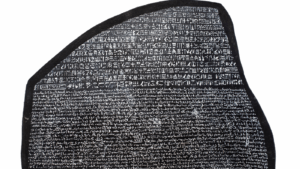
But each theory crumbled under scrutiny. Short texts offered no Rosetta Stone equivalent, that bilingual key which cracked Egyptian in 1822. Sensational books claimed breakthroughs, like reading seals as prayers to gods, but peers dismissed them as wishful thinking. These early stumbles highlighted the script's stubborn core- too few pieces for solid proof.
 Via Medium
 Via Pinterest
Still, it inspires pride in southern India, where leaders see the script as cultural heritage. Recent digs in Gujarat uncovered seals with fish signs near Dravidian-style ports, bolstering the link. If true, cracking the code could rewrite language family trees, showing Dravidian as an ancient powerhouse, not a sidelined branch.
 Via Wikipedia
But evidence thins- Indus art lacks Vedic gods like Indra, and the script predates known Sanskrit by centuries. Broader theories stretch further, proposing Mesopotamian imports via sea trade. Cuneiform tablets from Ur mention "Meluhha," likely the Indus realm, with shared weights hinting at script exchanges.
Even wilder ideas suggest Etruscan or Chinese parallels, based on stroke counts. A 1970s claim read signs as a proto-Mesopotamian dialect, but it fizzled without backing. These paths crisscross like a maze, each promising a door but leading to dead ends. They remind everyone how the script's isolation invites bold leaps, yet demands ironclad tests.
 Via DD Mishra
 Via News18
The debate echoes in labs, where models test entropy, randomness levels to gauge depth. High entropy suggests meaning; low hints at lists. Results lean toward language, but doubts linger. Resolving this could shift views- from merchant doodles to epic literature, reshaping the civilization's image.
 Via Live Science
Beyond trade, some seals show yogi figures in lotus poses, hinting at early meditation. Were these spiritual tags? Or just clan crests? Their polish and carnelian gems show craft pride. Breaking one seal's code could floodlight economics- who grew wheat, shipped tin? Daily life peeks through, too; women's figurines beside signs suggest roles in rituals. Seals bridge the abstract script to the tangible world, making decipherment a key to bustling bazaars long gone.
 Via Medium
It guesses alignments, proposing Dravidian fits. But accuracy hovers low, as biases creep in from uneven data. Rao once quipped that the case feels "closed" on its linguistic nature, yet meaning slips away. Digital archives now let global teams collaborate, scanning seals in 3D. This tech surge promises crowdsourced breakthroughs, turning solo puzzles into shared quests.
 Via Priint
Challenges persist- AI needs labeled examples, but humans lack any. Still, generative models like those behind chatbots could "hallucinate" translations, testable against artifacts. Imagine AI scanning a seal and outputting "barley from Mohenjo," verifiable by grain finds. Ethicists warn of over-reliance, risking false positives. Yet, optimists see AI bridging gaps, much like it revived Linear B from Minoan clay. For the Indus, it could finally voice the silent symbols.
 Via The Archaeologist
This code captivates because it mirrors us, ordered yet opaque, advanced yet fragile. In a decoded world, its voice could heal divides, affirming diverse roots. For now, it stands as a testament to ingenuity, urging humans to dig deeper. The Indus script, etched in stone, etches questions in minds, an eternal puzzle, promising wonders untold.
More in Unassigned
Via Long Now Foundation
Why has it stayed locked away? Short inscriptions and a lack of clues make it tough. But hope flickers with new tools like artificial intelligence and even cash prizes for solvers. This undeciphered code continues to draw scholars, sparking debates and dreams of revelation.
Discovery of the Lost Symbols
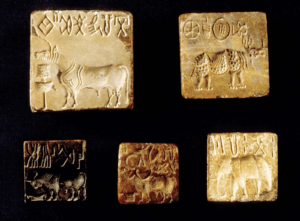
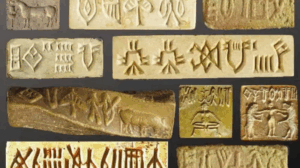
Archaeologists first uncovered the Indus script in the 1920s during digs at Harappa and Mohenjo-Daro, two key cities of the civilization. John Marshall, leading the effort, found small stone seals stamped with animals like unicorns and bulls, alongside rows of tiny signs. These artifacts hinted at a writing system more complex than simple pictures. Over time, teams unearthed about 4,000 inscriptions across hundreds of sites.
Via The Financial Express
The symbols appeared on everyday items- clay tags for goods, copper tablets, and even tiny cubes. This spread suggested the script played a big role in society, perhaps for labeling cargo or marking ownership. Early explorers noted patterns, like repeated signs next to animal motifs.
But without longer texts, progress stalled. The script faded with the civilization around 1900 BCE, leaving no bridge to later Indian writings. This sudden end turned the symbols into ghosts of history, whispering unanswered questions about who these people were and how they spoke.
Via Britannica
What Makes the Indus Script Unique
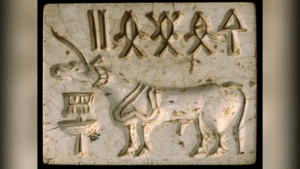
Unlike familiar alphabets, the Indus script uses about 400 distinct signs, blending strokes, curves, and dots. Most inscriptions run from right to left, with an average length of just five symbols, too brief for full sentences. Seals, the most common carriers, measure no bigger than a postage stamp, forcing compact designs. Animals often frame the text, like a humped bull or elephant, adding layers of possible meaning. Some signs repeat in sequences, hinting at grammar or numbers, while others stand alone like logos.
Via Business Standard
No vowels show up clearly, and the mix of simple and complex forms puzzles experts. Is it a full language, a shorthand for merchants, or just emblems for clans? The variety across sites, from city centers to remote villages, shows that it unified a vast region.
Early Theories and Failed Cracks
In the decades after discovery, scholars chased wild guesses to unlock the code. Some linked it to Sumerian cuneiform from Mesopotamia, seeing trade ties in shared motifs. Others tied it to ancient Egyptian hieroglyphs, noting picture-like signs. By the mid-20th century, Indian researchers proposed roots in Dravidian tongues, spoken today in southern India.
Via Dawn
This idea gained traction because the Indus people might have migrated south, carrying their words. Indo-Aryan fans pointed to Sanskrit links, imagining Vedic hymns encoded in seals. A few even called the signs non-linguistic, mere tallies for crops or clan badges, not true writing. Finnish expert Asko Parpola pushed the Dravidian angle, using computer stats to spot name-like patterns.
But each theory crumbled under scrutiny. Short texts offered no Rosetta Stone equivalent, that bilingual key which cracked Egyptian in 1822. Sensational books claimed breakthroughs, like reading seals as prayers to gods, but peers dismissed them as wishful thinking. These early stumbles highlighted the script's stubborn core- too few pieces for solid proof.
Via Medium
The Dravidian Connection Explored
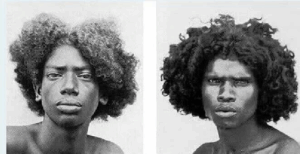
One enduring idea paints the Indus script as an ancestor to Dravidian languages like Tamil and Telugu. Proponents argue that the civilization's fall scattered its people southward, blending their speech into modern tongues. Words for animals on seals, bulls, and fish echo Dravidian terms, suggesting labels for trade goods. Place names in south India, like those ending in "-ur" for village, might trace back to Indus roots. This theory fits archaeological clues- no horse bones in Indus sites match later Aryan arrivals, leaving room for a pre-Aryan Dravidian base. Critics counter that sound matches are shaky without a deciphered key.
Via Pinterest
Still, it inspires pride in southern India, where leaders see the script as cultural heritage. Recent digs in Gujarat uncovered seals with fish signs near Dravidian-style ports, bolstering the link. If true, cracking the code could rewrite language family trees, showing Dravidian as an ancient powerhouse, not a sidelined branch.
Indo-Aryan and Beyond- Other Linguistic Paths
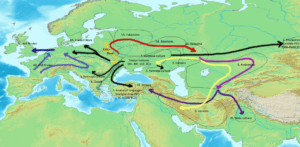
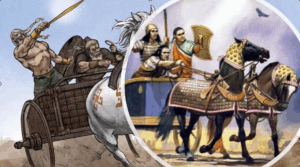
Not everyone buys the Dravidian story. Some scholars chase Indo-Aryan ties, linking the script to the Rigveda's chants from 1500 BCE. They spot swastika-like signs as early Hindu symbols, imagining seals as amulets with mantras. This view aligns with northern India's Aryan migration narrative, where horse-riding groups overlaid older cultures.
Via Wikipedia
But evidence thins- Indus art lacks Vedic gods like Indra, and the script predates known Sanskrit by centuries. Broader theories stretch further, proposing Mesopotamian imports via sea trade. Cuneiform tablets from Ur mention "Meluhha," likely the Indus realm, with shared weights hinting at script exchanges.
Even wilder ideas suggest Etruscan or Chinese parallels, based on stroke counts. A 1970s claim read signs as a proto-Mesopotamian dialect, but it fizzled without backing. These paths crisscross like a maze, each promising a door but leading to dead ends. They remind everyone how the script's isolation invites bold leaps, yet demands ironclad tests.
Via DD Mishra
Symbols or Language? The Debate Rages
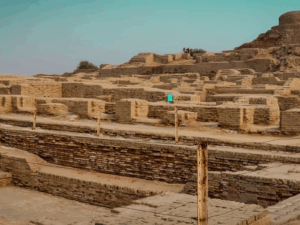
A core fight divides experts- Is the Indus script real writing or just symbols? True scripts encode full ideas, like English sentences. But with short bursts, some call it "proto-writing", signs for objects, not abstract thoughts. Seals might tally goats or mark potters' guilds, not spell stories. This view explains the uniformity- practical tools for a trading empire, not poems. Counterarguments point to sequences mimicking grammar, fish then man, perhaps "catch fish." Statistical studies show sign pairs follow rules, like word order in tongues. If symbols only, why 400 varieties? That complexity screams language.
Via News18
The debate echoes in labs, where models test entropy, randomness levels to gauge depth. High entropy suggests meaning; low hints at lists. Results lean toward language, but doubts linger. Resolving this could shift views- from merchant doodles to epic literature, reshaping the civilization's image.
Seals - Windows to Trade and Daily Life
Most inscriptions grace seals, square stones punched with text and beasts. These weren't jewelry but stamps for clay lumps sealing bundles. Imagine a trader pressing a bull seal on a sack of barley, proving origin. Such use screams commerce- the Indus spanned rivers to deserts, swapping beads for lapis lazuli. Seals cluster at docks like Lothal, a planned harbor with locks. Inscriptions there might list weights or ports, guiding safe deals.
Via Live Science
Beyond trade, some seals show yogi figures in lotus poses, hinting at early meditation. Were these spiritual tags? Or just clan crests? Their polish and carnelian gems show craft pride. Breaking one seal's code could floodlight economics- who grew wheat, shipped tin? Daily life peeks through, too; women's figurines beside signs suggest roles in rituals. Seals bridge the abstract script to the tangible world, making decipherment a key to bustling bazaars long gone.
The Dawn of Digital Tools in Decipherment
Computers entered the fray in the 1960s, cataloging signs for pattern hunts. Rajesh Rao, a University of Washington professor, used stats to probe entropy, finding language-like complexity. His work, shared in journals, treats seals as data sets, spotting frequent combos. Yet, machines hit walls- short texts starve algorithms of training fuel. Enter machine learning, trained on known scripts like Sumerian.
Via Medium
It guesses alignments, proposing Dravidian fits. But accuracy hovers low, as biases creep in from uneven data. Rao once quipped that the case feels "closed" on its linguistic nature, yet meaning slips away. Digital archives now let global teams collaborate, scanning seals in 3D. This tech surge promises crowdsourced breakthroughs, turning solo puzzles into shared quests.
Artificial Intelligence- A New Hope
Artificial intelligence offers fresh firepower against the ancient riddle. AI excels at pattern recognition, devouring vast datasets to infer rules. Researchers feed it Indus images alongside Tamil texts, seeking matches. Neural networks simulate "sign to sound" maps, predicting phonemes. A recent project in India used deep learning to cluster signs, uncovering hidden grammar.
Via Priint
Challenges persist- AI needs labeled examples, but humans lack any. Still, generative models like those behind chatbots could "hallucinate" translations, testable against artifacts. Imagine AI scanning a seal and outputting "barley from Mohenjo," verifiable by grain finds. Ethicists warn of over-reliance, risking false positives. Yet, optimists see AI bridging gaps, much like it revived Linear B from Minoan clay. For the Indus, it could finally voice the silent symbols.
Explore the AI Quest to Decode the Indus Script
As tools evolve, the hunt presses on. Quantum computing could crunch combos beyond AI's reach. Global grants fund joint digs, seeking longer texts. Youth programs train next-gen codebreakers, blending STEM and history. Optimism brews- one seal might tip the scale. Until then, the script teaches humility, humanity's story half-told, waiting for bold hearts.
Via The Archaeologist
This code captivates because it mirrors us, ordered yet opaque, advanced yet fragile. In a decoded world, its voice could heal divides, affirming diverse roots. For now, it stands as a testament to ingenuity, urging humans to dig deeper. The Indus script, etched in stone, etches questions in minds, an eternal puzzle, promising wonders untold.