Unassigned
The Invisible World Beyond Human Senses

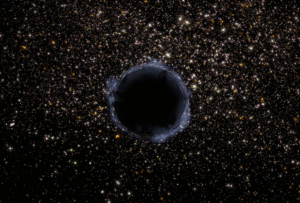
The universe is far larger and stranger than what you can see with your naked eyes. Scientists estimate that only about five percent of the universe consists of ordinary matter, like stars, planets, and people. The remaining ninety-five percent is invisible to us, made up of dark matter and dark energy. These hidden components shape how galaxies form and expand, yet you cannot detect them directly.
 Dark matter does not emit or absorb light, making it impossible to spot with telescopes. Instead, people infer its presence through gravitational effects on visible objects. Dark energy, on the other hand, drives the accelerating expansion of the universe. Together, they dominate the cosmic landscape, reminding people how limited direct observations truly are.
 Scientists propose that dark matter consists of particles that interact weakly with light and ordinary atoms. Experiments in underground labs search for these elusive particles using sensitive detectors. So far, direct detection remains challenging, but indirect evidence from cosmic collisions strengthens the case. Understanding dark matter could reveal new physics beyond the current models.
 Unlike matter, dark energy does not clump but remains uniform across vast distances. Its repulsive effect grows as the universe expands, potentially leading to a cold, empty future. Researchers study cosmic microwave background radiation to map its influence. Theories suggest it might be a property of space itself or a dynamic field.
 Animals perceive more of this spectrum; bees see ultraviolet patterns on flowers to find nectar. Birds navigate using polarized light invisible to us. These abilities highlight how evolution tunes senses to specific needs. Expanding the tools, like night-vision goggles, lets people glimpse these hidden worlds.
 Via Centre of Excellence
Medical ultrasound devices send high-frequency waves to image inside the body safely. Seismic sensors detect low-frequency earth rumbles before earthquakes. These technologies extend the auditory reach, revealing vibrations that shape animal behavior and natural events. Every day life is filled with unheard symphonies influencing the world around us.
 Via Live Science
These particles oscillate between three types, a discovery that earned a Nobel Prize. Solar fusion produces electron neutrinos, but fewer arrive than predicted, solved by this flavor-changing. Neutrinos from supernovae provide clues about stellar explosions. Their ghostly nature makes them ideal for probing dense objects like neutron stars.
 Via National Geographic Education
Snakes like pit vipers sense infrared with specialized organs to hunt warm-blooded prey at night. Firefighters wear gear with infrared viewers to navigate smoke-filled buildings. Every day, remote use infrared signals to control devices. This hidden light uncovers energy flows in nature and technology.
 Via Gamma Scientific
Insects navigate using ultraviolet polarization in the sky. Forensic experts use UV lamps to detect fluids and fibers at crime scenes. Black lights make certain materials glow for art and entertainment. This energetic light influences health, ecology, and investigation methods.
 Via New Scientist
Satellites use radio for GPS positioning accurate to meters. Astronomers map hydrogen gas in galaxies via its radio emissions. Thunderstorms generate radio noise detectable worldwide. This invisible band connects people globally and reveals the universe's structure.
 Via Medium
Dentists use low-dose X-rays to check teeth without surgery. Art conservators examine paintings underneath for hidden layers. These rays come from accelerating electrons in strong fields. Safety shields protect against overexposure in controlled settings.
 Via Space
Medical therapies target tumors with precise gamma beams. Food irradiation uses them to kill bacteria without chemicals. Cosmic rays hitting the atmosphere produce secondary gamma rays. Studying them unveils extreme physics in the universe.
 Via Live Science
Seismic networks monitor underground vibrations for earthquakes and volcanoes. Sonar maps ocean floors using sound echoes. These instruments bridge your sensory gaps, turning invisible phenomena into data. Advancements continue to push boundaries of detection.
 Via New Scientist
Microwaves heat food by exciting water molecules internally. Fluorescent lights convert ultraviolet to visible light inside tubes. These technologies rely on hidden forces integrated into daily life. Awareness of them enhances appreciation for modern conveniences.
 Via Dawn
Whales sing complex songs, traveling thousands of miles underwater. Currents carry nutrients globally, influencing the climate. Most ocean floor remains unmapped, hiding potential discoveries. Exploration robots extend the reach into this vast, invisible realm.
 Via Live Science
Nanoparticles in the air affect health and electronics. DNA coils tightly in cells, directing life processes. Electron microscopes reveal atomic structures. This tiny scale operates constantly, shaping biology and materials.
 Via Scientific American
Every day, reality emerges from probabilistic quantum rules. Lasers rely on stimulated emission of coherent light. Superconductors carry electricity without resistance at low temperatures. Probing this realm challenges the macroscopic perceptions.
 Via NASA Science
Brain-computer interfaces may expand sensory inputs directly. Virtual reality simulates unseen spectra for training. Collaborative global efforts accelerate progress. The universe holds endless layers yet to be uncovered.
 Via Youmatter
The invisible ninety-five percent invites ongoing inquiry. Each revelation reshapes understanding of existence. Staying open to surprises enriches the human experience. The journey of discovery continues indefinitely.
More in Unassigned
Dark matter does not emit or absorb light, making it impossible to spot with telescopes. Instead, people infer its presence through gravitational effects on visible objects. Dark energy, on the other hand, drives the accelerating expansion of the universe. Together, they dominate the cosmic landscape, reminding people how limited direct observations truly are.
What Is Dark Matter?
Dark matter is a mysterious substance that provides the extra gravity needed to hold galaxies together. Without it, stars would fly apart due to their rapid spins. Observations of galaxy rotations show that there must be unseen mass pulling everything in place. This invisible stuff outweighs normal matter by about five to one.
Scientists propose that dark matter consists of particles that interact weakly with light and ordinary atoms. Experiments in underground labs search for these elusive particles using sensitive detectors. So far, direct detection remains challenging, but indirect evidence from cosmic collisions strengthens the case. Understanding dark matter could reveal new physics beyond the current models.
The Role of Dark Energy
Dark energy is the force causing the universe to expand at an increasing rate. In the late 1990s, astronomers discovered that distant supernovae were farther away than expected, indicating acceleration. This unseen energy permeates space and counteracts gravity on large scales. It makes up roughly sixty-eight percent of the universe's total energy.
Unlike matter, dark energy does not clump but remains uniform across vast distances. Its repulsive effect grows as the universe expands, potentially leading to a cold, empty future. Researchers study cosmic microwave background radiation to map its influence. Theories suggest it might be a property of space itself or a dynamic field.
Limits of Human Vision
Our eyes detect only a tiny portion of the electromagnetic spectrum, known as visible light. This narrow band ranges from red to violet wavelengths, allowing you to see colors and shapes. Beyond this, ultraviolet light from the sun can burn skin, but you need special creams to protect against it. Infrared rays warm the bodies, yet remain unseen without thermal cameras.
Animals perceive more of this spectrum; bees see ultraviolet patterns on flowers to find nectar. Birds navigate using polarized light invisible to us. These abilities highlight how evolution tunes senses to specific needs. Expanding the tools, like night-vision goggles, lets people glimpse these hidden worlds.
Sounds Beyond Hearing
Human ears pick up sounds between twenty and twenty thousand hertz, covering speech and music. Elephants communicate with infrasound below this range, traveling miles through the ground. Dogs hear ultrasonic whistles that train them without disturbing people. Bats use echolocation at high frequencies to hunt in total darkness.
Via Centre of Excellence
Medical ultrasound devices send high-frequency waves to image inside the body safely. Seismic sensors detect low-frequency earth rumbles before earthquakes. These technologies extend the auditory reach, revealing vibrations that shape animal behavior and natural events. Every day life is filled with unheard symphonies influencing the world around us.
Neutrinos - Ghostly Travelers
Neutrinos are subatomic particles that pass through matter almost without interaction. Trillions of streams through your body every second from the sun and cosmic sources. They carry a tiny mass and travel near light speed, rarely colliding with atoms. Detectors buried deep underground capture rare interactions to study them.
Via Live Science
These particles oscillate between three types, a discovery that earned a Nobel Prize. Solar fusion produces electron neutrinos, but fewer arrive than predicted, solved by this flavor-changing. Neutrinos from supernovae provide clues about stellar explosions. Their ghostly nature makes them ideal for probing dense objects like neutron stars.
Infrared - Seeing Heat
Infrared radiation reveals heat signatures invisible to the naked eye. Thermal cameras detect warm bodies in the dark, aiding search and rescue operations. Astronomers use infrared telescopes to peer through cosmic dust clouds where stars form. This light penetrates obscurations that block visible wavelengths.
Via National Geographic Education
Snakes like pit vipers sense infrared with specialized organs to hunt warm-blooded prey at night. Firefighters wear gear with infrared viewers to navigate smoke-filled buildings. Every day, remote use infrared signals to control devices. This hidden light uncovers energy flows in nature and technology.
Ultraviolet - The Sun's Hidden Rays
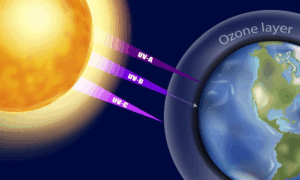
Ultraviolet light from the sun energizes the skin to produce vitamin D, but it can cause damage over time. It lies just beyond violet in the spectrum, divided into UVA, UVB, and UVC bands. Protective ozone absorbs most UVC, while UVA penetrates deeply. Sunglasses and sunscreen block these rays to prevent harm.
Via Gamma Scientific
Insects navigate using ultraviolet polarization in the sky. Forensic experts use UV lamps to detect fluids and fibers at crime scenes. Black lights make certain materials glow for art and entertainment. This energetic light influences health, ecology, and investigation methods.
Radio Waves - Cosmic Messengers
Radio waves are long-wavelength electromagnetic signals that travel vast distances. Pulsars emit regular radio pulses, acting as cosmic clocks for navigation. SETI searches these waves for intelligent signals from other worlds. Every day, broadcasts carry music and news through the air.
Via New Scientist
Satellites use radio for GPS positioning accurate to meters. Astronomers map hydrogen gas in galaxies via its radio emissions. Thunderstorms generate radio noise detectable worldwide. This invisible band connects people globally and reveals the universe's structure.
X-Rays - Peering Inside
X-rays penetrate soft tissue but bounce off bones, creating medical images. Airports scan luggage with them to spot hidden items. Astronomers observe hot gas in galaxy clusters emitting X-rays. Supernova remnants glow brightly in this high-energy light.
Via Medium
Dentists use low-dose X-rays to check teeth without surgery. Art conservators examine paintings underneath for hidden layers. These rays come from accelerating electrons in strong fields. Safety shields protect against overexposure in controlled settings.
Gamma Rays - Ultimate Energy
Gamma rays are the most energetic form of light, produced in nuclear reactions and black holes. They penetrate deeply, requiring lead shielding for safety. Detectors on satellites map gamma-ray bursts from distant explosions. These events release more energy in seconds than the sun does in its lifetime.
Via Space
Medical therapies target tumors with precise gamma beams. Food irradiation uses them to kill bacteria without chemicals. Cosmic rays hitting the atmosphere produce secondary gamma rays. Studying them unveils extreme physics in the universe.
Tools That Reveal the Unseen
Particle accelerators smash atoms to create and detect rare particles like those in dark matter. Telescopes in space avoid atmospheric interference for clearer views across the spectrum. Gravitational wave detectors sense ripples from merging black holes, a new way to "hear" the cosmos.
Via Live Science
Seismic networks monitor underground vibrations for earthquakes and volcanoes. Sonar maps ocean floors using sound echoes. These instruments bridge your sensory gaps, turning invisible phenomena into data. Advancements continue to push boundaries of detection.
Everyday Invisible Influences
Wi-Fi signals fill homes with data streams you cannot see or hear. Magnetic fields from Earth guide compasses and migrating birds. Static electricity builds up unnoticed until a spark jumps. Air pressure changes affect the weather and your ears on planes.
Via New Scientist
Microwaves heat food by exciting water molecules internally. Fluorescent lights convert ultraviolet to visible light inside tubes. These technologies rely on hidden forces integrated into daily life. Awareness of them enhances appreciation for modern conveniences.
The Ocean's Hidden Depths
Deep-sea creatures use bioluminescence to communicate in eternal darkness. Hydrothermal vents spew hot, mineral-rich water, supporting unique ecosystems. Pressure at depths crushes ordinary submarines, requiring special designs. Sonar reveals underwater mountains and trenches unseen from the surface.
Via Dawn
Whales sing complex songs, traveling thousands of miles underwater. Currents carry nutrients globally, influencing the climate. Most ocean floor remains unmapped, hiding potential discoveries. Exploration robots extend the reach into this vast, invisible realm.
Microscopic Worlds Around Us
Bacteria and viruses inhabit every surface, invisible without microscopes. Dust mites live in bedding, feeding on skin flakes. Pollen grains trigger allergies as they float unseen. Fungal networks connect tree roots underground, sharing resources.
Via Live Science
Nanoparticles in the air affect health and electronics. DNA coils tightly in cells, directing life processes. Electron microscopes reveal atomic structures. This tiny scale operates constantly, shaping biology and materials.
Quantum Weirdness Unseen
Particles exist in multiple states until observed, a quantum superposition. Entanglement links particles instantly over distances, defying classical intuition. Tunnels through barriers allow improbable escapes. These effects power emerging computers and secure communications.
Via Scientific American
Every day, reality emerges from probabilistic quantum rules. Lasers rely on stimulated emission of coherent light. Superconductors carry electricity without resistance at low temperatures. Probing this realm challenges the macroscopic perceptions.
Future Discoveries Await
New telescopes will image exoplanets in detail, seeking signs of life. Advanced colliders hunt for physics beyond the standard model. AI analyzes vast data sets to spot patterns humans miss. Space missions sample asteroids and moons for clues.
Via NASA Science
Brain-computer interfaces may expand sensory inputs directly. Virtual reality simulates unseen spectra for training. Collaborative global efforts accelerate progress. The universe holds endless layers yet to be uncovered.
Explore the World Beyond Human Perception
Recognizing the perceptual limits fosters humility and curiosity. History shows repeated expansions of what you consider real, from atoms to galaxies. Education equips future generations with tools to explore further. Personal experiments with simple detectors spark wonder.
Via Youmatter
The invisible ninety-five percent invites ongoing inquiry. Each revelation reshapes understanding of existence. Staying open to surprises enriches the human experience. The journey of discovery continues indefinitely.