Unassigned
OpenAI's GPT-5 Nears Launch After Extended Development

After months of anticipation, OpenAI is now signaling that GPT-5 is close to launch. Over the past week, several posts from OpenAI’s top executives and team members have hinted at a major reveal. These include references made by CEO Sam Altman and the company’s head of applied research, Boris Power. Their recent statements and cryptic posts suggest the release may occur as early as this week.
 Via The Information
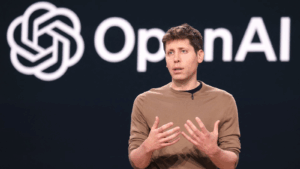
On X, OpenAI posted a teaser reading “LIVE5TREAM THURSDAY 10 AM PT,” swapping the “S” in “livestream” with a “5.” This stylistic change is being viewed as a clear indication that GPT 5 will be the highlight of the upcoming event. The broader AI community has taken note, and speculation continues to grow.
 Via HardReset
Last month, Altman confirmed that OpenAI was preparing to launch GPT 5 “soon,” a message consistent with earlier reports by journalists like Tom Warren. Warren had stated in February that Microsoft was expanding its server capacity to accommodate the new model. These developments point toward a carefully planned rollout strategy involving infrastructure readiness and internal testing.
 Via Blue Manakin
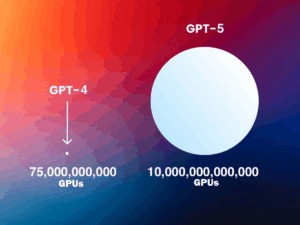
Although GPT 4.5 and GPT 4o were introduced in the meantime, these models were largely considered transitional. The expectations surrounding GPT 5 stem from the magnitude of improvements seen in the jump from GPT 3 to GPT 4. Many are now questioning whether GPT 5 will bring a similar level of innovation or represent a more incremental upgrade.
 Via Reuters
Another hurdle was the scarcity of high-quality training data. OpenAI’s former chief scientist, Ilya Sutskever, had previously pointed out that, while processing power was expanding rapidly, available datasets were not keeping pace. This data bottleneck posed a significant obstacle to scaling up AI model capabilities.
 Via Tom’s Guide
This uncertainty adds to the risk and complexity of building next-generation models. OpenAI also encountered difficulties during these “training runs.” Because of the intricacy of the system, failures can happen unexpectedly. The scale of these operations means even minor errors can impact months of work, leading to further delays in the deployment timeline.
 Via The Indian Express
The integration of test time computing represents a shift in strategy. Rather than relying solely on training to boost intelligence, OpenAI now channels more resources into execution, enabling the model to adapt in real time to the complexity of user inputs. This could improve responses in areas like advanced mathematics, logic, and multi-step problem-solving.
 Via Vocal Media
OpenAI aims to remove this friction. According to Nick Turley, head of ChatGPT, the goal is to make it so the average user does not need to think about which model to use. GPT 5 will make those decisions automatically, streamlining the process and improving user experience across the platform.
 Via Medium
By blending these capabilities, GPT 5 will aim to offer the best of both worlds. It will prioritize speed and cost for simpler queries while applying greater computational depth to tasks requiring higher accuracy and critical thinking. This approach allows users to receive optimal performance without needing to manage or understand the technical decisions happening behind the scenes.
 Via News24
This tiered system is designed to scale the experience based on user needs while also managing system load. GPT 5 is expected to integrate all of ChatGPT’s best features, including Voice, Canvas, Search, and Deep Research. These tools will be available in combination, offering a more comprehensive AI interaction.
 Via Boston Consulting Group
OpenAI’s recent announcement of its open-weight models, GPT OSS 120b and GPT OSS 20b, has already caused a stir. Yet, even with these launches, the attention quickly shifted back to GPT-5. Many believe that the open models were simply a prelude to something far more significant. The timing and messaging around both releases have fueled speculation that OpenAI is carefully staging its rollout strategy.
 Via GW Media Relations
This consistent forward movement suggests the company is prepared to navigate both technological and legal challenges simultaneously. It also signals strong confidence in the readiness of its next flagship model, making it distinctive and extraordinary.
 Via Data Scientest
Despite these advances, ChatGPT remains the most widely used tool, making GPT 5’s upcoming release a potentially transformative moment. The new model could strengthen OpenAI’s position and increase the gap between it and other platforms.
 Via The Verge
That standard, achieved by an anonymous and unreleased model, remains out of reach for now. Altman’s comments indicate that, although GPT 5 will deliver significant enhancements, it may not represent the peak of AI reasoning just yet. Users are encouraged to view it as part of an ongoing progression rather than a final destination.
 Via GeekFlare
With automatic model selection, enhanced reasoning abilities, and tiered access to advanced tools, GPT 5 is expected to shape the next phase of generative AI. Although its full capabilities remain to be seen, the groundwork laid by OpenAI points to a substantial evolution in how language models are developed and deployed. The world now waits for the official reveal.
More in Unassigned
Via The Information
On X, OpenAI posted a teaser reading “LIVE5TREAM THURSDAY 10 AM PT,” swapping the “S” in “livestream” with a “5.” This stylistic change is being viewed as a clear indication that GPT 5 will be the highlight of the upcoming event. The broader AI community has taken note, and speculation continues to grow.
Public Hints from OpenAI Leaders Intensify Speculation
OpenAI CEO Sam Altman has actively contributed to the buzz. He recently shared a screenshot revealing “ChatGPT 5” in the top-left corner of the interface. Expectations that the release is soon were further fueled around the same time by Boris Power's excitement on X about how the public would react to GPT-5.
Via HardReset
Last month, Altman confirmed that OpenAI was preparing to launch GPT 5 “soon,” a message consistent with earlier reports by journalists like Tom Warren. Warren had stated in February that Microsoft was expanding its server capacity to accommodate the new model. These developments point toward a carefully planned rollout strategy involving infrastructure readiness and internal testing.
A Long Road from GPT 4 to GPT 5
The journey from GPT 4 to GPT 5 has been longer than many anticipated. GPT 4, which debuted in March 2023, marked a significant leap in intelligence, outperforming its predecessor GPT 3.5 by a wide margin. Notably, GPT 4 achieved a top 10 percent score in a simulated bar exam, while GPT 3.5 had scored in the bottom 10 percent.
Via Blue Manakin
Although GPT 4.5 and GPT 4o were introduced in the meantime, these models were largely considered transitional. The expectations surrounding GPT 5 stem from the magnitude of improvements seen in the jump from GPT 3 to GPT 4. Many are now questioning whether GPT 5 will bring a similar level of innovation or represent a more incremental upgrade.
Challenges Slowed the Timeline but Did Not Derail It
Initially expected earlier in the year, GPT 5’s release was delayed due to complications in development. In April, Altman acknowledged the challenges developers faced in integrating multiple complex components into the model. These issues included maintaining performance, managing system complexity, and ensuring server capacity for what he described as “unprecedented demand.”
Via Reuters
Another hurdle was the scarcity of high-quality training data. OpenAI’s former chief scientist, Ilya Sutskever, had previously pointed out that, while processing power was expanding rapidly, available datasets were not keeping pace. This data bottleneck posed a significant obstacle to scaling up AI model capabilities.
Technical Setbacks During Model Training
Training massive language models like GPT-5 involves extensive computation, often requiring months of system runs. During this process, hardware-induced failures can occur, affecting performance and reliability. Researchers typically do not know the final model’s capabilities until the training is complete.
Via Tom’s Guide
This uncertainty adds to the risk and complexity of building next-generation models. OpenAI also encountered difficulties during these “training runs.” Because of the intricacy of the system, failures can happen unexpectedly. The scale of these operations means even minor errors can impact months of work, leading to further delays in the deployment timeline.
Combining Strengths Through Test Time Compute
To address some of the challenges of AI performance, OpenAI has invested in a system called “test time compute.” This method involves allocating additional processing power at the time of a task, especially for problems that demand deeper reasoning or complex decision-making. According to Altman, GPT-5 will incorporate this feature alongside its large foundational models.
Via The Indian Express
The integration of test time computing represents a shift in strategy. Rather than relying solely on training to boost intelligence, OpenAI now channels more resources into execution, enabling the model to adapt in real time to the complexity of user inputs. This could improve responses in areas like advanced mathematics, logic, and multi-step problem-solving.
GPT 5 Aims to Automatically Select the Best Model
A key improvement expected in GPT 5 is its ability to autonomously choose the most suitable model for any given prompt. Current versions of ChatGPT allow users to manually toggle between models, such as those optimized for reasoning or speed. However, many users may not know which model suits their task best.
Via Vocal Media
OpenAI aims to remove this friction. According to Nick Turley, head of ChatGPT, the goal is to make it so the average user does not need to think about which model to use. GPT 5 will make those decisions automatically, streamlining the process and improving user experience across the platform.
Improved Efficiency and Answer Quality Expected
With model selection handled in the background, GPT 5 is expected to deliver more efficient and higher-quality results. Reasoning models tend to be better at solving complex problems but are slower and more resource-intensive. On the other hand, general-purpose GPT models are faster but may not always deliver the most precise answer for complicated tasks.
Via Medium
By blending these capabilities, GPT 5 will aim to offer the best of both worlds. It will prioritize speed and cost for simpler queries while applying greater computational depth to tasks requiring higher accuracy and critical thinking. This approach allows users to receive optimal performance without needing to manage or understand the technical decisions happening behind the scenes.
Access Levels and Feature Tiers for GPT 5 Users
When GPT 5 launches, it will be made available across different user tiers. Free ChatGPT users will reportedly have access to the model with standard intelligence settings. Plus subscribers will benefit from a higher intelligence level, and Pro subscribers will gain access to the most advanced version.
Via News24
This tiered system is designed to scale the experience based on user needs while also managing system load. GPT 5 is expected to integrate all of ChatGPT’s best features, including Voice, Canvas, Search, and Deep Research. These tools will be available in combination, offering a more comprehensive AI interaction.
Community Reaction and Developer Interest Grows
As anticipation builds, developers and users alike are watching closely. The AI community has taken note of every post, teaser, and indirect reference related to GPT 5. Companies like Flowith have even hinted that GPT-5 will soon be included in their model picker tools. These subtle acknowledgments from third-party developers further support the theory that the release is imminent.
Via Boston Consulting Group
OpenAI’s recent announcement of its open-weight models, GPT OSS 120b and GPT OSS 20b, has already caused a stir. Yet, even with these launches, the attention quickly shifted back to GPT-5. Many believe that the open models were simply a prelude to something far more significant. The timing and messaging around both releases have fueled speculation that OpenAI is carefully staging its rollout strategy.
OpenAI Maintains Momentum Despite Legal Pressures
The lead-up to GPT 5’s release has not been without controversy. Ziff Davis, parent company of several technology publications, filed a lawsuit against OpenAI in April 2025. The lawsuit claims that OpenAI’s training methods infringed on copyrighted material. Despite these legal pressures, OpenAI has continued its product development and public messaging without pause.
Via GW Media Relations
This consistent forward movement suggests the company is prepared to navigate both technological and legal challenges simultaneously. It also signals strong confidence in the readiness of its next flagship model, making it distinctive and extraordinary.
Competition Intensifies with Rivals Advancing Fast
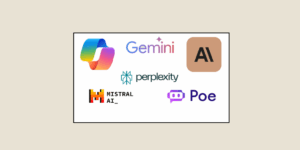
OpenAI’s competitors have not remained idle. Google launched Gemini 2.5 models in March, offering reasoning capabilities and handling large prompts. Anthropic introduced its Claude 4 models in May, one of which is tailored for programming and other intricate tasks. Meta’s Llama 3 open-source models also entered the market with notable strength.
Via Data Scientest
Despite these advances, ChatGPT remains the most widely used tool, making GPT 5’s upcoming release a potentially transformative moment. The new model could strengthen OpenAI’s position and increase the gap between it and other platforms.
Altman Sets Expectations - Promising but Experimental
While expectations for GPT 5 are high, Altman has urged users to keep them grounded. In recent posts, he clarified that the model is still experimental. He stated that GPT 5 would include new research techniques but would not achieve International Math Olympiad gold-medal-level reasoning.
Via The Verge
That standard, achieved by an anonymous and unreleased model, remains out of reach for now. Altman’s comments indicate that, although GPT 5 will deliver significant enhancements, it may not represent the peak of AI reasoning just yet. Users are encouraged to view it as part of an ongoing progression rather than a final destination.
Explore GPT-5 - OpenAI's Next-Gen AI Model Arriving Soon
OpenAI is on the verge of unveiling one of its most anticipated projects to date. After a long development process, marked by technical challenges, infrastructure preparation, and rising competition, GPT 5 appears ready for public introduction. Strong hints from top OpenAI leaders suggest that the release could occur within days.
Via GeekFlare
With automatic model selection, enhanced reasoning abilities, and tiered access to advanced tools, GPT 5 is expected to shape the next phase of generative AI. Although its full capabilities remain to be seen, the groundwork laid by OpenAI points to a substantial evolution in how language models are developed and deployed. The world now waits for the official reveal.