Unassigned
Costa Concordia - The Mystery of the 2012 Sinking

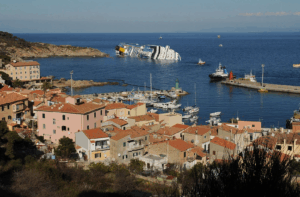
On January 13, 2012, at 7:15 p.m., the Costa Concordia left the port of Civitavecchia, Italy, for a seven-day Mediterranean cruise. The ship was a floating city. Longer than three football fields and taller than a ten-story building, it carried 4,252 people, 1,023 crew members, and 3,229 passengers from all over the world.
 Via Britannica
Inside, the ship felt like a luxury resort. Guests enjoyed four swimming pools, five restaurants, thirteen bars, a casino, a basketball court, a large gym with sauna and Turkish bath, and even a Formula 1 racing simulator. Many people called it the most beautiful cruise ship in Europe. No one imagined that just hours later, their vacation would turn into a nightmare.
 Via CNN
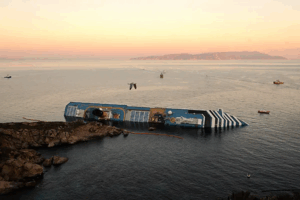
Schettino wanted to impress a retired captain friend who once lived on the island. He brought the Concordia within 150 meters of the rocky coast at night while traveling at almost full speed. The normal safe distance for a ship this size is 7–8 kilometers offshore. The water near Giglio was shallow and full of hidden rocks.
 Via Ideas
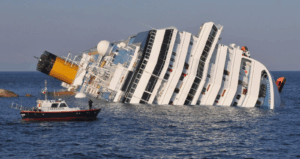
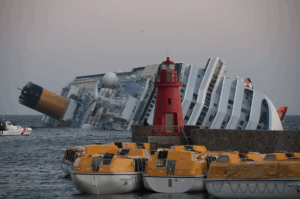
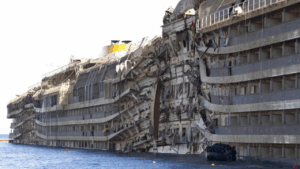
The impact tore a 70-meter (230-foot) gash along the left side of the hull. Cold seawater rushed in faster than pumps could push it out. Within minutes, the engine room flooded. The main power failed. The giant ship began drifting and slowly tilting.
 Via safety4sea
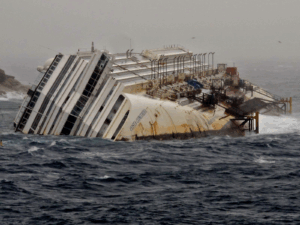
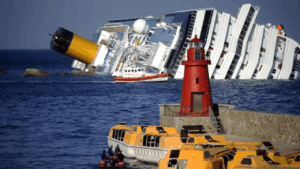
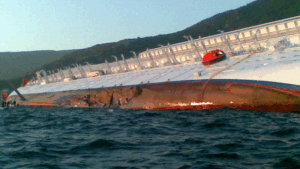
In reality, the ship was taking on thousands of tons of water every minute. By 10:00 p.m., the tilt reached 20 degrees. Furniture slid across the floors. People struggled to walk. Only at 10:55 p.m., more than an hour after hitting the rock, did Captain Schettino finally order “abandon ship.” By then, the ship leaned almost 30 degrees, escaping much harder.
 Via SBS
Some crew members acted bravely from the start. They ignored the captain’s delay and began putting passengers into lifeboats early. An Indian waitress named Karnaatha Rameshana helped blind and wheelchair-bound guests reach safety. Waiter Russell Rebello gave his own life jacket to a passenger and kept helping others until he disappeared in the chaos. He was one of the 32 people who did not survive.
 Via The Telegraph
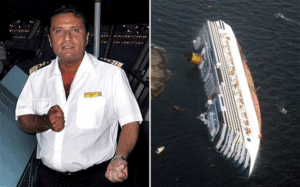
The recorded conversation became famous worldwide. Coast Guard Commander Gregorio De Falco shouted, “Get back on board! It is an order!” Schettino made excuses and refused to return. Italians later nicknamed him “Captain Coward.”
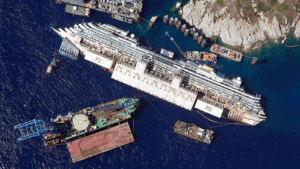 Via CBC
Residents opened homes, schools, and churches to give survivors blankets, hot drinks, and dry clothes. In a few hours, the tiny Giglio became a rescue center for more than 4,000 shocked and freezing passengers.
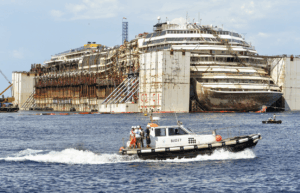 Via The Atlantic
Sadly, most trapped passengers drowned in their cabins. In total, 32 people lost their lives. The half-sunken ship still held almost 2 million liters of heavy fuel. Engineers feared an environmental disaster if it leaked. For months, experts pumped out the thick, cold fuel in winter conditions.
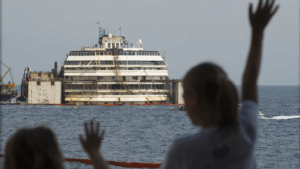
Then came the hardest part, lifting a 114,000-ton ship that was lying on its side. In September 2013, in an operation called “parbuckling,” engineers used giant steel cables and huge floating boxes filled with water to slowly roll the ship upright.
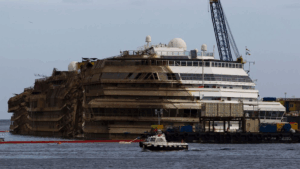 Via ABC News
It took 19 hours and was watched live by millions. In July 2014, the wreck was towed to Genoa and finally scrapped. The entire salvage cost more than $1.5 billion, almost three times the price of building the ship.
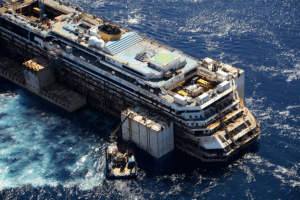 Via The New York Times
The disaster revealed many problems: the captain ignored safety rules to show off, the crew had little emergency training, language barriers slowed communication (many crew spoke little Italian), and the company had allowed dangerous “sail-bys” in the past.
 Via Wikimedia Commons
Today, the rusting rock that tore open the hull still carries a scar shaped exactly like the ship’s wound, a silent reminder of Giglio Island. Cruise safety rules are now stricter worldwide. Captains can no longer take ships dangerously close to shore for show. Emergency drills are taken more seriously.
And every new officer learns the name Schettino as a warning of what happens when pride and lies take command of a ship. The Costa Concordia story is more than a sea disaster. It is a powerful lesson: leadership matters, honesty matters, and when thousands of lives depend on one person’s decisions, there is no room for show-offs or cowards.
 Via SBS
 Via ABC News
On the island, the 700 residents of Giglio turned their tiny village into a rescue base. Fishermen launched every boat they owned. Families opened their homes to freezing strangers. The local priest turned the church into a shelter, and the school became a first-aid station. One elderly islander even rowed out alone in his small wooden boat to pick up people swimming in the dark. Their quick actions saved hundreds of lives that the official rescue teams could not reach in time.
 Via Smithsonian Magazine
In September 2013, after 19 hours of careful pulling with steel cables and giant floating boxes, the ship was rolled upright in an operation watched live by millions. In July 2014, it was towed 200 miles to Genoa, moving at just two knots and escorted by a fleet of tugboats. There, workers spent three more years cutting the once-proud ship into pieces.
Elevators, chandeliers, marble floors, everything was scrapped or sold. The total cost of the cleanup reached almost two billion dollars, far more than the ship had cost to build. Today, only a scar on the underwater rock and stricter safety rules remain as reminders of the night the floating palace died.
More in Unassigned
Via Britannica
Inside, the ship felt like a luxury resort. Guests enjoyed four swimming pools, five restaurants, thirteen bars, a casino, a basketball court, a large gym with sauna and Turkish bath, and even a Formula 1 racing simulator. Many people called it the most beautiful cruise ship in Europe. No one imagined that just hours later, their vacation would turn into a nightmare.
A Dangerous Shortcut
At around 9:30 p.m., only two and a half hours after leaving port, Captain Francesco Schettino ordered the huge ship to leave its safe deep water and steer very close to Giglio Island. This risky move is called a “sail-by.” Ships sometimes do it to greet people on shore with lights and horn blasts, but it is only safe when done far from land in deep water.
Via CNN
Schettino wanted to impress a retired captain friend who once lived on the island. He brought the Concordia within 150 meters of the rocky coast at night while traveling at almost full speed. The normal safe distance for a ship this size is 7–8 kilometers offshore. The water near Giglio was shallow and full of hidden rocks.
The Moment Everything Changed
At 9:45 p.m., passengers heard a terrible grinding noise. The entire ship shook violently. Plates and glasses crashed off tables. The lights went out. The Costa Concordia had struck an underwater rock.
Via Ideas
The impact tore a 70-meter (230-foot) gash along the left side of the hull. Cold seawater rushed in faster than pumps could push it out. Within minutes, the engine room flooded. The main power failed. The giant ship began drifting and slowly tilting.
Confusion and Lies
For the first crucial minutes, the captain told passengers it was only an “electrical problem” and there was nothing to worry about. Crew members repeated the same message over the loudspeakers. Many guests went back to eating dinner or returned to their cabins.
Via safety4sea
In reality, the ship was taking on thousands of tons of water every minute. By 10:00 p.m., the tilt reached 20 degrees. Furniture slid across the floors. People struggled to walk. Only at 10:55 p.m., more than an hour after hitting the rock, did Captain Schettino finally order “abandon ship.” By then, the ship leaned almost 30 degrees, escaping much harder.
Chaos on a Tilting Ship
When the abandon-ship order finally sounded, panic spread quickly. The ship was now tilted so far that one whole side was almost underwater. Lifeboats on the higher side could not be lowered properly. People climbed over railings, slid down the sloping deck, and jumped into the dark, cold sea.
Via SBS
Some crew members acted bravely from the start. They ignored the captain’s delay and began putting passengers into lifeboats early. An Indian waitress named Karnaatha Rameshana helped blind and wheelchair-bound guests reach safety. Waiter Russell Rebello gave his own life jacket to a passenger and kept helping others until he disappeared in the chaos. He was one of the 32 people who did not survive.
The Captain Who Ran Away
While crew and passengers fought for their lives, Captain Schettino left the ship very early, around 11:20 p.m., and reached shore in a lifeboat. Coast Guard officers called him on the phone and ordered him to return and lead the rescue.
Via The Telegraph
The recorded conversation became famous worldwide. Coast Guard Commander Gregorio De Falco shouted, “Get back on board! It is an order!” Schettino made excuses and refused to return. Italians later nicknamed him “Captain Coward.”
A Small Island Becomes a Safe Haven
Giglio Island has only about 700 residents. That night, almost everyone woke up to flashing lights and sirens. Islanders launched every small boat they had. The deputy mayor jumped into a lifeboat himself and rescued people trapped inside the half-sunken ship.
Via CBC
Residents opened homes, schools, and churches to give survivors blankets, hot drinks, and dry clothes. In a few hours, the tiny Giglio became a rescue center for more than 4,000 shocked and freezing passengers.
The Morning After
When the sun rose on January 14, the world saw the shocking sight: the huge Costa Concordia lay on its side just off the island like a wounded giant. Divers and helicopters continued searching for missing people for weeks. Rescuers found a South Korean honeymoon couple alive inside an air pocket more than 24 hours later.
Via The Atlantic
Sadly, most trapped passengers drowned in their cabins. In total, 32 people lost their lives. The half-sunken ship still held almost 2 million liters of heavy fuel. Engineers feared an environmental disaster if it leaked. For months, experts pumped out the thick, cold fuel in winter conditions.
Then came the hardest part, lifting a 114,000-ton ship that was lying on its side. In September 2013, in an operation called “parbuckling,” engineers used giant steel cables and huge floating boxes filled with water to slowly roll the ship upright.
Via ABC News
It took 19 hours and was watched live by millions. In July 2014, the wreck was towed to Genoa and finally scrapped. The entire salvage cost more than $1.5 billion, almost three times the price of building the ship.
Justice and Lessons Learned
In 2015, after a long trial, Captain Francesco Schettino was found guilty of manslaughter, causing a shipwreck, and abandoning his ship. He was sentenced to 16 years in prison. Five other officers received shorter sentences for their roles in the poor emergency response.
Via The New York Times
The disaster revealed many problems: the captain ignored safety rules to show off, the crew had little emergency training, language barriers slowed communication (many crew spoke little Italian), and the company had allowed dangerous “sail-bys” in the past.
Why the Costa Concordia Tragedy Still Matters
The Costa Concordia sinking was not caused by a storm, an iceberg, or a fire. It happened because of human mistakes, mainly one man’s reckless decision and refusal to tell the truth. Thirty-two people paid with their lives for a needless “salute” to an island on a night.
Via Wikimedia Commons
Today, the rusting rock that tore open the hull still carries a scar shaped exactly like the ship’s wound, a silent reminder of Giglio Island. Cruise safety rules are now stricter worldwide. Captains can no longer take ships dangerously close to shore for show. Emergency drills are taken more seriously.
And every new officer learns the name Schettino as a warning of what happens when pride and lies take command of a ship. The Costa Concordia story is more than a sea disaster. It is a powerful lesson: leadership matters, honesty matters, and when thousands of lives depend on one person’s decisions, there is no room for show-offs or cowards.
Via SBS
Heroes in the Darkness - The Crew and Islanders Who Saved Lives
While Captain Schettino fled early, many ordinary crew members and strangers showed incredible courage. Indian waiter Russell Rebello was seen giving his own life jacket to a frightened passenger and helping families into lifeboats until the very end. His body was the last to be recovered, more than two years later. Another Indian crew member, security officer Karnaatha Rameshana, carried a blind woman to safety and calmed panicked children even though she could barely speak Italian. Crew members from dozens of countries ignored the captain’s confusing orders and started lowering lifeboats on their own. Some lifted wheelchair users on their shoulders and passed babies hand-to-hand down rope ladders.
Via ABC News
On the island, the 700 residents of Giglio turned their tiny village into a rescue base. Fishermen launched every boat they owned. Families opened their homes to freezing strangers. The local priest turned the church into a shelter, and the school became a first-aid station. One elderly islander even rowed out alone in his small wooden boat to pick up people swimming in the dark. Their quick actions saved hundreds of lives that the official rescue teams could not reach in time.
Explore the Costa Concordia Cruise Disaster
The half-sunken Costa Concordia was too big and too full of fuel to leave where it lay. Engineers first built a huge barrier around the wreck to stop oil from poisoning the sea. For weeks in freezing winter weather, divers pumped out almost two million liters of thick fuel. Then came the biggest challenge in maritime history: lifting a 114,000-ton ship off the rocks and making it float again.
Via Smithsonian Magazine
In September 2013, after 19 hours of careful pulling with steel cables and giant floating boxes, the ship was rolled upright in an operation watched live by millions. In July 2014, it was towed 200 miles to Genoa, moving at just two knots and escorted by a fleet of tugboats. There, workers spent three more years cutting the once-proud ship into pieces.
Elevators, chandeliers, marble floors, everything was scrapped or sold. The total cost of the cleanup reached almost two billion dollars, far more than the ship had cost to build. Today, only a scar on the underwater rock and stricter safety rules remain as reminders of the night the floating palace died.