News / History
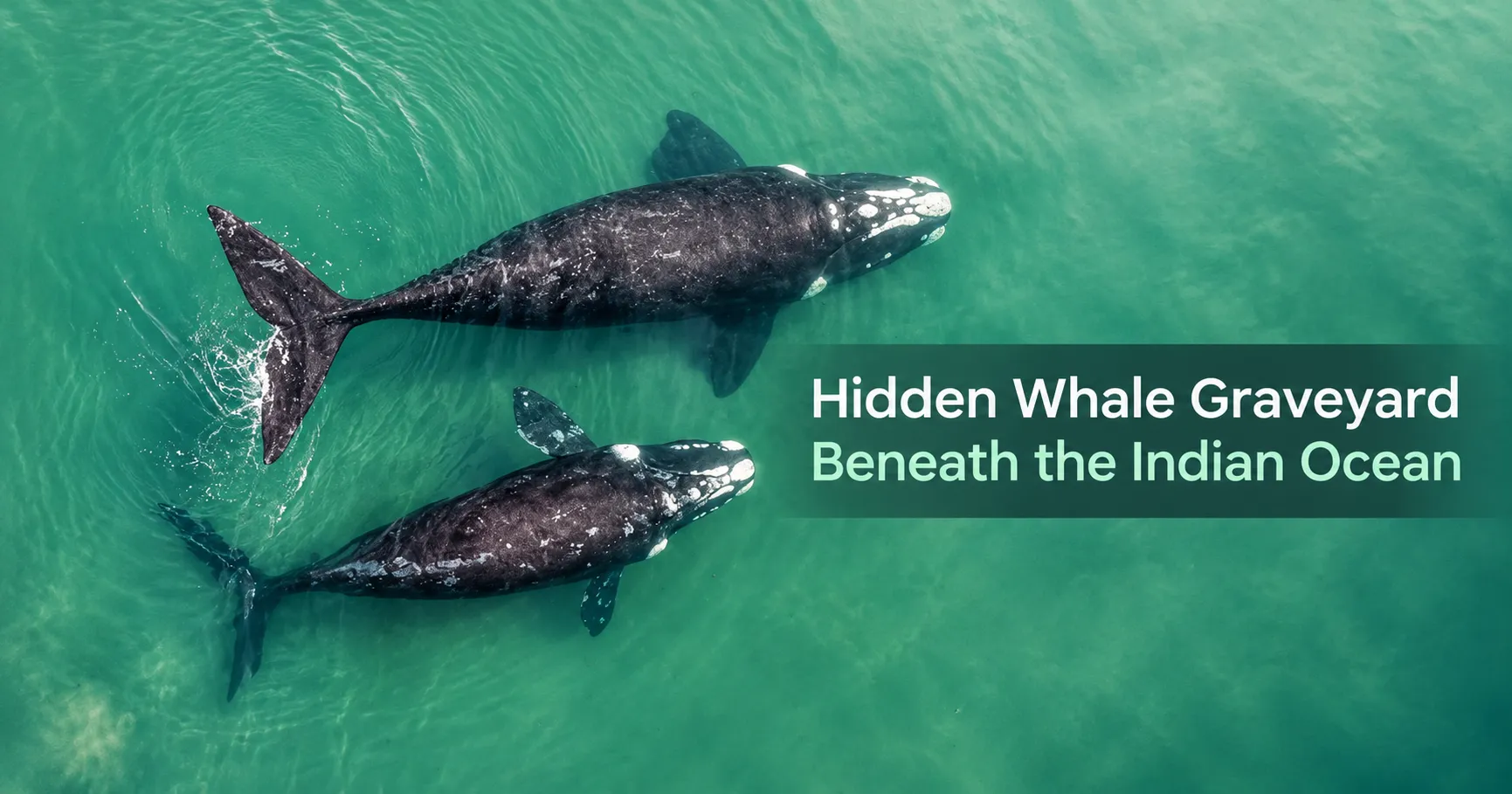
5.3 Million-Year-Old Whale Graveyard Found in Indian Ocean
Far below the waves of the southeastern Indian Ocean, scientists have uncovered one of the most remarkable natural sites ever found in the deep sea. A vast whale graveyard, packed with hundreds of fossils and bones, stretches across the dark ocean floor in a region known as the Diamantina Zone. The oldest remains at the site date back about 5.3 million years, making it a rare record of whale life and death across millions of years.
Few places on Earth hold this many whale remains in a single area, and almost none sit this deep. The discovery was made by a team of researchers led by Xiaotong Peng from the Chinese Academy of Sciences. Their findings were published in the scientific journal Nature, one of the most respected publications in the world.
Via Live Science
The team describes the site as one of the deepest known whale fall ecosystems on the planet. That alone makes it special, since most whale falls studied in the past were found in shallower waters closer to coastlines, where they are easier to reach and observe. What makes this find even more exciting is that the graveyard is not just a collection of old bones.
Some parts of it are still very much alive, with fresh whale carcasses supporting entire communities of deep-sea animals. This mix of ancient fossils and active ecosystems gives scientists a rare chance to study both the past and the present in one place. It also shows how much of the ocean floor remains unexplored and how many surprises are still waiting in the deepest parts of the sea.
Via Scrollin
What Happens When a Whale Dies at Sea
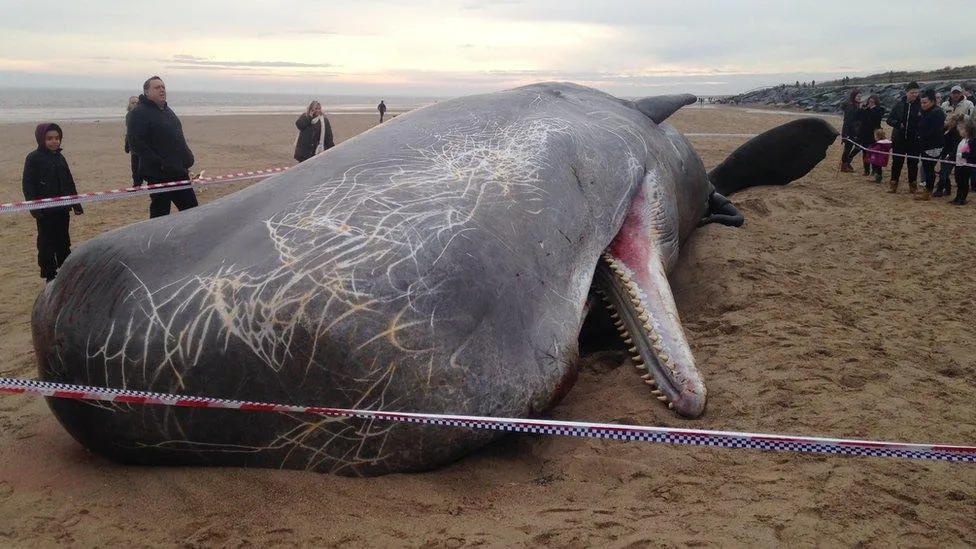
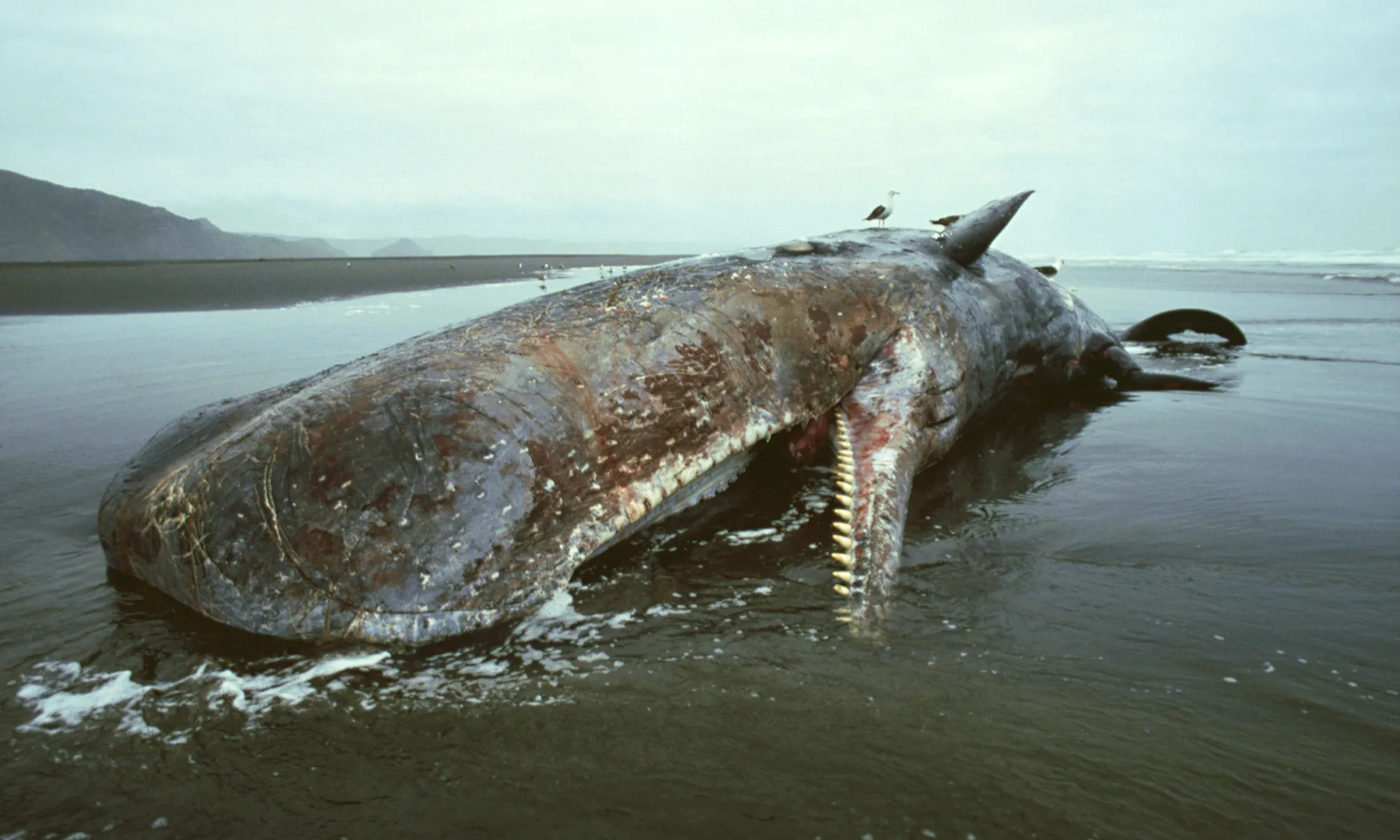
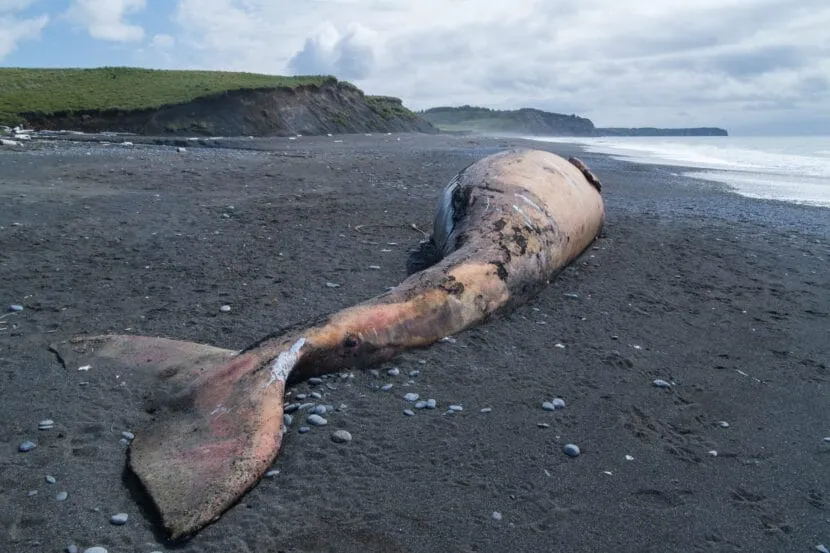
A whale’s death in the open ocean sets off a remarkable chain of events. At first, the huge body may float near the surface for some time, drawing in sharks, seabirds, and ot, her predators looking for an easy meal. As the carcass breaks down and gases escape, it slowly begins to sink. It falls through thousands of meters of dark, cold water until it finally settles on the seafloor, where a whole new stage of life begins around it.
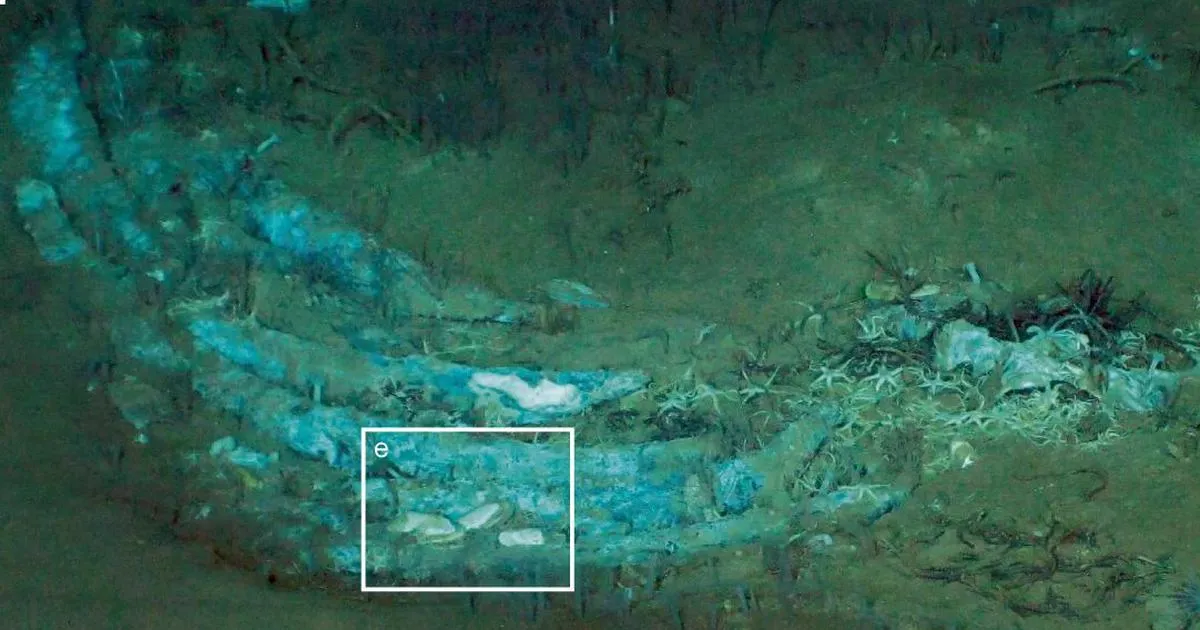
Scientists call this process a “whale fall.” Once a carcass reaches the bottom, it becomes a giant source of food in a place where food is usually very scarce. The deep sea is mostly a cold, quiet desert, with only small bits of organic material drifting down from above. A single whale body can deliver more nutrients to one spot than the surrounding seafloor might receive over many years.
Via BBC
Because of this, whale falls act like sudden oases that attract a wide range of creatures. Researchers have learned that a whale fall can support life for years or even decades. Scavengers such as hagfish, sleeper sharks, and crabs usually arrive first to strip away the soft tissue.
Smaller animals then move in to feed on what remains in the surrounding sediment. Over time, bacteria break down the fats stored inside the bones, providing energy for unusual life forms. Even so, the scientific record of whale falls has always been sparse and patchy, which is why a site of this size is such an important find.
Via Animals
Deep Dive Mission That Led to the Discovery
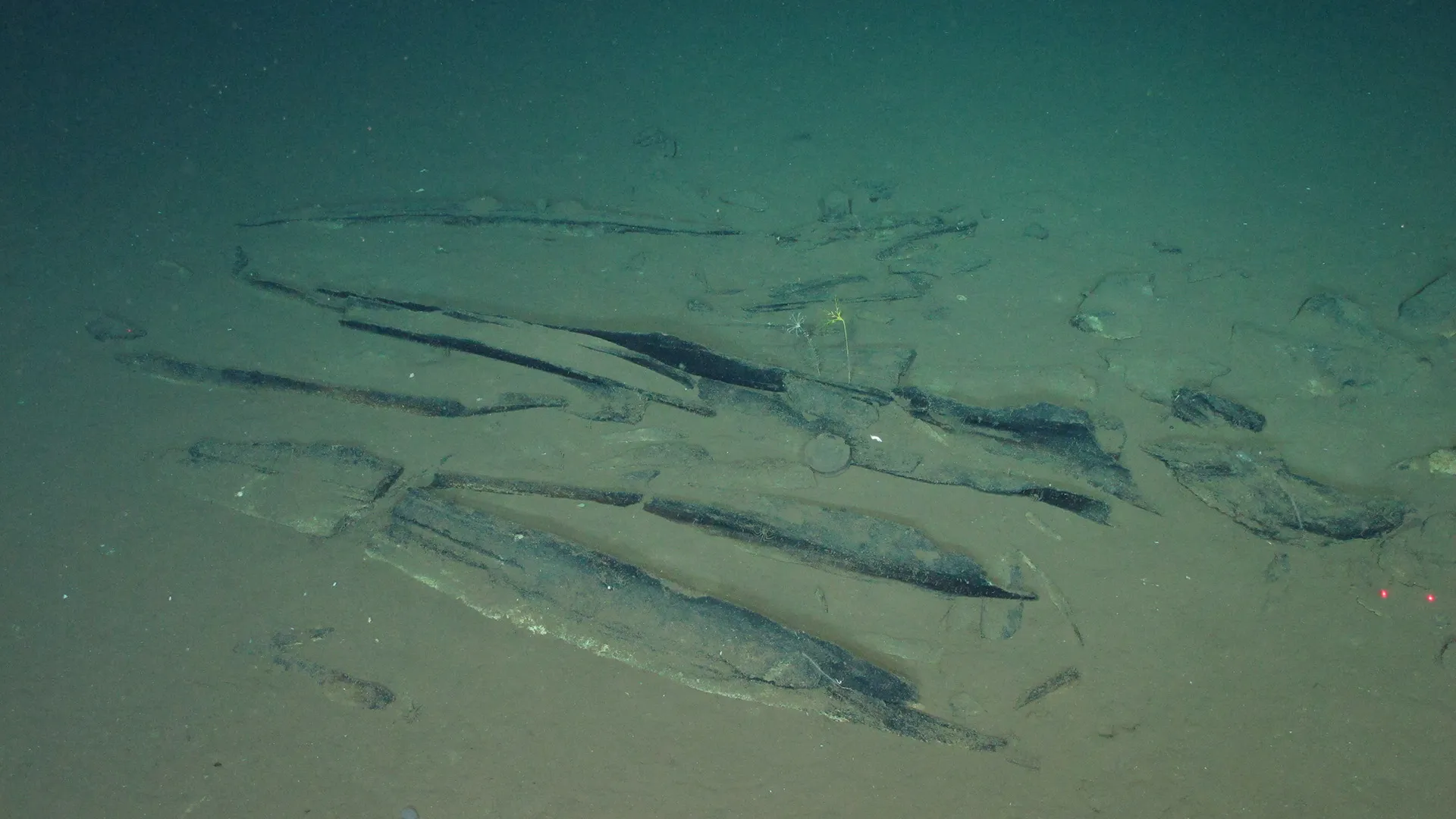
The story of this discovery began in February 2023, during a special dive mission in the southeastern Indian Ocean. The research team used a crewed deep-sea submersible called the Fendouzhe, a Chinese vessel built to reach some of the deepest parts of the ocean. As the submersible explored the seafloor, the scientists spotted something unexpected. Whale skeletons and fossils were scattered across the bottom, many of them partly buried in the soft sediment.
Via Atmos Magazine
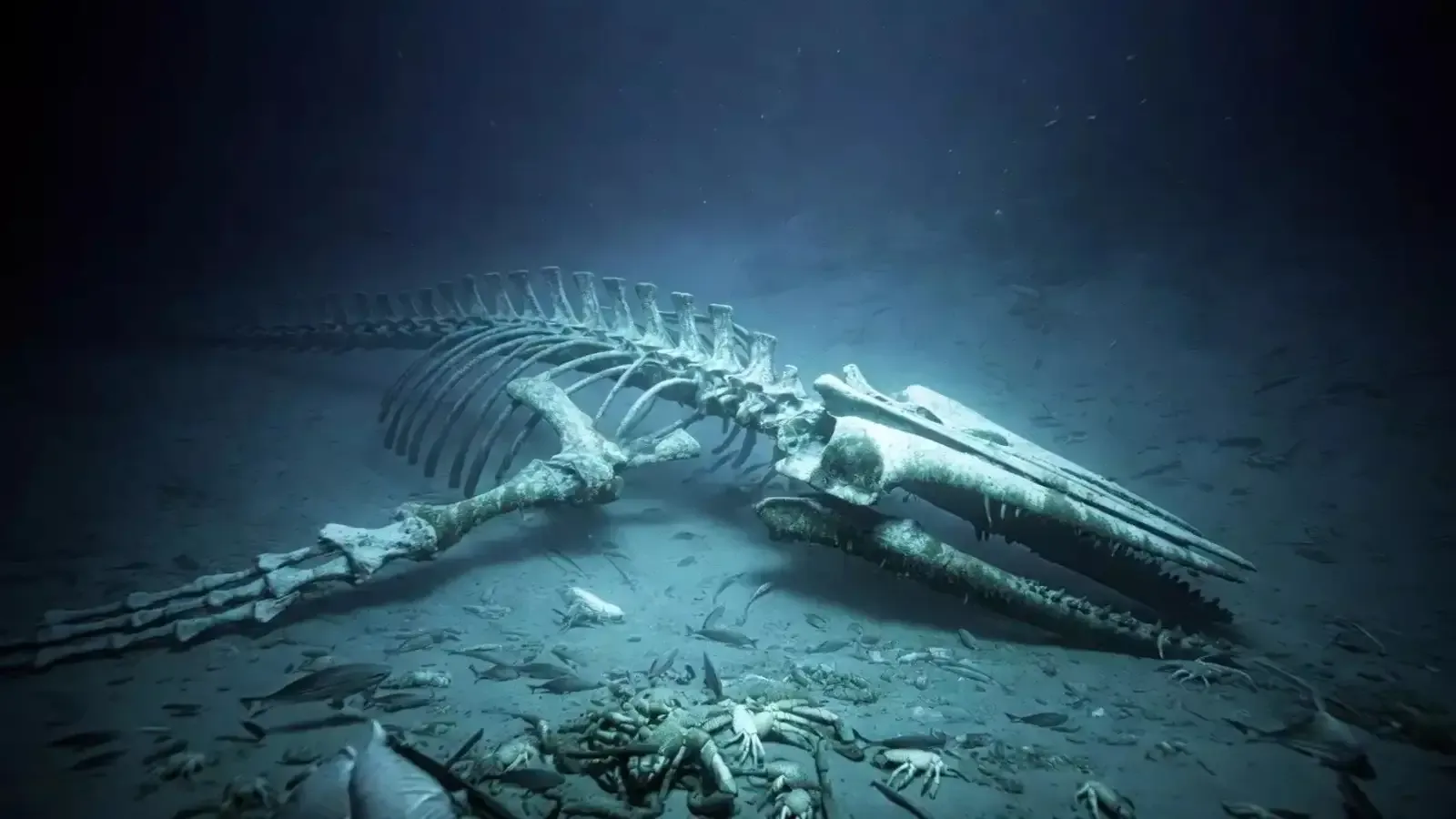
That first sighting was only the beginning. Over the following month, the team carried out 32 more dives to the seafloor to learn how large the site really was. Each dive helped them map more of the area and count the remains they found. Slowly, a clear picture began to form. This was not a small cluster of bones but a massive whale necropolis, a true graveyard spread across a huge stretch of ocean floor.
The final numbers were striking. The site stretched for roughly 1,200 kilometers, or about 745 miles, along the seafloor. The remains sat at depths between 4,200 and 7,000 meters, which is about 13,800 to 23,000 feet below the surface. Across this vast area, the team recorded 476 whale fossils as well as five active whale falls. Working at such extreme depths is difficult and costly, which makes the scale of this mapping effort all the more impressive.
Via The Economic Times
Strange Life Thriving on Whale Bones
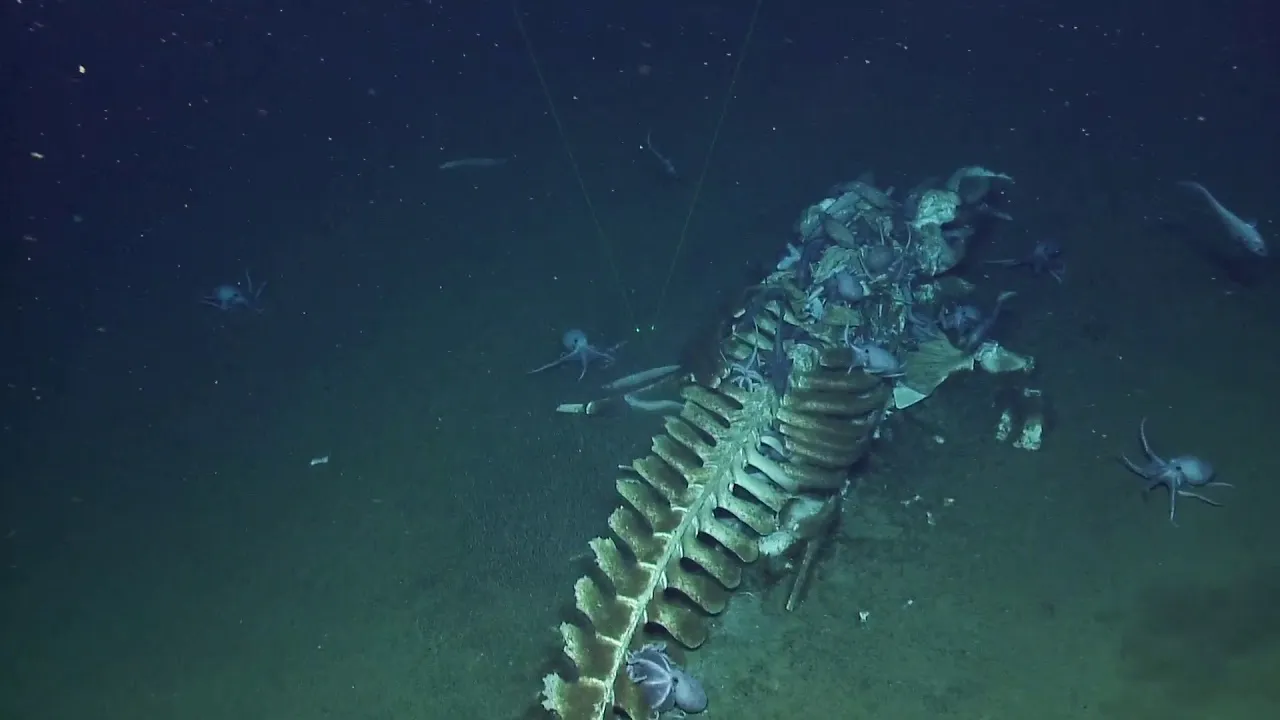
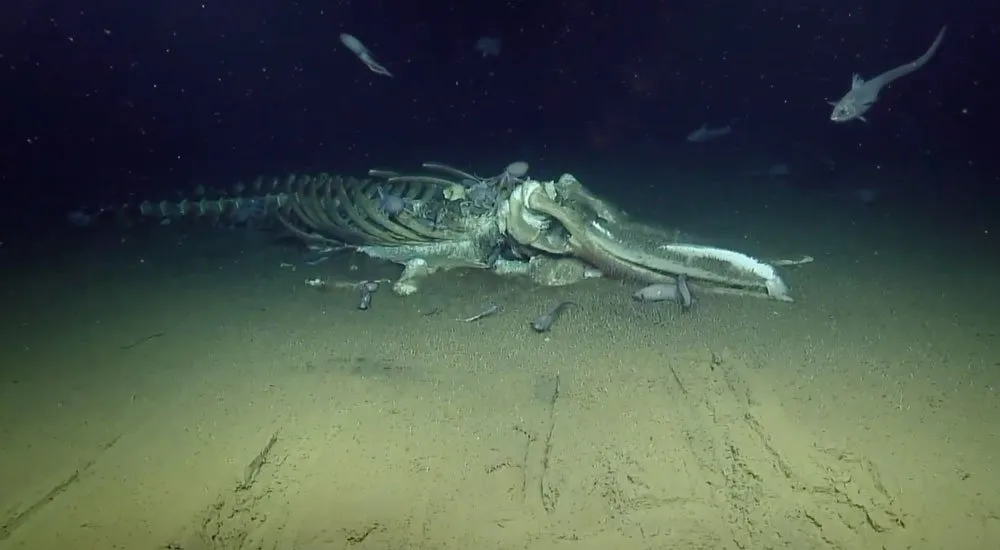
The five active whale falls found at the site were full of life. Scientists observed many strange-looking creatures gathered around the carcasses, feeding on the rich supply of nutrients. Among them were jellyfish, brittle stars, and bone-boring worms.
These animals have adapted to life in total darkness, freezing temperatures,s and crushing water pressure, conditions that would be impossible for most living things to survive. According to the researchers, many of these creatures may be new to science. This is not unusual in the deep sea, where only a small fraction of species have ever been seen or described.
Via Smithsonian Magazine
Every new expedition to the ocean floor tends to turn up animals that nobody has recorded before. A deep, remote whale fall like this one is an ideal place for unusual species to live, since it offers a steady food source in an otherwise empty environment. Bone-boring worms are especially interesting to scientists. These tiny animals dig into whale bones to reach the fats and oils stored inside, slowly breaking the skeleton down over time.
Brittle stars, which look like starfish with long, thin arms, crawl across the bones and sediment in search of food. Together, these creatures form a complete ecosystem built around a single dead whale. Studying them helps researchers understand how life manages to survive in some of the harshest places on Earth.
Via Transom
The Whales Behind the Ancient Fossils
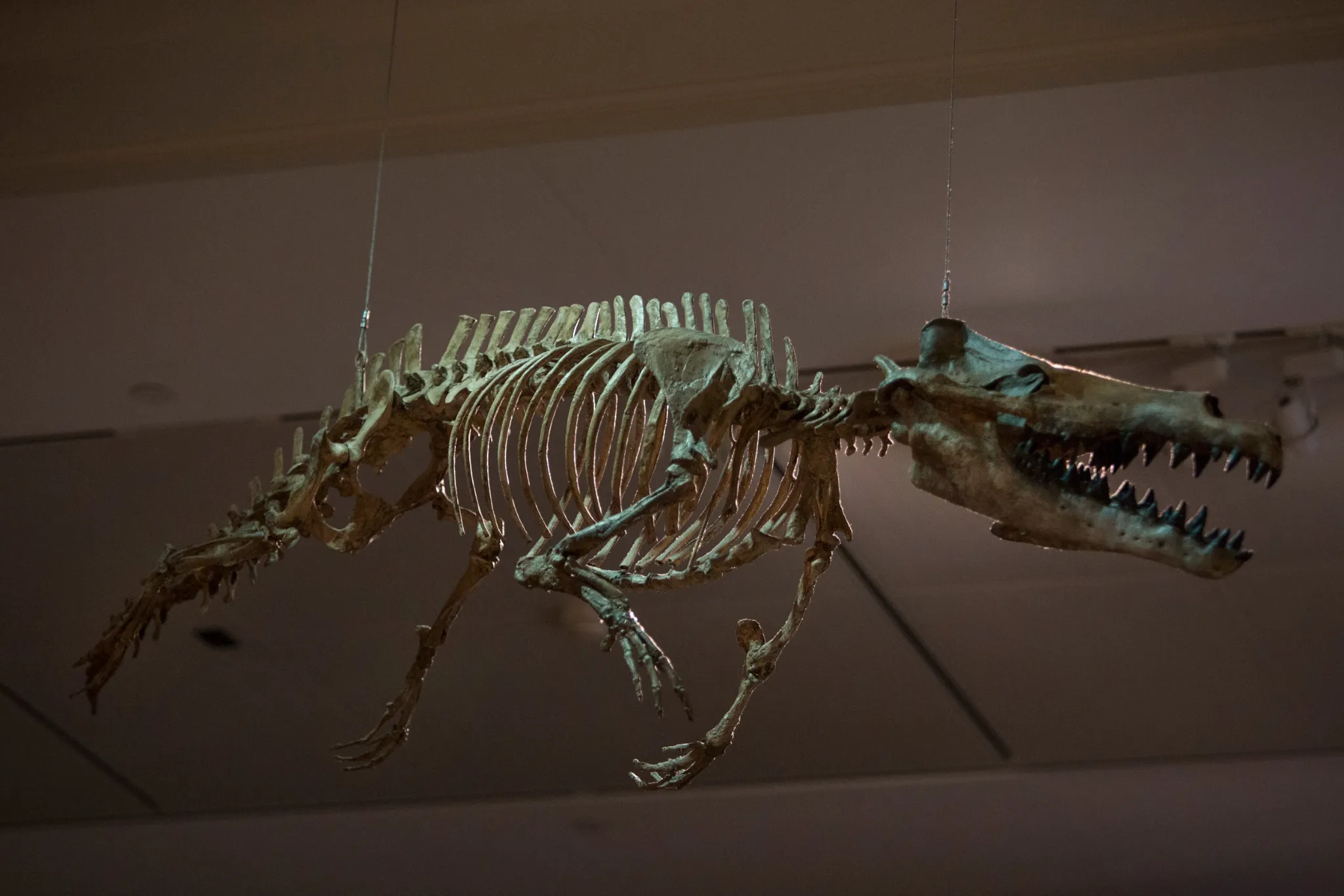
From the 476 fossils spotted on the seafloor, the team recovered 43 for closer study. By examining them, the scientists identified five species of beaked whales. These included the Andrews’ beaked whale and the strap-toothed whale, both of which are known to live in this part of the ocean today. The team also identified one species of baleen whale, the sei whale, which is among the larger filter-feeding whales that swim the world’s oceans.
The largest find at the site was a dead Antarctic minke whale measuring about five meters, or roughly 16 feet, long. The researchers identified it by the distinct shape of its ear bone, along with genetic analysis. Ear bones are often useful for telling whale species apart, since each species tends to have its own unique shape. Combining this physical evidence with DNA testing gave the team a confident identification of the animal.
Via Hakai Magazine
Perhaps the most exciting result was the discovery of a brand-new whale species. The team named it Pterocetus diamantinae, after the Diamantina Zone where it was found. This species is now extinct, which means it only survives in the fossil record. To find out how old the remains were, scientists used isotopic dating, a method that measures the steady decay of radioactive isotopes. The results showed that the oldest fossils at the site are about 5.3 million years old.
Why So Many Whales Ended Up in One Place
Finding hundreds of whale remains in one region naturally raises a big question about how the graveyard formed. Whales die all across the world’s oceans, and their bodies usually end up scattered far apart. A site with this many fossils suggests that something about the Diamantina Zone made it a natural collecting point. The research team looked closely at the area’s features to find an explanation.
Via KTOO
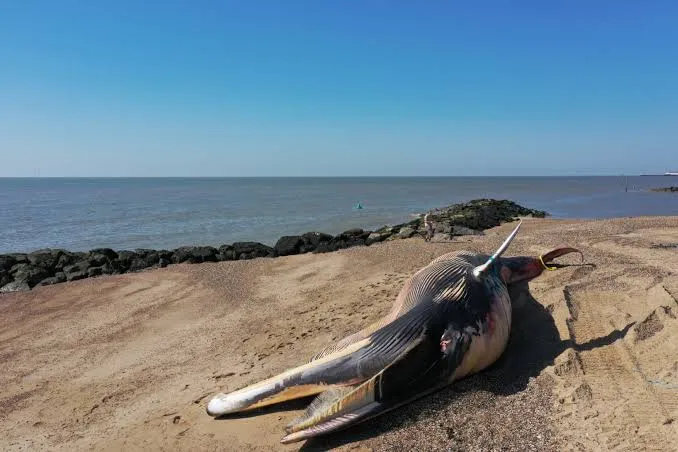
The authors suggest that the shape of the seafloor plays a major role. The Diamantina Zone has a V-shaped topography, with steep sides that slope down toward a deep center. This shape likely funnels whale carcasses toward the bottom as they sink, guiding them into the same general area. Over millions of years, this process could have gathered a huge number of remains in one place, building the graveyard piece by piece.
The type of whales living nearby also matters. Many deep-diving beaked whale species are known to inhabit this part of the ocean. Since these whales spend their lives in the region, it makes sense that many of them would also die and sink there. The combination of local whale populations and the funnel-like seafloor may explain why the Diamantina Zone became such a rich record of whale remains. It is a natural process that has quietly unfolded for more than five million years.
Via National Geographic
What the Discovery Means for Science
This discovery adds a great deal to what scientists know about whale falls and the unusual ecosystems they support. Most past studies focused on shallower sites, so finding active whale falls at such great depths opens up new areas of research. It shows that these food-rich oases can exist and thrive far deeper than many people expected.
It also gives researchers a chance to study how deep-sea life changes from one depth to another. The find is also important for understanding beaked whales, which are some of the most mysterious animals in the ocean. These whales usually live far offshore and spend very little time at the surface. They routinely dive as deep as one kilometer, or around 3,300 feet, and can hold their breath for more than an hour.
Via Science News Explore
Because they are so hard to observe in the wild, much about their lives remains unknown. Fossils that span about five million years give scientists a rare window into how these whales evolved from the Pliocene epoch to the present day. Above all, this research is a humbling reminder of how little people know about the deep sea.
Via Seaside Sustainability
Large parts of the ocean floor have never been seen, and each new expedition can reveal something completely unexpected. The scientists set out to explore a remote stretch of seafloor and found a hidden graveyard filled with ancient whales, living ecosystems, and possibly new species. It shows that when people go looking for answers in the deep ocean, they may find far more than they ever imagined.