
Unassigned
Only One Brown Panda Exists in the World Today

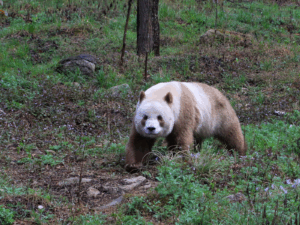
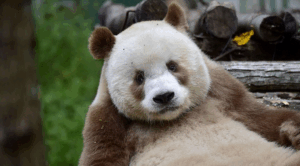
Qizai is a special giant panda with brown and white fur. He stands out because all other giant pandas are black and white. He is the only known brown panda alive today. This makes him very rare and interesting to people around the world. Scientists say there have been only about seven brown pandas ever seen. All of them come from the same area in China. Qizai lives in a safe place where experts take care of him.
His story shows how nature can create surprises. Pandas are loved for their cute looks and playful ways. Qizai adds a new twist with his chocolate-like color. He reminds people that even in the animal world, being different can be a good thing. Many people hear about Qizai and want to learn more. His fur is not dirty or painted. It is real and comes from his genes.
 Via Wikipedia
Genes are like instructions in the body that decide color and other traits. Qizai's genes have a small change that makes his fur brown instead of black. This change is rare and happens only in some pandas. He was born in the wild but now lives with humans who protect him. His life helps teach others about pandas and why you need to save them.
 Via Reddit
All known brown pandas come from the Qinling region, home to a unique panda population. Early theories suggested the brown color came from diet or environmental factors, but genetic studies proved otherwise. After Dandan died in 2000, researchers examined her fur and DNA, revealing that the brown coloration results from genetic differences, not a separate species.
The Qinling population is small, so inbreeding may increase the likelihood of rare traits like brown fur. Even so, brown pandas remain incredibly scarce, only a few among thousands. The most famous, Qizai, continues Dandan’s legacy, reminding people how nature hides surprises in remote corners of the world and how each discovery deepens the understanding of evolution.
 Via El Pais English
 Via Bored Panda
The mice got lighter fur, too. This proved the idea. The discovery happened after years of study. It started with Dandan and led to Qizai. Now you know it is not from dirt or food. It is all in the genes. This gene change only happens in Qinling pandas. Other pandas in places like Sichuan do not have it. The groups split long ago, about 300,000 years ago.
This split let different traits grow. Understanding this helps protect pandas. If you know the genes, you can watch for health issues. Brown pandas like Qizai are healthy, but rare traits can sometimes cause problems. For now, the brown color is just a cool variation. It makes Qizai stand out and teaches you about animal colors.
 Via Earth
 Via Panda-Q
It is one of the best for pandas in China. Qizai stayed there and grew up safe. His rescuers named him Qi Zai. It means "seventh son" in Chinese. But some say it also comes from a movie character. The character is an alien that looks different, just like Qizai. The name fits his unique look. Growing up, Qizai learned to eat bamboo and play. Pandas are good climbers as cubs.
They roll around and explore. Qizai did all that in a safe space. His early days were tough, but the rescue changed his life. Now he is a grown panda, about 15 years old. That is middle age for pandas. They can live up to 20 years in the wild, longer in care. Qizai's story shows why rescues matter. Without help, he might not be here today.
 Via South China Morning Post
 Via Panda-Q
Qizai is gentle and calm. He does not fight much. Sometimes he waits by a window to see other pandas. He likes company but is shy too. Keepers say he is clean. He grooms his fur with his mouth. He even has a special spot for bathroom needs, away from his bed. This keeps his area neat.
In the afternoon, Qizai might nap in the shade. Pandas sleep a lot to digest food. At night, he settles down. Keepers check on him to make sure he is okay. They watch for health issues like tooth problems. Bamboo is hard on teeth. Qizai gets check-ups to stay healthy. His life is peaceful and fun. The sanctuary makes sure he has everything. It is like a Panda hotel with room service.
 Via Pinterest
 Via Alchetron
Sichuan ones are the kind most people know. They are bigger and have classic black and white fur. Qinling pandas might look fluffier. Their eye patches can be darker, too. Living in the mountains has challenges. The bamboo there has metals like copper and lead. This can hurt pandas over time. But they adapt by eating the best parts. They pick bamboo with more protein and less fiber.
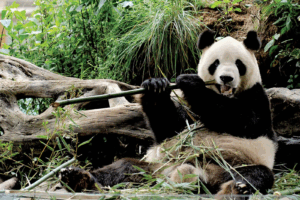 Via Britannica
Conservation helps fight these issues. China has parks like the Giant Panda National Park. It covers big areas in the mountains. Centers breed pandas to raise numbers. They release some back into the wild. For Qizai, his center protects rare ones like him. Groups like Pandas International help too. They give money for vaccines and tools. Qizai was adopted by them in 2019. This means they support his care forever.
 Via My Modern Met
Qizai reminds people to protect the planet. Pandas need clean homes and food. If people help them, people help themselves. His life from rescue to dad shows that human care works. Anyone can feel like the odd one out. But Qizai thrives because of it. He is proud and happy. Follow his example and celebrate uniqueness. Qizai's legend will last and melt hearts for years.
More in Unassigned
Via Wikipedia
Genes are like instructions in the body that decide color and other traits. Qizai's genes have a small change that makes his fur brown instead of black. This change is rare and happens only in some pandas. He was born in the wild but now lives with humans who protect him. His life helps teach others about pandas and why you need to save them.
The History of Brown Pandas
Brown pandas remained unknown until 1985, when the first one, a female named Dandan, was discovered in China’s Qinling Mountains. Unlike typical black-and-white pandas, Dandan had brown fur and lived in captivity for many years, producing cubs that were mostly black and white. Only a few showed traces of brown, proving how rare the trait was.
Via Reddit
All known brown pandas come from the Qinling region, home to a unique panda population. Early theories suggested the brown color came from diet or environmental factors, but genetic studies proved otherwise. After Dandan died in 2000, researchers examined her fur and DNA, revealing that the brown coloration results from genetic differences, not a separate species.
The Qinling population is small, so inbreeding may increase the likelihood of rare traits like brown fur. Even so, brown pandas remain incredibly scarce, only a few among thousands. The most famous, Qizai, continues Dandan’s legacy, reminding people how nature hides surprises in remote corners of the world and how each discovery deepens the understanding of evolution.
Via El Pais English
What Makes Qizai's Fur Brown?
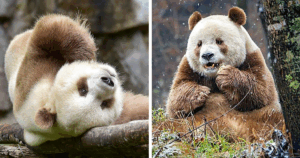
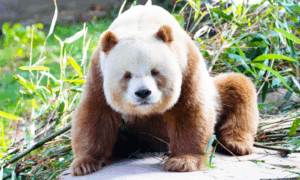
Qizai's brown fur comes from a change in his genes. Scientists found out that it is a small missing part in a gene called Bace2. This gene helps make color in fur. When the change occurs, the fur turns brown instead of black. It is like a recipe missing one step. The change is tiny, just 25 parts out of many. But it makes a big difference. That is why it is so rare. Qizai got it from his mom and dad. Experts tested Qizai's fur under a microscope. They saw fewer color spots in his hair. These spots are called melanosomes. They make the black color in normal pandas. With fewer of them, the fur looks brown. Scientists even tried the same gene change in mice.
Via Bored Panda
The mice got lighter fur, too. This proved the idea. The discovery happened after years of study. It started with Dandan and led to Qizai. Now you know it is not from dirt or food. It is all in the genes. This gene change only happens in Qinling pandas. Other pandas in places like Sichuan do not have it. The groups split long ago, about 300,000 years ago.
This split let different traits grow. Understanding this helps protect pandas. If you know the genes, you can watch for health issues. Brown pandas like Qizai are healthy, but rare traits can sometimes cause problems. For now, the brown color is just a cool variation. It makes Qizai stand out and teaches you about animal colors.
Via Earth
Qizai's Early Life and Rescue
Qizai was born in 2009 in the Qinling Mountains. This place is full of tall trees and bamboo. Bamboo is what pandas eat most. As a baby, Qizai lived in the wild with his mom. But something went wrong. When he was about two months old, his mom left him alone. He was weak and hungry. Lucky for him, people found him on November 1, 2009. They were in the Foping Nature Reserve. The reserve protects wild animals. Qizai could not survive on his own. So, they took him to a rescue center. At the center, experts gave him milk and care. He was small and scared at first. But he got stronger day by day. The place is called the Shaanxi Rare Wildlife Rescue and Research Center.
Via Panda-Q
It is one of the best for pandas in China. Qizai stayed there and grew up safe. His rescuers named him Qi Zai. It means "seventh son" in Chinese. But some say it also comes from a movie character. The character is an alien that looks different, just like Qizai. The name fits his unique look. Growing up, Qizai learned to eat bamboo and play. Pandas are good climbers as cubs.
They roll around and explore. Qizai did all that in a safe space. His early days were tough, but the rescue changed his life. Now he is a grown panda, about 15 years old. That is middle age for pandas. They can live up to 20 years in the wild, longer in care. Qizai's story shows why rescues matter. Without help, he might not be here today.
Via South China Morning Post
A Day in Qizai's Life at the Sanctuary
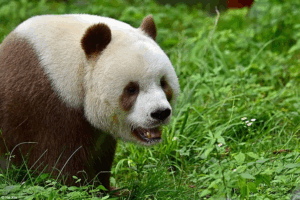
Qizai lives at the Qinling Giant Panda Research Center in Xi'an, China. It is also known as the Louguantai Center. This place is like a home for pandas. It has big areas with trees and grass. Qizai has his own space to roam. He wakes up early and starts eating. Pandas eat a lot, up to 14 hours a day. His main food is bamboo. He likes the fresh shoots best. But he also loves carrots as a treat. Keepers give him extras to keep him happy. During the day, Qizai plays and rests. He climbs trees or rolls on the ground. Pandas are not very active. They save energy because bamboo does not provide much nutrition.
Via Panda-Q
Qizai is gentle and calm. He does not fight much. Sometimes he waits by a window to see other pandas. He likes company but is shy too. Keepers say he is clean. He grooms his fur with his mouth. He even has a special spot for bathroom needs, away from his bed. This keeps his area neat.
In the afternoon, Qizai might nap in the shade. Pandas sleep a lot to digest food. At night, he settles down. Keepers check on him to make sure he is okay. They watch for health issues like tooth problems. Bamboo is hard on teeth. Qizai gets check-ups to stay healthy. His life is peaceful and fun. The sanctuary makes sure he has everything. It is like a Panda hotel with room service.
Via Pinterest
The Qinling Panda Subspecies
Qizai belongs to the Qinling panda group. This is a subspecies of giant pandas. It was named in 2005. The full name is Ailuropoda melanoleuca qinlingensis. These pandas live only in the Qinling Mountains. The area is in Shaanxi Province. It has high spots from 1,300 to 3,000 meters up. The weather is cool and wet, good for bamboo. Qinling pandas are a bit different from others. They have smaller heads and bigger teeth. This helps them chew tough bamboo. There are about 200 to 300 Qinling pandas in the wild. That is more than before, but still few. They split from other pandas long ago. This made them unique. Brown fur shows up only in this group. The mountains keep them apart from Sichuan pandas.
Via Alchetron
Sichuan ones are the kind most people know. They are bigger and have classic black and white fur. Qinling pandas might look fluffier. Their eye patches can be darker, too. Living in the mountains has challenges. The bamboo there has metals like copper and lead. This can hurt pandas over time. But they adapt by eating the best parts. They pick bamboo with more protein and less fiber.
Challenges and Conservation for Pandas
Pandas face big problems. Their homes are getting smaller because people are building things. Bamboo forests are cut down. This makes it hard to find food. Pandas need lots of bamboo to eat. They also get sick from bad teeth. Chewing bamboo wears teeth out. In the wild, old pandas can die from this. Pollution adds trouble. Metals in the soil go into bamboo. Qinling areas have more of this.
Via Britannica
Conservation helps fight these issues. China has parks like the Giant Panda National Park. It covers big areas in the mountains. Centers breed pandas to raise numbers. They release some back into the wild. For Qizai, his center protects rare ones like him. Groups like Pandas International help too. They give money for vaccines and tools. Qizai was adopted by them in 2019. This means they support his care forever.
Explore the Mystery of the Rare Brown Panda
Qizai is more than a cute panda. He teaches you about nature's variety. Being different is okay and can be special. His brown fur draws people to learn about pandas. This helps conservation. When folks see Qizai, they want to help save forests. He is like an ambassador for animals. Scientists use him to study genes and health. This knowledge aids other species, too.
Via My Modern Met
Qizai reminds people to protect the planet. Pandas need clean homes and food. If people help them, people help themselves. His life from rescue to dad shows that human care works. Anyone can feel like the odd one out. But Qizai thrives because of it. He is proud and happy. Follow his example and celebrate uniqueness. Qizai's legend will last and melt hearts for years.
